Acute Lymphoblastic Leukemia Characterized by Rare BCR::FGFR1 Translocation: A Case Report With Literature Review
Maximilian Al-Bazaz, Anika Forstreuter, Ibrahim Hammada, Jurek Hille, Jan Nicolai Wagner, Jochim Reinert, Janine Wehrhahn, Carsten Bokemeyer, Walter Fiedler

TL;DR
A rare BCR::FGFR1 translocation in a 60-year-old ALL patient led to aggressive disease and poor prognosis despite treatment, highlighting the need for detailed molecular analysis in ALL diagnosis.
Contribution
This case report highlights the clinical significance of the rare BCR::FGFR1 translocation in ALL and its impact on treatment outcomes.
Findings
The patient had a rare t(8; 22)(p11; q11) BCR::FGFR1 translocation associated with aggressive ALL.
Despite achieving cytological remission, MRD positivity persisted, leading to stem cell transplantation.
The patient died due to graft-versus-host disease and infections post-transplant, underscoring the severity of this translocation.
Abstract
We present the case of a 60-year-old male patient with a common B-cell acute lymphoblastic leukemia (ALL) who carried the rare t(8; 22)(p11; q11) BCR::FGFR1 chromosomal translocation. The presence of the t(8; 22)(p11; q11) BCR::FGFR1 translocation, identified by cytogenetics including Fluorescence In Situ Hybridization (FISH) is known for its association with aggressive disease. Given the dismal prognosis, an early search for a stem cell donor was initiated. The patient was treated according to the German Multicenter ALL (GMALL) Study Group consensus recommendations. The disease was refractory to the first cycle of induction chemotherapy. However, after the second induction, cytological remission was achieved. Nevertheless, minimal residual disease (MRD) positivity persisted (IGH rearrangement detected by PCR) after the first consolidation therapy, giving indication for a stem cell…
Genes, proteins, chemicals, diseases, species, mutations and cell lines named across the full text — each resolved to its canonical identifier and authoritative record.
Click any figure to enlarge with its caption.
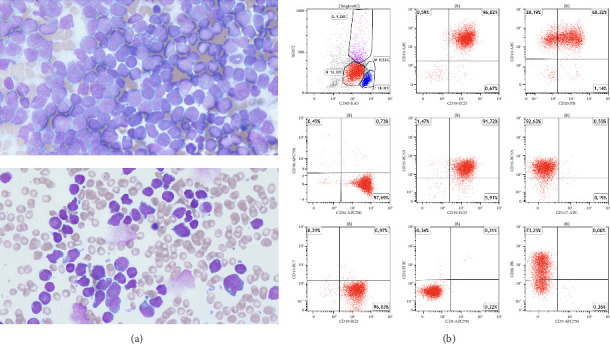 Figure 1
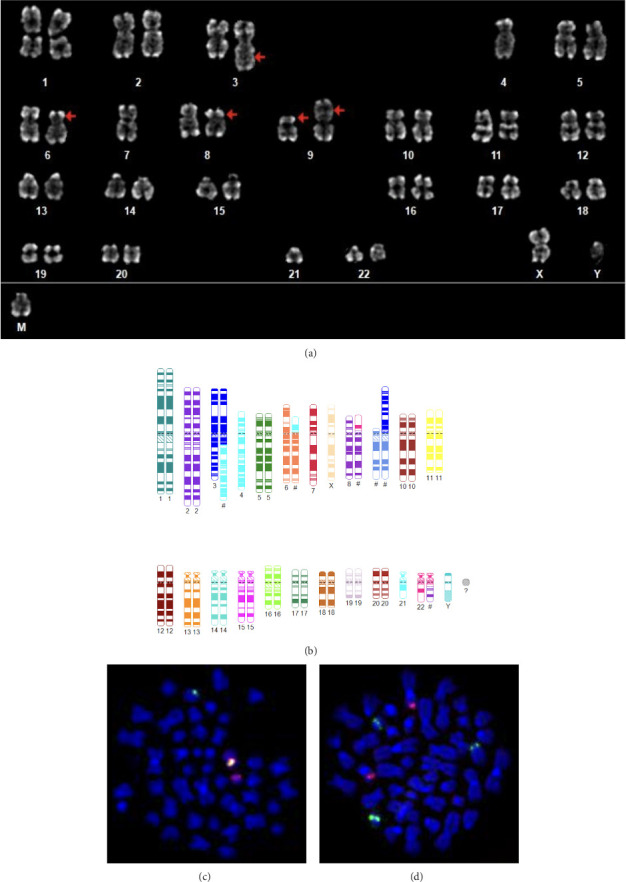 Figure 2
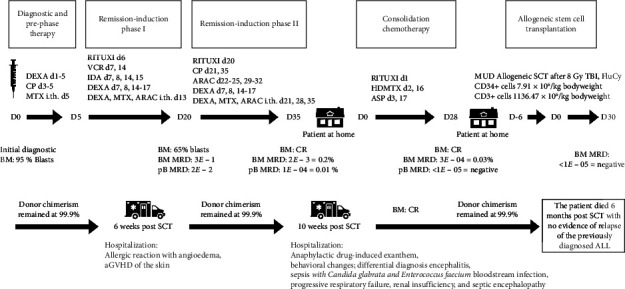 Figure 3
Peer Reviews
No public reviews on file for this paper yet. If you reviewed it on a platform where reviews are public (OpenReview, ICLR, NeurIPS, ICML), you can paste yours below so the community can read it here.
Videos
No videos yet. Explain this paper in a talk, walkthrough, or lecture? Add one.
Taxonomy
TopicsFibroblast Growth Factor Research · Eosinophilic Disorders and Syndromes · Kruppel-like factors research