A Refractory Case of Sydenham Chorea Managed With Intravenous Pulse-Dose Methylprednisolone
Andrea Weitz, Inna Kaminecki, Clark Azubuike, Alexandria L. Rivas, Sai Pranathi Bingi, Jennifer E. Wilson, Jessyca T. Cripps, Michael Mitchell, Mary Baiyeri, Maria Gasque

TL;DR
A child with severe Sydenham's chorea improved after high-dose corticosteroid treatment when other therapies failed.
Contribution
Demonstrates the potential effectiveness of intravenous methylprednisolone in refractory Sydenham's chorea cases.
Findings
High-dose corticosteroids led to significant improvement in choreiform movements and emotional dysregulation.
Standard treatments like valproic acid and haloperidol were ineffective in managing the patient's symptoms.
Long-term penicillin prophylaxis was used to prevent recurrence of Sydenham's chorea.
Abstract
We describe the case of an eight-year-old female presenting with abrupt-onset involuntary movements, emotional lability, and gait disturbances, consistent with Sydenham's chorea (SC). Her condition deteriorated despite initial antibiotic treatment and symptomatic management. Notable findings included elevated antistreptolysin O titers and antideoxyribonuclease B antibodies, suggestive of recent Group A Streptococcus infection. Brain magnetic resonance imaging revealed punctate gliosis in the supratentorial white matter, and extensive workup excluded alternative diagnoses. Despite escalating therapy with valproic acid, clonidine, and haloperidol, the patient exhibited persistent choreiform movements and emotional dysregulation. High-dose corticosteroids (methylprednisolone) were initiated, resulting in significant symptomatic improvement and restoration of ambulatory function. Long-term…
Genes, proteins, chemicals, diseases, species, mutations and cell lines named across the full text — each resolved to its canonical identifier and authoritative record.
Click any figure to enlarge with its caption.
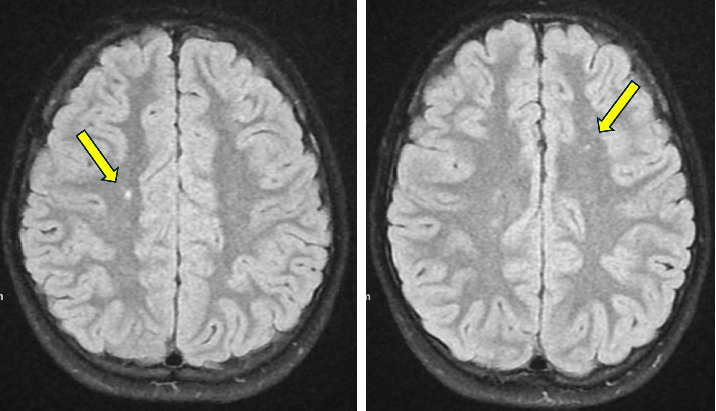 Figure 1
Peer Reviews
No public reviews on file for this paper yet. If you reviewed it on a platform where reviews are public (OpenReview, ICLR, NeurIPS, ICML), you can paste yours below so the community can read it here.
Videos
No videos yet. Explain this paper in a talk, walkthrough, or lecture? Add one.
Taxonomy
TopicsStreptococcal Infections and Treatments · Botulinum Toxin and Related Neurological Disorders · Obsessive-Compulsive Spectrum Disorders