GCACL-Rec: A study on conversational recommendation via global context-aware and multi-view contrastive adversarial joint learning
Xianghui Li, Xiaowen Liu, Xinhuan Chen, Ming Ma, Ping Xiang, Ping Xiang, Ping Xiang

TL;DR
This paper introduces GCACL-Rec, a new recommendation system that improves session-based recommendations by considering user behavior across multiple sessions and using advanced learning techniques.
Contribution
The novel contribution is the integration of global context-aware modeling and multi-view contrastive adversarial learning for session-based recommendations.
Findings
GCACL-Rec outperforms existing methods on benchmark datasets like Diginetica, Tmall, and RetailRocket.
The model effectively captures cross-session dependencies and improves recommendation accuracy through its hybrid prediction structure.
Abstract
Session-based recommendation (SBR) aims to provide personalized recommendations based on anonymous user click sequences. Although existing methods have achieved notable progress, most focus solely on user preferences within a single session, overlooking item transitions across sessions, which limits their ability to model complex behavior patterns. To address this, we propose GCACL-Rec, a model that enhances dynamic modeling by incorporating global item transition information. It constructs a multi-scale graph structure using Multi-scale graph neural networks (MSGNN) and introduces a relative multi-head attention mechanism (RMA) to enhance cross-session dependency modeling. In addition, a multi-view contrastive-adversarial joint learning strategy (MPACL) is adopted to distinguish better relevant from irrelevant information and extract user intent more effectively. During prediction, we…
Genes, proteins, chemicals, diseases, species, mutations and cell lines named across the full text — each resolved to its canonical identifier and authoritative record.
Click any figure to enlarge with its caption.
 Figure 1
 Figure 2
 Figure 3
 Figure 4
 Figure 5
 Figure 6
 Figure 7
 Figure 8
 Figure 9
 Figure 10
 Figure 11
 Figure 12
 Figure 13
 Figure 14
 Figure 15
 Figure 16
 Figure 17
 Figure 18
 Figure 19
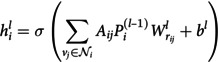 Figure 20
 Figure 21
 Figure 22
 Figure 23
 Figure 24
 Figure 25
 Figure 26
 Figure 27
 Figure 28
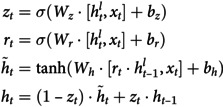 Figure 29
 Figure 30
 Figure 31
 Figure 32
 Figure 33
 Figure 34
 Figure 35
 Figure 36
 Figure 37
 Figure 38
 Figure 39
 Figure 40
 Figure 41
 Figure 42
 Figure 43
 Figure 44
 Figure 45
 Figure 46
 Figure 47
 Figure 48
 Figure 49
 Figure 50
Peer Reviews
No public reviews on file for this paper yet. If you reviewed it on a platform where reviews are public (OpenReview, ICLR, NeurIPS, ICML), you can paste yours below so the community can read it here.
Videos
No videos yet. Explain this paper in a talk, walkthrough, or lecture? Add one.
Taxonomy
TopicsRecommender Systems and Techniques · Emotion and Mood Recognition · Topic Modeling