Weakly-supervised explainable infection severity classification from chest CT scans
Ibrahim Almakky, Mohammad Yaqub, Asadullah Shaikh, Asadullah Shaikh, Asadullah Shaikh, Asadullah Shaikh, Asadullah Shaikh

TL;DR
This paper introduces a weakly-supervised method for classifying infection severity in chest CT scans, offering explainable results to aid clinicians in treating respiratory diseases.
Contribution
A novel weakly-supervised classification approach for infection severity with explainable results, avoiding expensive segmentation annotations.
Findings
The proposed method achieves state-of-the-art performance on multi-centre SARS-CoV-2 datasets.
It shows significant performance gains on cross-site train/test splits.
The approach provides explainable infection coverage through fused low- and high-level features.
Abstract
Novel respiratory diseases can have a devastating impact on healthcare systems, which underlines the importance of developing methods to improve the prevention, diagnosis, and prognosis of such diseases. Developing computer-aided diagnosis tools that determine infection severity can aid healthcare professionals in deciding treatment strategies and preventing cross-infection. In such manner, lung infection severity classification from chest CTs is crucial for deciding treatment plans and interventions needed to block illness progression in individual patients and reduce cross infection. However, current techniques face performance, generalizability, and explainability challenges for automated infection severity classification methods due to the high spatial complexity of 3D volumes. Significant efforts have been focused on segmentation approaches to quantify lung infection and assess…
Genes, proteins, chemicals, diseases, species, mutations and cell lines named across the full text — each resolved to its canonical identifier and authoritative record.
Click any figure to enlarge with its caption.
 Figure 1
 Figure 2
 Figure 3
 Figure 4
 Figure 5
 Figure 6
 Figure 7
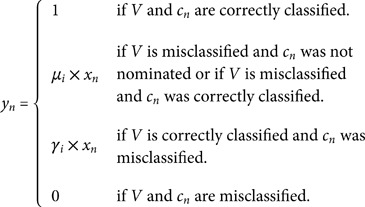 Figure 8
 Figure 9
 Figure 10
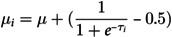 Figure 11
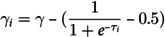 Figure 12
 Figure 13
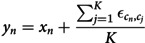 Figure 14
 Figure 15
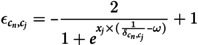 Figure 16
 Figure 17
 Figure 18
 Figure 19
 Figure 20
 Figure 21
 Figure 22
 Figure 23
 Figure 24
 Figure 25
 Figure 26
 Figure 27
 Figure 28
 Figure 29
 Figure 30
 Figure 31
 Figure 32
 Figure 33
 Figure 34
 Figure 35
 Figure 36
 Figure 37
 Figure 38
 Figure 39
 Figure 40
 Figure 41
 Figure 42
 Figure 43
 Figure 44
 Figure 45
 Figure 46
 Figure 47
 Figure 48
 Figure 49
 Figure 50
Peer Reviews
No public reviews on file for this paper yet. If you reviewed it on a platform where reviews are public (OpenReview, ICLR, NeurIPS, ICML), you can paste yours below so the community can read it here.
Videos
No videos yet. Explain this paper in a talk, walkthrough, or lecture? Add one.
Taxonomy
TopicsCOVID-19 diagnosis using AI · Anomaly Detection Techniques and Applications · Lung Cancer Diagnosis and Treatment