What are the spatio-temporal differentiation characteristics and driving factors of the coupling coordination degree between green finance and ecological efficiency? Evidence from 84 cities in western China
Dalai Ma, Bitan An, Zuman Guo, Jiawei Zhang, Fengtai Zhang, Ruonan Chang, Yin Yan, Xiaoyong Zhou, Xiaoyong Zhou, Xiaoyong Zhou

TL;DR
This paper studies how green finance and ecological efficiency interact in 84 cities in western China from 2007 to 2021, identifying regional patterns and factors influencing their coordination.
Contribution
The study provides empirical evidence on the spatio-temporal differentiation and driving factors of green finance and ecological efficiency coordination in western China.
Findings
Green finance levels are rising but show significant regional disparities, with high-level areas shifting from northwest to southwest.
The coupling coordination degree between green finance and ecological efficiency is higher in the northwest than in the southwest.
Factors like industrial structure and technological progress positively influence coordination, while population size and government intervention have negative effects.
Abstract
Facilitating the coordinated and effective progress of green finance (GF) and ecological efficiency (EE) stands as a potent approach to support our nation in attaining sustainable development goals. This paper Utilized panel data encompassing 84 cities in Western China spanning from 2007 to 2021, this paper empirically analyzes the spatio-temporal characteristics and driving factors of the coupling coordination degree between green finance and ecological efficiency (CCD-GFEE) in western cities. The findings indicate that: (1) The level of GF demonstrates a rising trajectory, with significant regional disparities. Besides, the high level area progressively moves from the northwest to the southwest. (2) On the whole, urban EE demonstrates a relatively elevated level, but it still fails to reach DEA effectiveness. Compared to the northwest region, the southwest region has poorer…
Genes, proteins, chemicals, diseases, species, mutations and cell lines named across the full text — each resolved to its canonical identifier and authoritative record.
Click any figure to enlarge with its caption.
 Figure 1
 Figure 2
 Figure 3
 Figure 4
 Figure 5
 Figure 6
 Figure 7
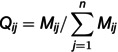 Figure 8
 Figure 9
 Figure 10
 Figure 11
 Figure 12
 Figure 13
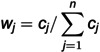 Figure 14
 Figure 15
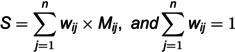 Figure 16
 Figure 17
 Figure 18
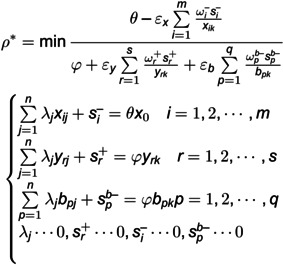 Figure 19
 Figure 20
 Figure 21
 Figure 22
 Figure 23
 Figure 24
 Figure 25
 Figure 26
 Figure 27
 Figure 28
 Figure 29
 Figure 30
 Figure 31
 Figure 32
 Figure 33
 Figure 34
 Figure 35
 Figure 36
 Figure 37
 Figure 38
 Figure 39
 Figure 40
 Figure 41
 Figure 42
 Figure 43
 Figure 44
 Figure 45
 Figure 46
 Figure 47
 Figure 48
 Figure 49
 Figure 50
Peer Reviews
No public reviews on file for this paper yet. If you reviewed it on a platform where reviews are public (OpenReview, ICLR, NeurIPS, ICML), you can paste yours below so the community can read it here.
Videos
No videos yet. Explain this paper in a talk, walkthrough, or lecture? Add one.
Taxonomy
TopicsEnergy, Environment, Economic Growth · Efficiency Analysis Using DEA · Sustainable Finance and Green Bonds