Physiology of body lateralization on regional lung ventilation and lung volumes in healthy subjects: Within-subjects design
Layane S. P. Costa, Cyda M. A. Reinaux, Emanuel F. F. Silva Júnior, Wagner S. Leite, Daniella C. Brandão, Armèle Dornelas de Andrade, Rollin Roldán, Caio C. A. Morais, Shirley Lima Campos

TL;DR
This study examines how lying on one's side affects lung ventilation and volume in healthy individuals, finding that it improves ventilation in dependent lung regions.
Contribution
The study provides new insights into the acute effects of lateral positioning on regional lung function in healthy adults.
Findings
Left-lateral positioning increased ventilation in dependent lung regions and decreased it in nondependent regions.
End-expiratory lung volumes increased in nondependent and posterior dependent regions during lateral positioning.
Bilateral positioning showed no significant changes in regional ventilation but significant changes in lung volumes.
Abstract
Lateral positioning improves pulmonary mechanics and lung volumes, but its effects in healthy adults remain unclear due to individual variability. To analyze the acute effects of lateral body positioning on regional lung ventilation and lung volumes in healthy adults. This within-subject study included two protocols: supine and left-lateral position (unilateral) with repeated measures and supine, left, and right-lateral positions (bilateral). All positions were performed at 30° for 5 minutes on an automated rotation bed. Electrical Impedance Tomography measured regional lung ventilation (%) and end-expiratory lung volumes (EELV) across four lung regions: (anterior right [AR] and left [AL]; posterior right [PR], and left [PL]). Linear mixed models assessed the influence of body position and individual variability on regional ventilation and lung volumes, while the Restricted Maximum…
Genes, proteins, chemicals, diseases, species, mutations and cell lines named across the full text — each resolved to its canonical identifier and authoritative record.
Click any figure to enlarge with its caption.
 Figure 1
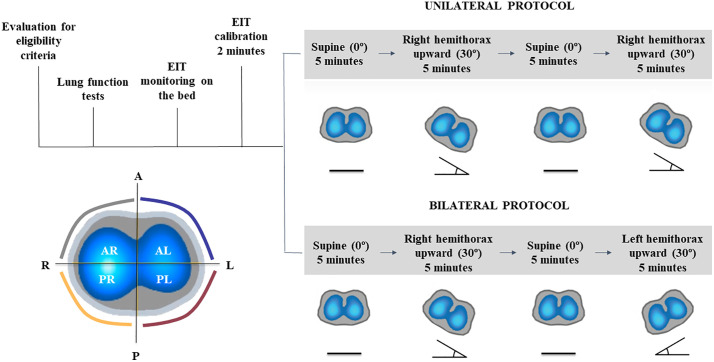 Figure 2
 Figure 3
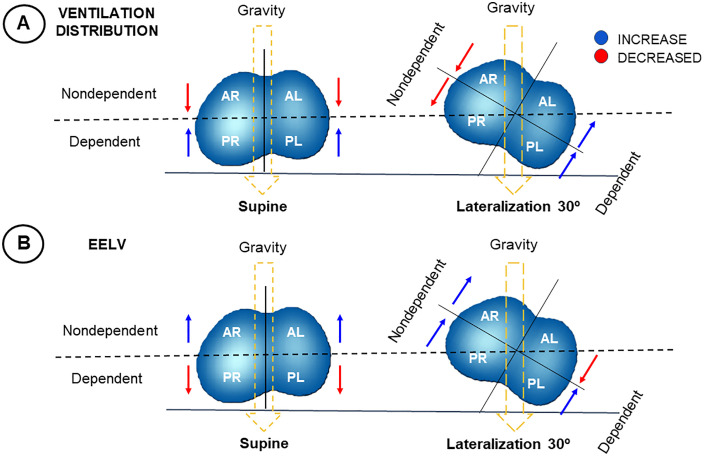 Figure 4
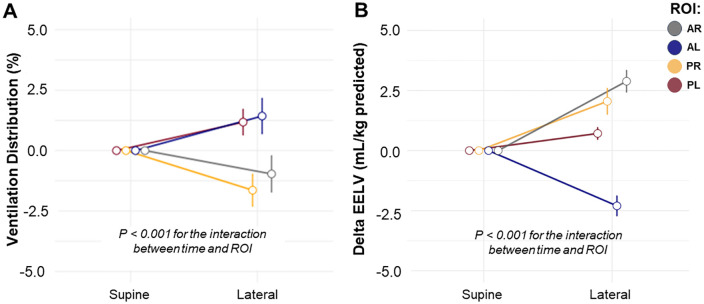 Figure 5
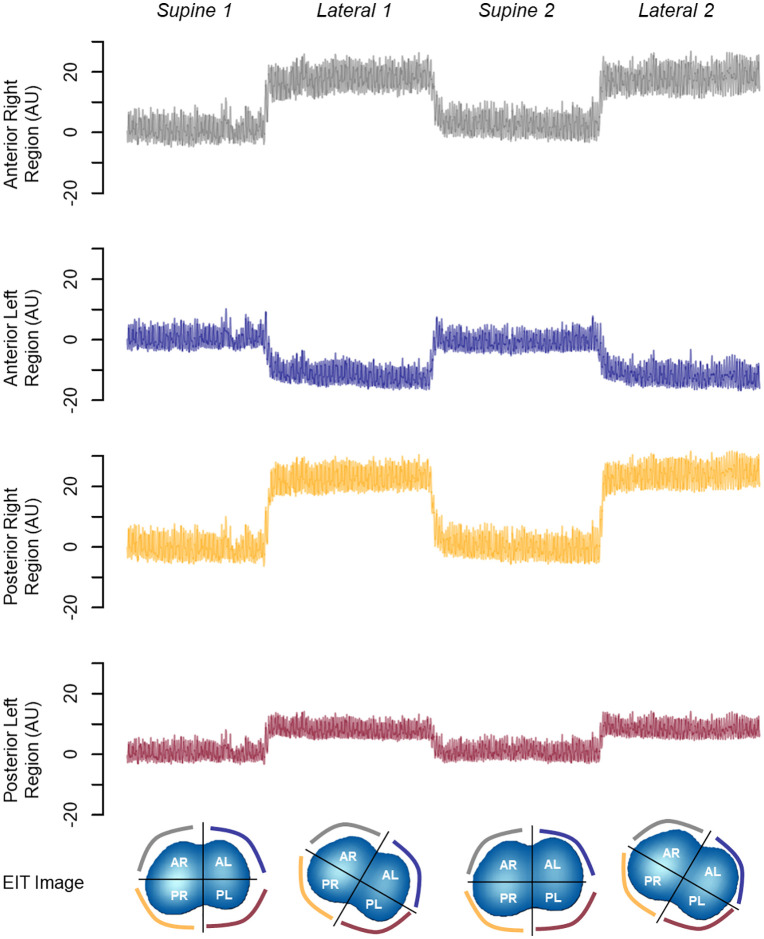 Figure 6
 Figure 7
Peer Reviews
No public reviews on file for this paper yet. If you reviewed it on a platform where reviews are public (OpenReview, ICLR, NeurIPS, ICML), you can paste yours below so the community can read it here.
Videos
No videos yet. Explain this paper in a talk, walkthrough, or lecture? Add one.
Taxonomy
TopicsHemispheric Asymmetry in Neuroscience · Chronic Obstructive Pulmonary Disease (COPD) Research · Electromagnetic Fields and Biological Effects