Psychosocial interventions for improving marital intimacy, sexual satisfaction, and quality of life of women and couples with infertility problems in low and middle-income countries: Systematic review protocol
Stella Sarpomaa Oppong, Florence Naab, Isaiah Osei Duah, Samuel Ankamah, David Owiredu, Francisca Happy Ametor, Mercy Monde Imakando, Josephine Mpomaa Kyei, Anthony Danso-Appiah

TL;DR
This study will review psychosocial interventions to improve relationships and quality of life for infertile couples in low- and middle-income countries.
Contribution
The study introduces a systematic review protocol to evaluate psychosocial interventions for infertility in LMICs, focusing on marital and sexual well-being.
Findings
The review will assess the effectiveness of psychosocial interventions for improving marital intimacy and sexual satisfaction.
It will identify interventions that may have been overlooked due to small sample sizes in previous studies.
Findings will guide clinical and public health strategies for infertile couples in low- and middle-income countries.
Abstract
Psychosocial interventions can be effective in improving health outcomes and quality of life of persons with infertility problems. This systematic review aims to document available psychosocial interventions for infertility-related problems in Low- and Middle-Income Countries (LMICs) and to assess their effectiveness for marital intimacy, sexual satisfaction, and quality of life (QoL) in people with infertility problems. Studies will be considered eligible if they are randomized controlled trials (RCTs), quasi-experimental studies, and Observational studies (cohort, case-control, cross-sectional studies) involving women and couples with infertility problems and living in a LMIC who received a psychosocial intervention to improve marital intimacy, sexual satisfaction, and QoL. We will search PubMed, SCOPUS, CINAHL, LILACS, CENTRAL, and PsycINFO (EBSCO) from inception to 31st March 2025,…
Genes, proteins, chemicals, diseases, species, mutations and cell lines named across the full text — each resolved to its canonical identifier and authoritative record.
Click any figure to enlarge with its caption.
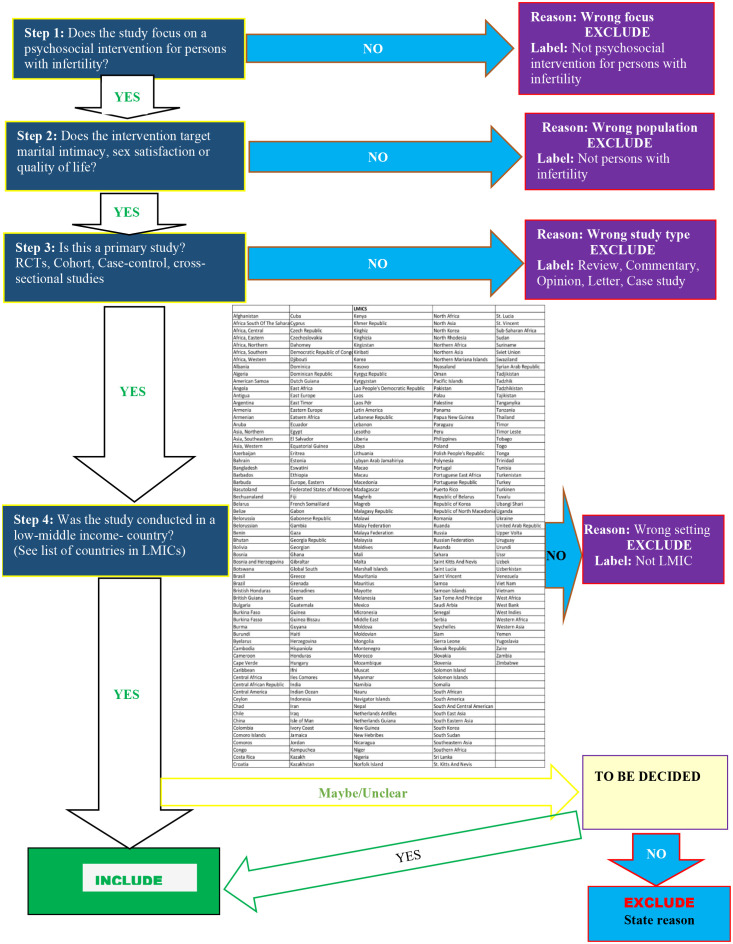 Figure 1
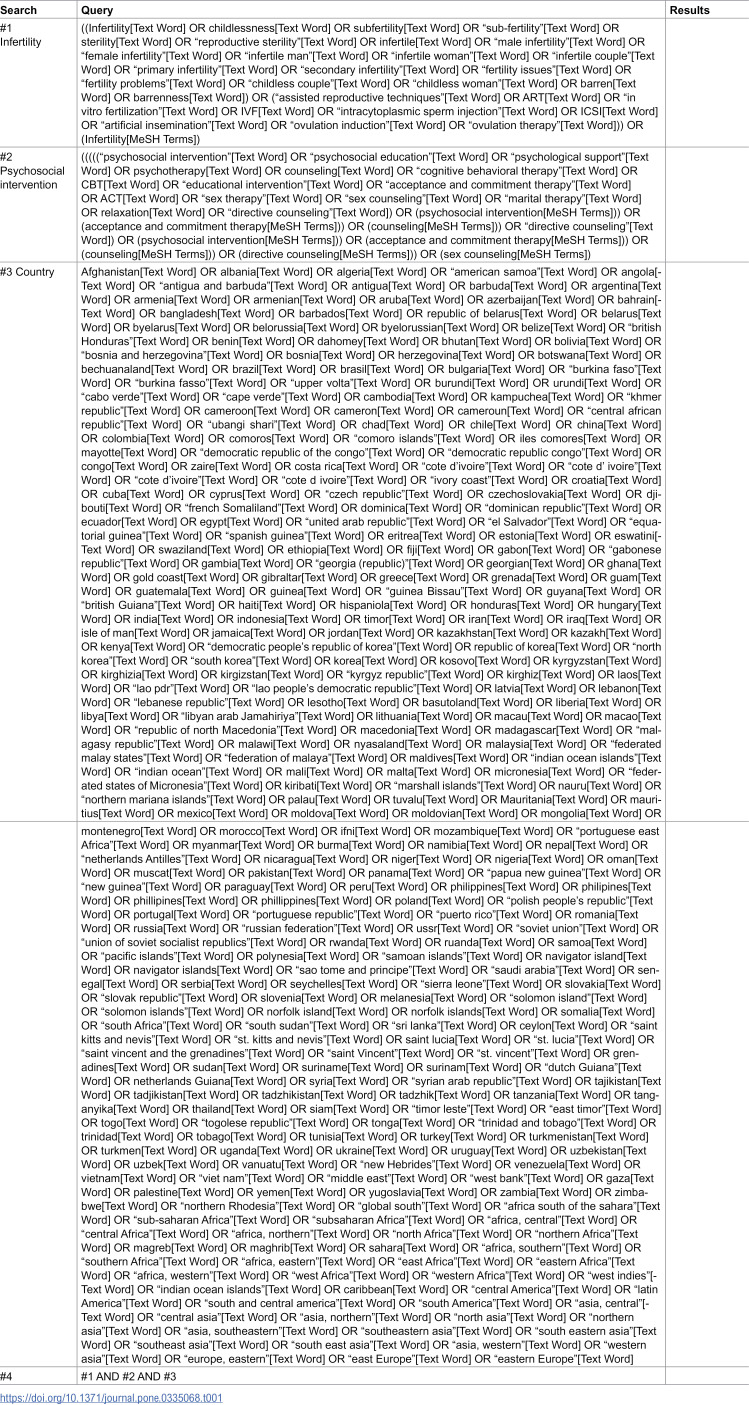 Figure 2
Peer Reviews
No public reviews on file for this paper yet. If you reviewed it on a platform where reviews are public (OpenReview, ICLR, NeurIPS, ICML), you can paste yours below so the community can read it here.
Videos
No videos yet. Explain this paper in a talk, walkthrough, or lecture? Add one.
Taxonomy
TopicsReproductive Health and Technologies · Family Dynamics and Relationships · Ovarian function and disorders