Pollen-foraging preferences of honey bee colonies (Apis mellifera L.) based on plant bloom timing in an urbanized Northeast U.S. habitat
Cole F.P. Moran-Bariso, David C. Gilley

TL;DR
Honey bees adaptively choose and reject pollen sources based on plant bloom timing in an urbanized area, showing dynamic foraging behavior.
Contribution
This study provides a high-resolution, temporal analysis of honey bee pollen foraging decisions and plant phenology in an urbanized habitat.
Findings
Honey bees collected an average of 5.6 pollen sources per week, rejecting many available options.
Bees adopted an average of 2.3 new pollen sources per week, demonstrating adaptive tracking of ephemeral floral resources.
The study identified 33 plant species collected in detectable amounts over the season.
Abstract
To successfully provision the colony with protein and other essential nutrients, honey bee colonies track ephemeral floral food sources and make adaptive group decisions about which pollen species to reject, which to collect, and in what quantities. This descriptive study has two objectives; 1) to document pollen diet-choice decisions (both acceptance and rejection) in freely foraging honey bee colonies at high temporal resolution over an entire foraging season, and 2) to create a phenological calendar for the mutualism between honey bees and their pollen-food source plants that can be used to assess possible future phenological mismatch. We used pollen traps to harvest pollen weekly from two honey bee colonies from May until October (2023) to determine the relative abundances of pollen sources utilized. We simultaneously monitored in the field plant-bloom timeframes of 41 known honey…
Genes, proteins, chemicals, diseases, species, mutations and cell lines named across the full text — each resolved to its canonical identifier and authoritative record.
Click any figure to enlarge with its caption.
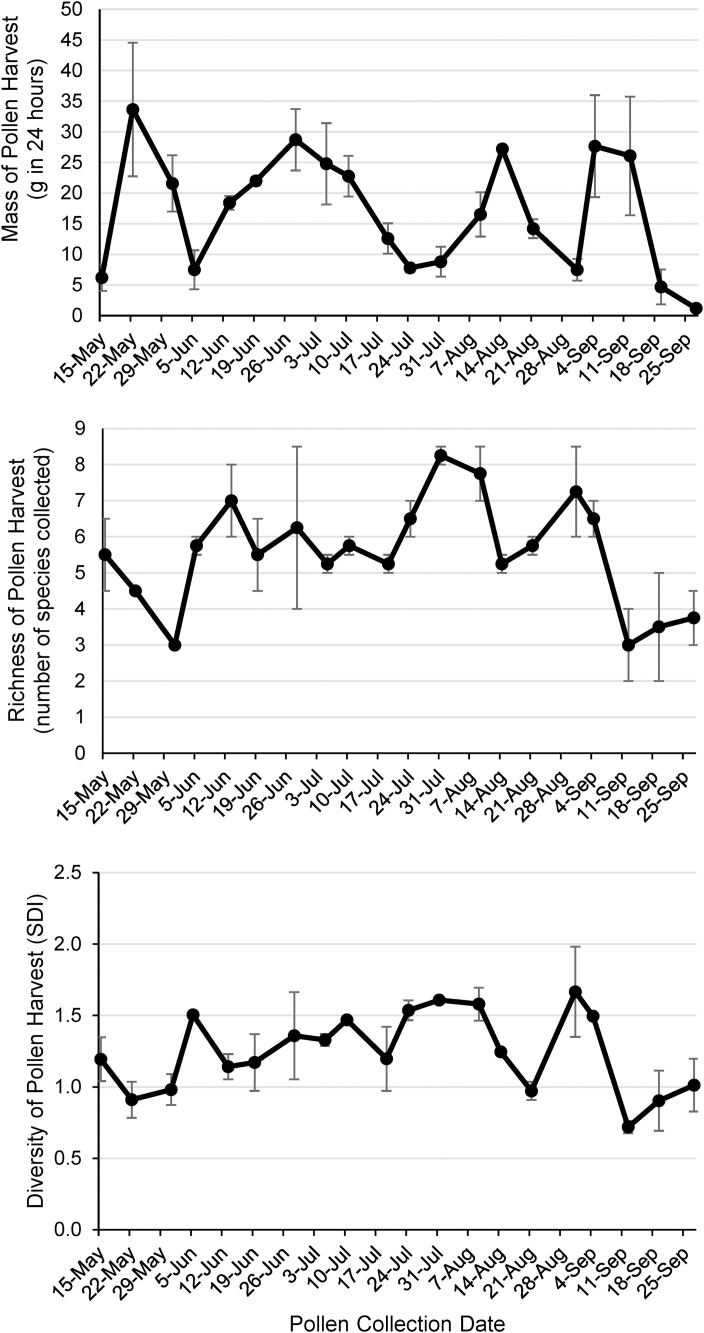 Figure 1
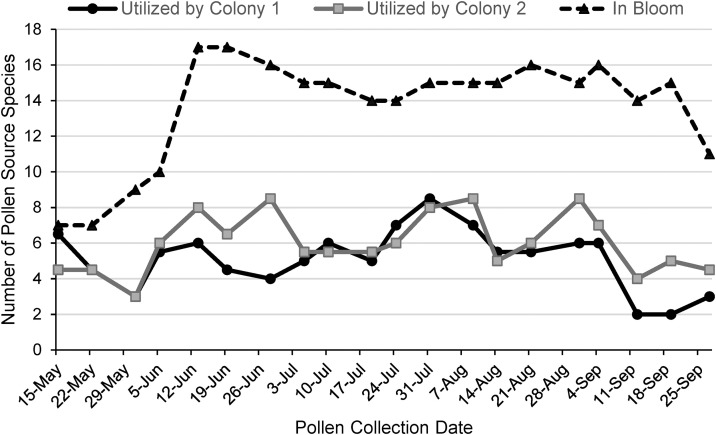 Figure 2
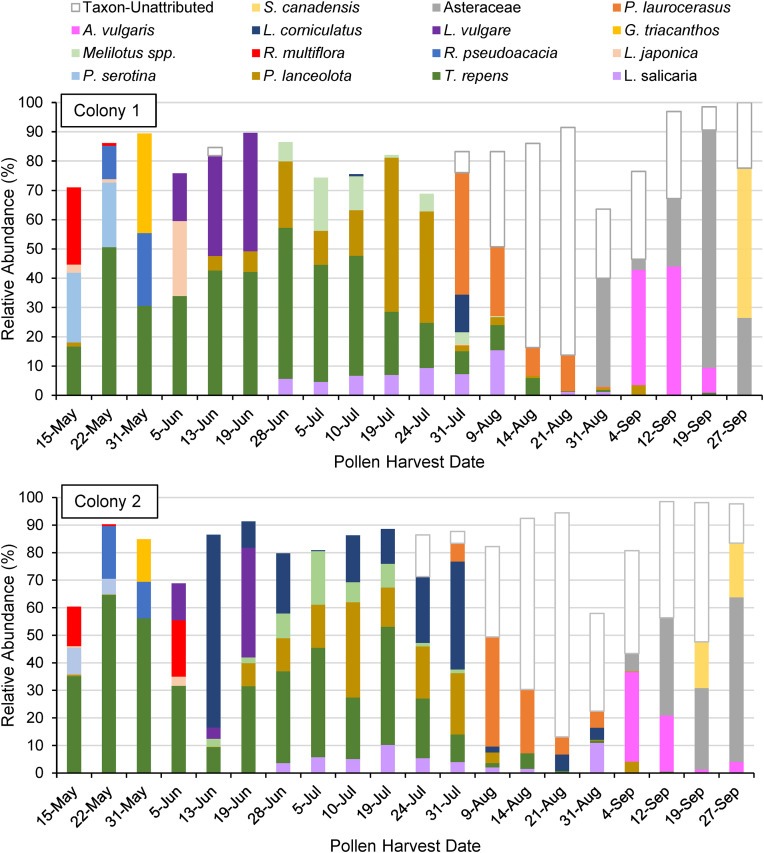 Figure 3
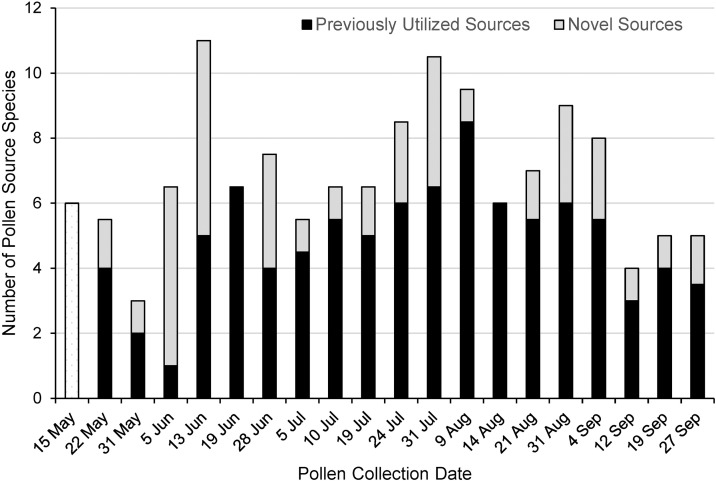 Figure 4
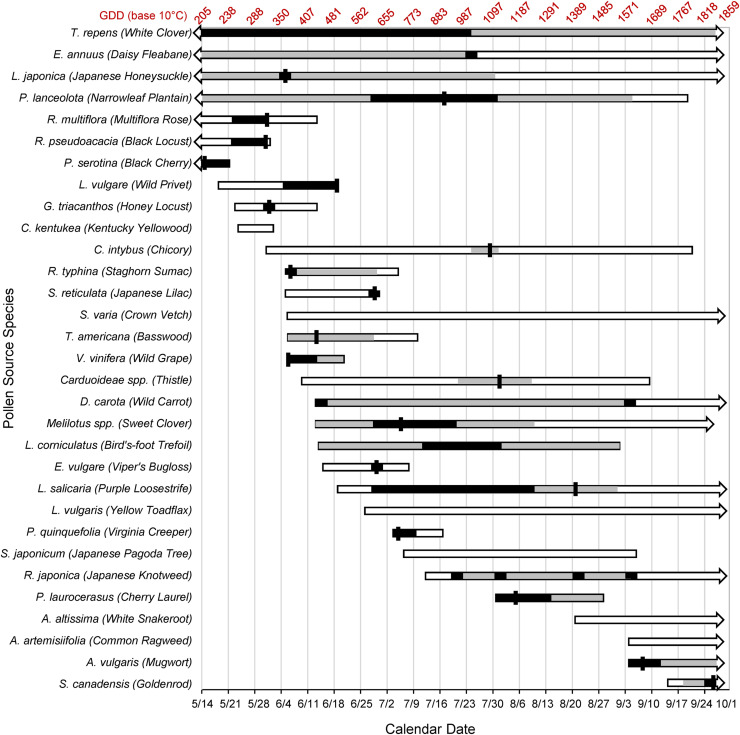 Figure 5
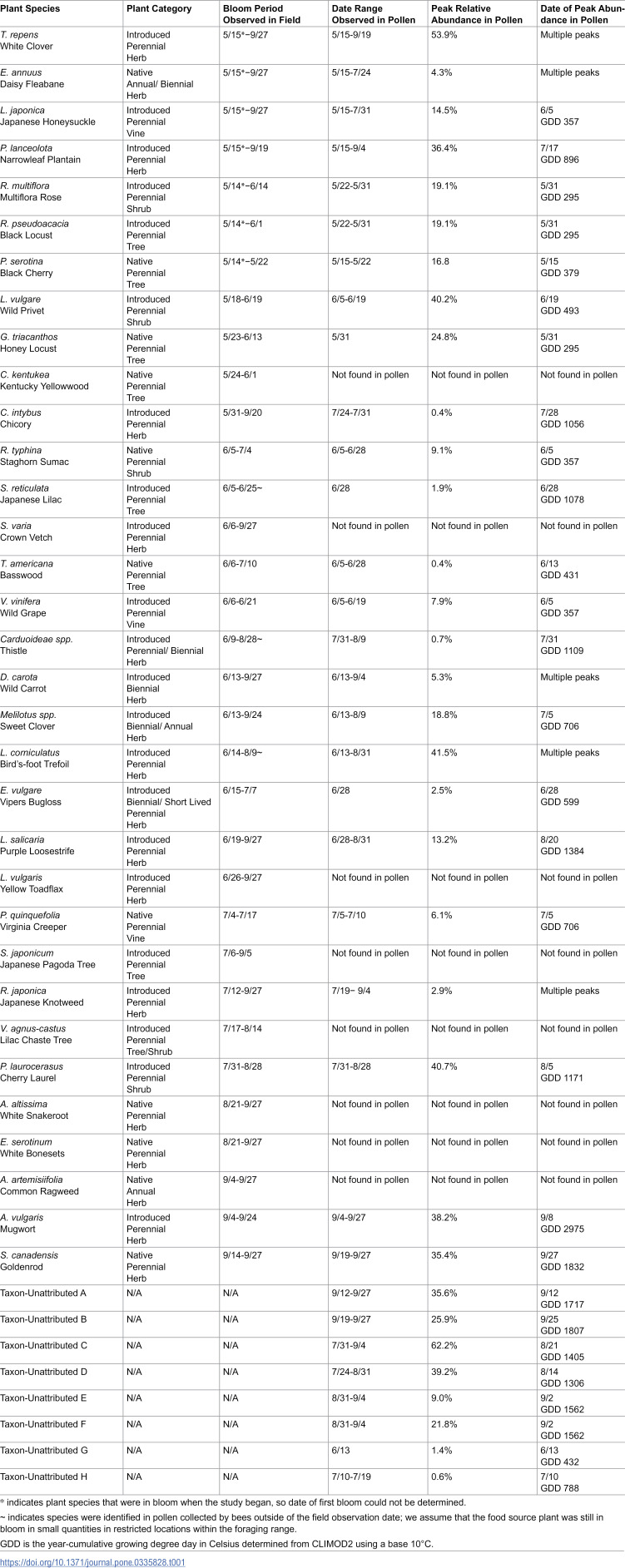 Figure 6
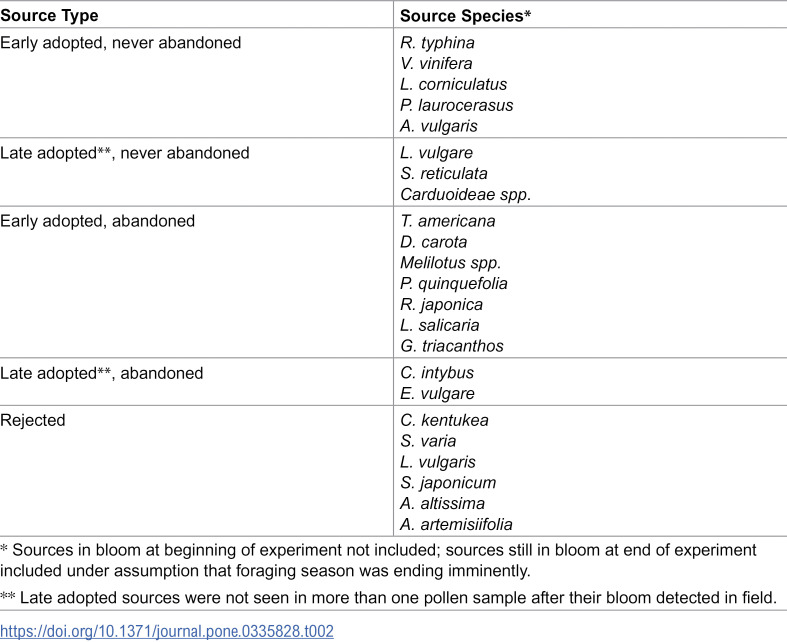 Figure 7
Peer Reviews
No public reviews on file for this paper yet. If you reviewed it on a platform where reviews are public (OpenReview, ICLR, NeurIPS, ICML), you can paste yours below so the community can read it here.
Videos
No videos yet. Explain this paper in a talk, walkthrough, or lecture? Add one.
Taxonomy
TopicsPlant and animal studies · Insect and Arachnid Ecology and Behavior · Insect and Pesticide Research