Interpretable ensemble learning model with shapley additive explanations for predicting anxiety symptoms risk in Chinese older adults with body shape index abnormality
Kai Wang

TL;DR
This study developed an interpretable model to predict anxiety risk in older Chinese adults with abnormal body shape, using explainable AI methods and finding that body shape index is a better predictor than BMI.
Contribution
The novel contribution is an interpretable ensemble model with SHAP explanations for anxiety prediction in older adults with abnormal body shape index.
Findings
ABSI is positively associated with anxiety symptoms, with stronger effects in males compared to females.
The Boosting-ADASYN model achieved high internal and external AUC values for anxiety prediction.
SHAP identified key predictors including marital status, age, health, education, and happiness.
Abstract
This study aimed to construct and validate an interpretable risk prediction model for anxiety symptoms in Chinese older adults with abnormal body shape, explore the association between A Body Shape Index (ABSI) and anxiety symptoms, and identify key predictive factors via explainable methods. Data were from the Chinese Longitudinal Healthy Longevity Survey (CLHLS) 2008–2014 (n = 1,844/2,663/3,058 for 2008/2011/2014). The 2008 data (80% training, 20% internal validation) and 2011/2014 data (external validation) were used. Feature selection, data balancing, ensemble learning (Boosting/Stacking/Voting), and Shapley Additive exPlanations (SHAP) were applied. ABSI was positively associated with anxiety symptoms (P = 0.038), with stronger effects in males (trend slope = 0.03) than females (0.02); female anxiety prevalence (39.37%) was higher than males (20.79%). The Boosting-ADASYN model…
Genes, proteins, chemicals, diseases, species, mutations and cell lines named across the full text — each resolved to its canonical identifier and authoritative record.
Click any figure to enlarge with its caption.
 Figure 1
 Figure 2
 Figure 3
 Figure 4
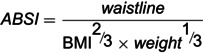 Figure 5
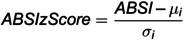 Figure 6
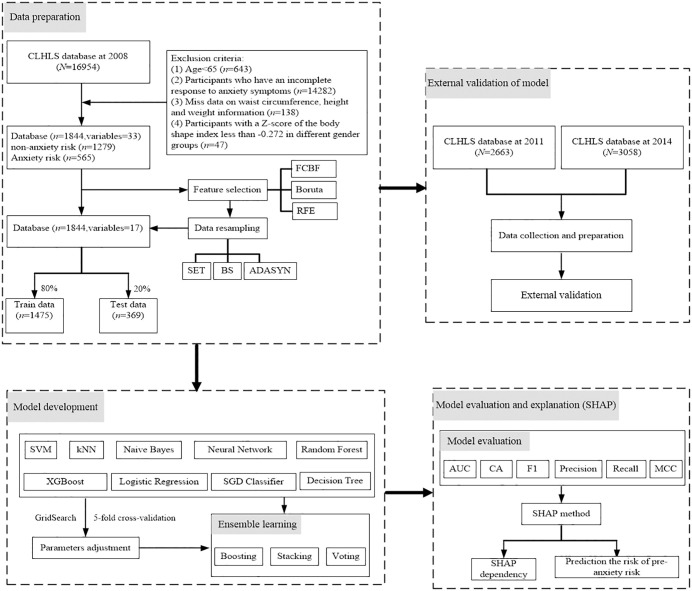 Figure 7
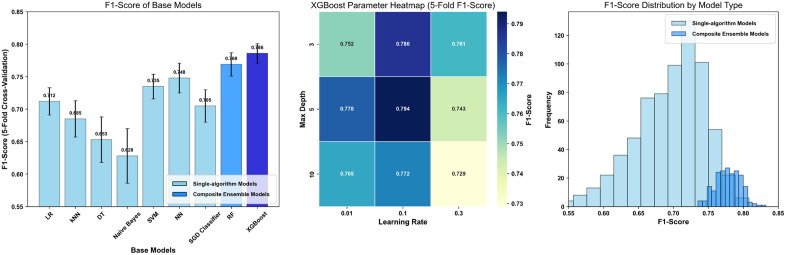 Figure 8
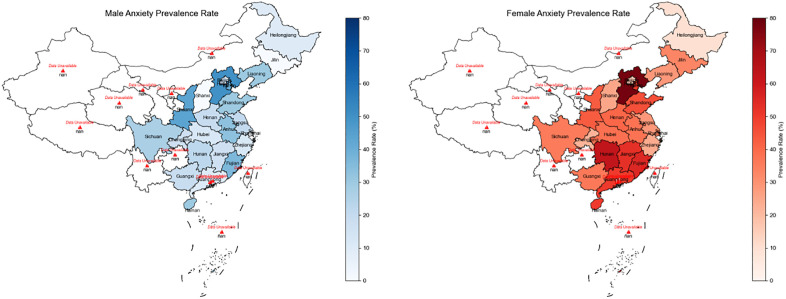 Figure 9
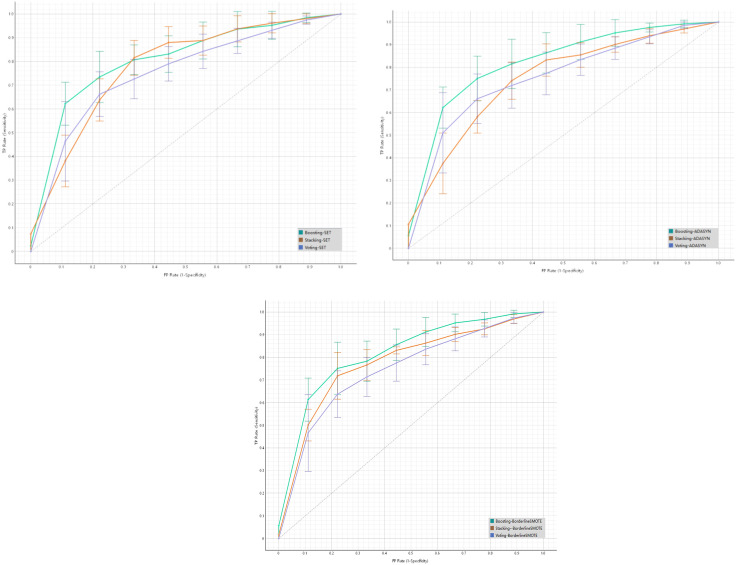 Figure 10
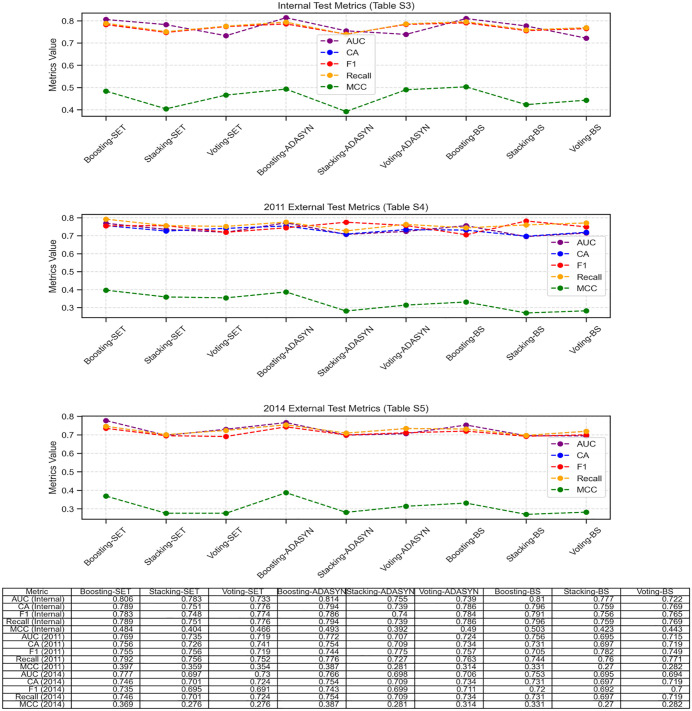 Figure 11
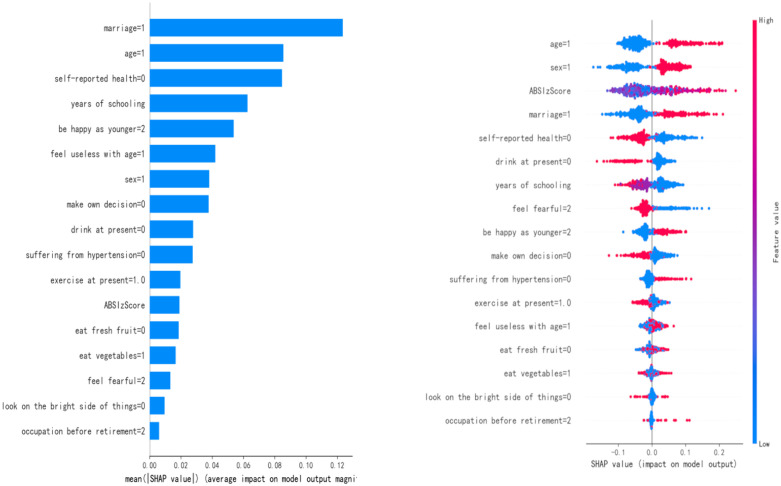 Figure 12
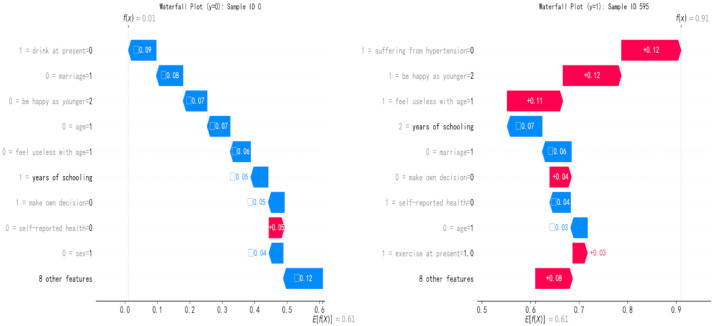 Figure 13
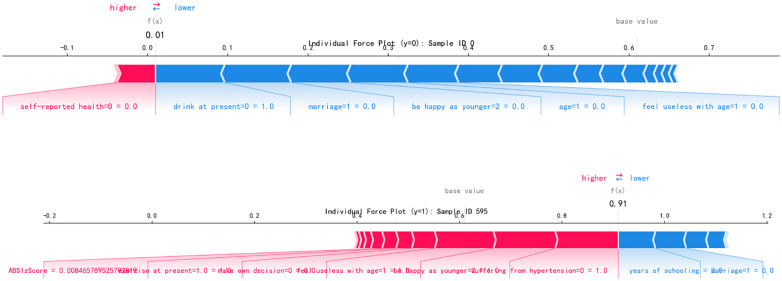 Figure 14
Peer Reviews
No public reviews on file for this paper yet. If you reviewed it on a platform where reviews are public (OpenReview, ICLR, NeurIPS, ICML), you can paste yours below so the community can read it here.
Videos
No videos yet. Explain this paper in a talk, walkthrough, or lecture? Add one.
Taxonomy
TopicsEating Disorders and Behaviors · Bariatric Surgery and Outcomes · Mental Health via Writing