Significance of the drug-induced lymphocyte stimulation test for various oral mesalamines in ulcerative colitis with mesalamine intolerance
Akira Madarame, Masakatsu Fukuzawa, Kumiko Uchida, Tadashi Ichimiya, Sakiko Naito, Yoshiya Yamauchi, Takashi Morise, Yasuyuki Kagawa, Takahiro Muramatsu, Takao Itoi, Mohammed Misbah Ul Haq, Mohammed Misbah Ul Haq, Mohammed Misbah Ul Haq, Mohammed Misbah Ul Haq

TL;DR
This study explores how a drug-induced lymphocyte stimulation test (DLST) can help identify patients with ulcerative colitis who are intolerant to mesalamine and predict whether retreatment will be successful.
Contribution
The study introduces DLST as a potential diagnostic and predictive tool for mesalamine intolerance and retreatment outcomes in ulcerative colitis patients.
Findings
Positive DLST results and older age at diagnosis are associated with mesalamine intolerance.
Higher DLST values and older age at diagnosis are linked to retreatment failure in mesalamine-intolerant patients.
DLSTs for various mesalamine formulations may predict intolerance and retreatment outcomes, though with risks of false results.
Abstract
This study aimed to determine if the drug-induced lymphocyte stimulation test (DLST) for various oral mesalamines can diagnose mesalamine intolerance and predict the success of retreatment in patients with adverse events (AEs) due to the first oral 5-aminosalicylate (5-ASA) formulations administered. Data from patients with ulcerative colitis who experienced AEs after administration of the first oral 5-ASA and underwent DLSTs for two or more types of mesalamine, including the first oral 5-ASA were retrospectively analyzed. Mesalamine intolerance was defined as AEs within 6 months of starting the first oral 5-ASA and the inability to take oral mesalamine. Clinical characteristics, symptoms, type of first oral 5-ASA, DLST results, and the efficacy of retreatment with oral mesalamine were compared. The DLST for the first oral 5-ASA (F-DLST), highest DLST among the different oral mesalamine…
Genes, proteins, chemicals, diseases, species, mutations and cell lines named across the full text — each resolved to its canonical identifier and authoritative record.
Click any figure to enlarge with its caption.
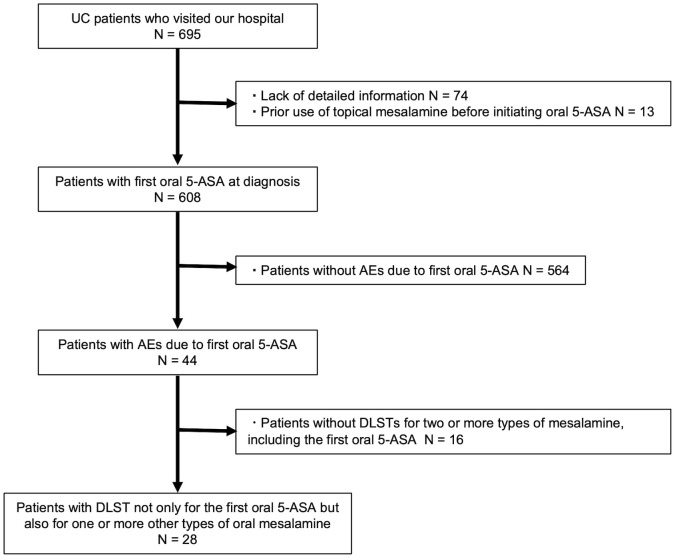 Figure 1
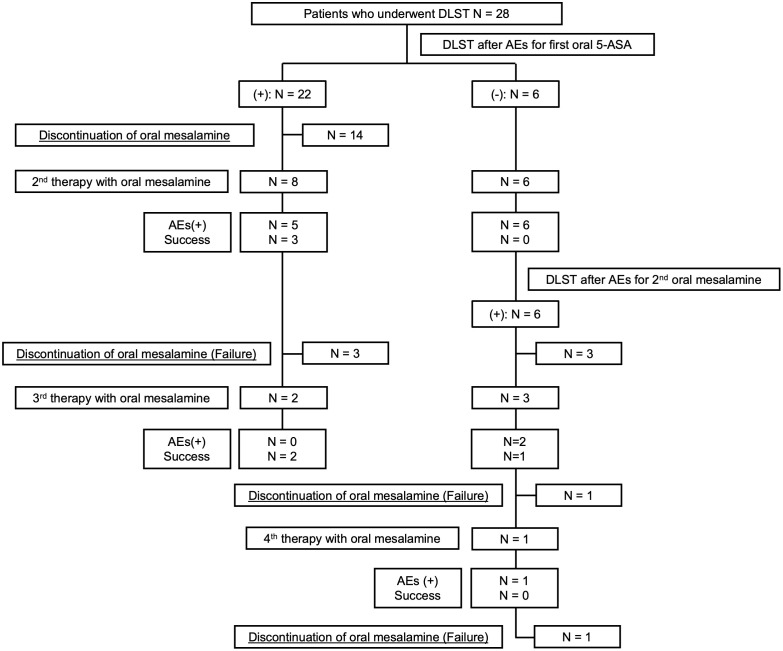 Figure 2
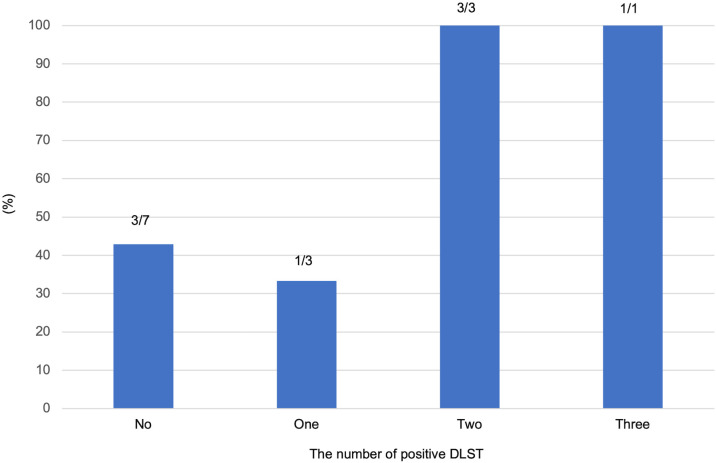 Figure 3
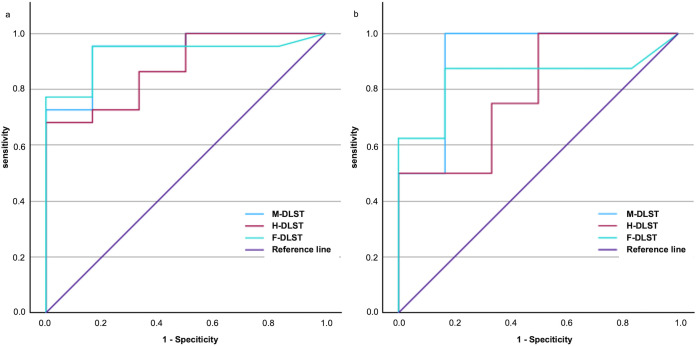 Figure 4
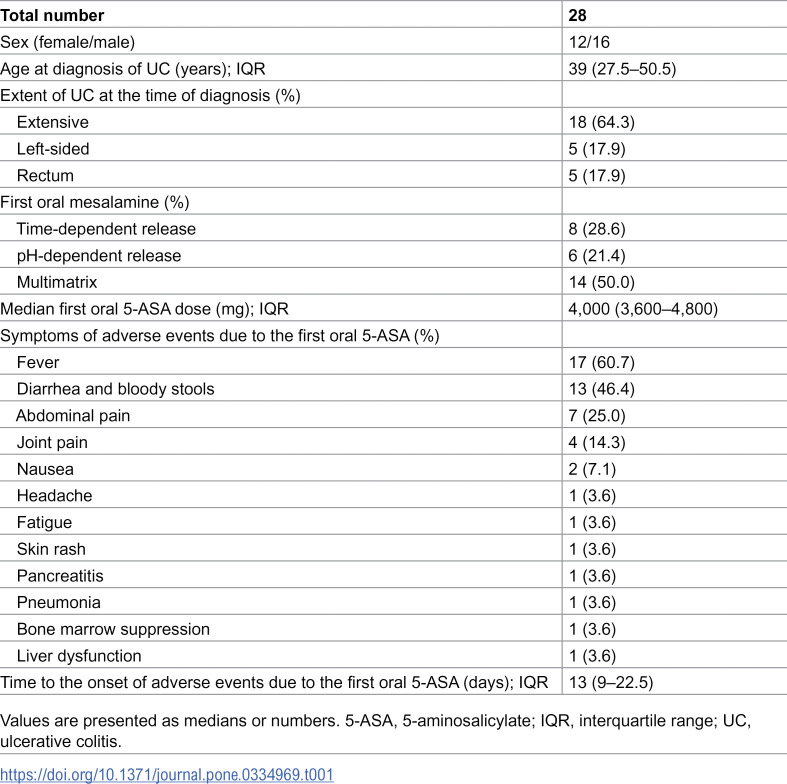 Figure 5
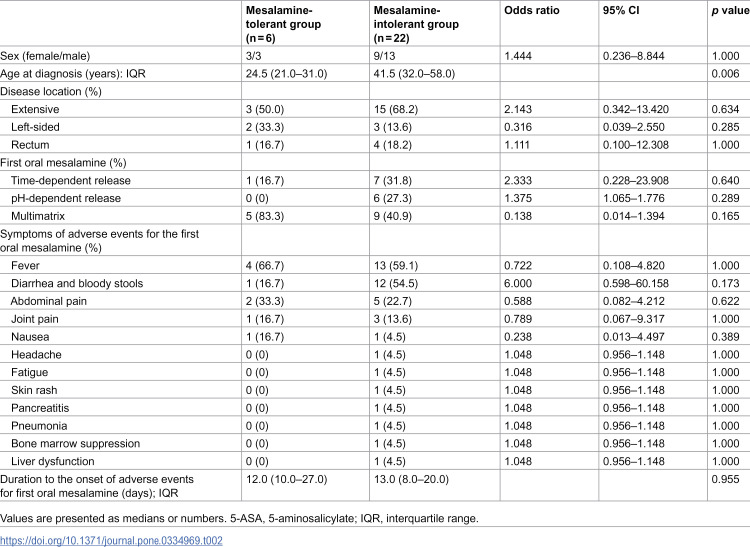 Figure 6
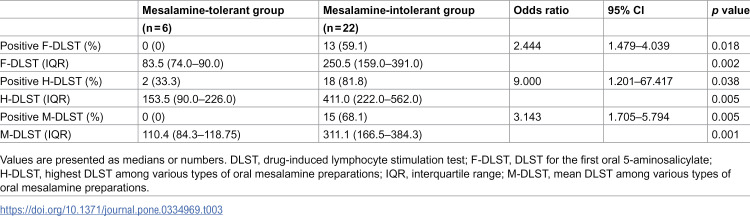 Figure 7
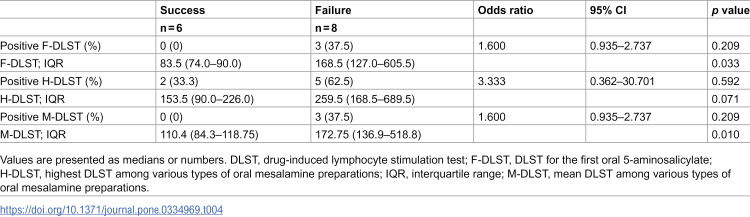 Figure 8
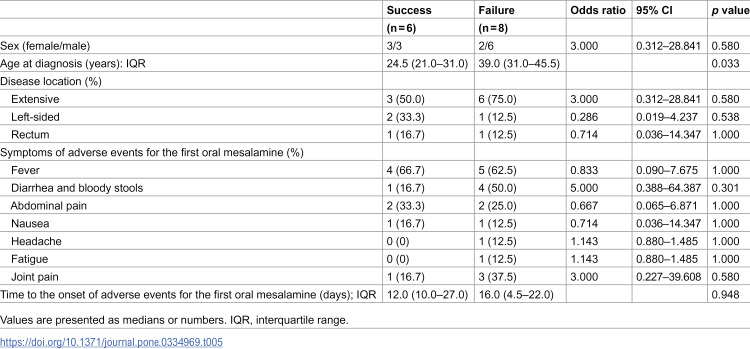 Figure 9
Peer Reviews
No public reviews on file for this paper yet. If you reviewed it on a platform where reviews are public (OpenReview, ICLR, NeurIPS, ICML), you can paste yours below so the community can read it here.
Videos
No videos yet. Explain this paper in a talk, walkthrough, or lecture? Add one.
Taxonomy
TopicsInflammatory Bowel Disease · Drug-Induced Adverse Reactions · Microscopic Colitis