Deficits in Motion and Form Perception in Infantile Nystagmus Syndrome
Mahesh R. Joshi, Aastha Subedi, Gyan B. Basnet, Asma A. A. Zahidi, Hari B. Adhikari

TL;DR
Infantile nystagmus syndrome causes reduced sensitivity to motion and form perception due to higher internal noise in visual processing.
Contribution
The study identifies higher internal noise as the primary cause of visual deficits in INS, distinguishing it from sampling efficiency issues.
Findings
INS participants had significantly higher motion and orientation coherence thresholds compared to controls.
Higher internal noise, not sampling efficiency, explains the visual perception deficits in INS.
Performance differences between INS and controls were evident at lower noise levels but not at the highest noise level.
Abstract
Visual deficits in infantile nystagmus syndrome (INS) could be a result of retinal blur from excessive eye movements and/or cortical changes from visual deprivation. We measured global motion and form sensitivity in INS to compare deficits between motion and form perception and to decipher the role of internal noise (local deficit such as eye movement) and sampling efficiency (global cortical deficit). A total of 30 participants (14.40 ± 4.83 years) with INS and 30 age-matched controls discriminated the direction of motion and orientation of physically equivalent translational random dot kinematograms (RDKs) and Glass patterns. Both stimuli consisted of 240 black dots (RDKs) and 120 pairs of dipoles (Glass patterns) with a display duration of 1.0 second. Two experimental paradigms were employed: coherence threshold (random noise) and equivalent noise (at five external noise levels).…
Genes, proteins, chemicals, diseases, species, mutations and cell lines named across the full text — each resolved to its canonical identifier and authoritative record.
Click any figure to enlarge with its caption.
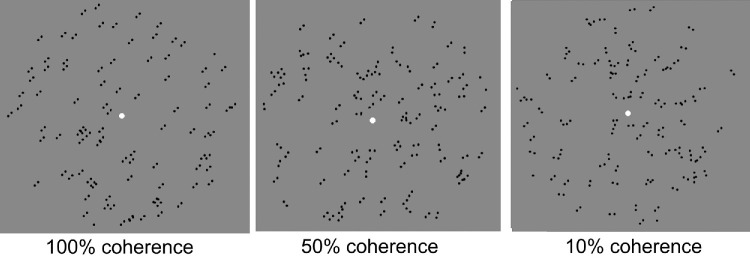 Figure 1
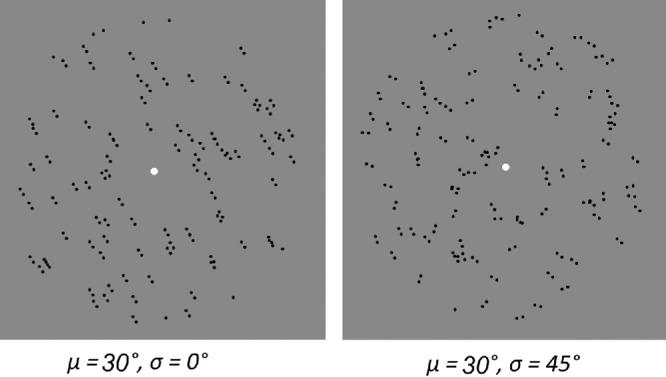 Figure 2
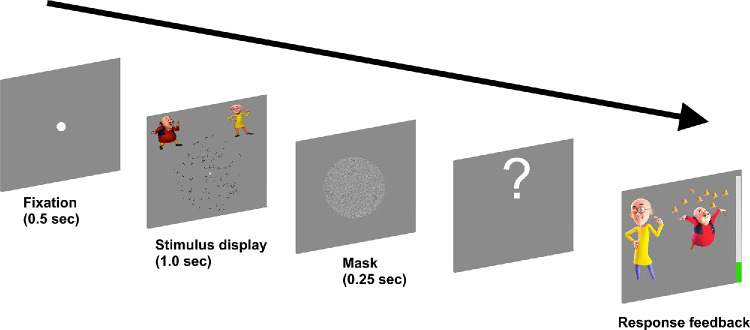 Figure 3
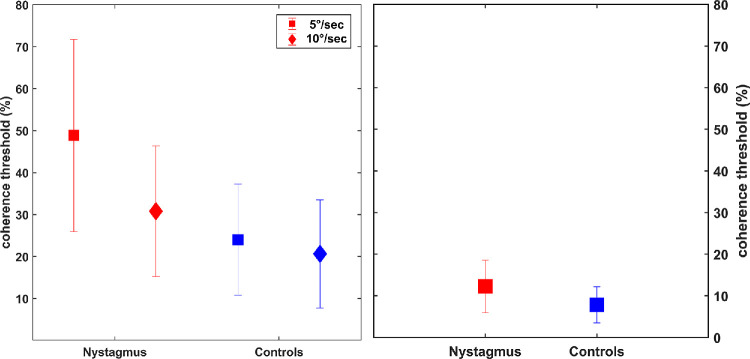 Figure 4
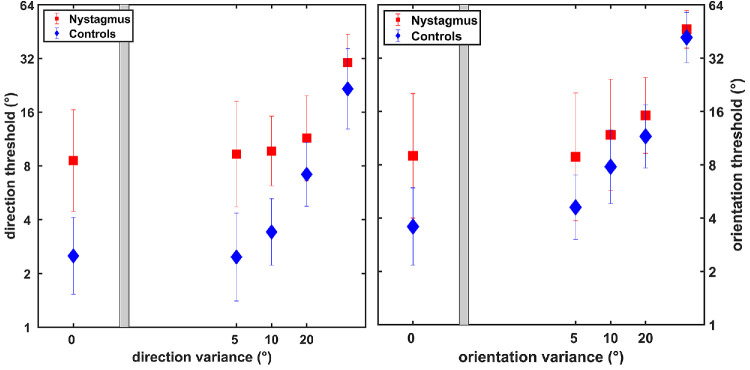 Figure 5
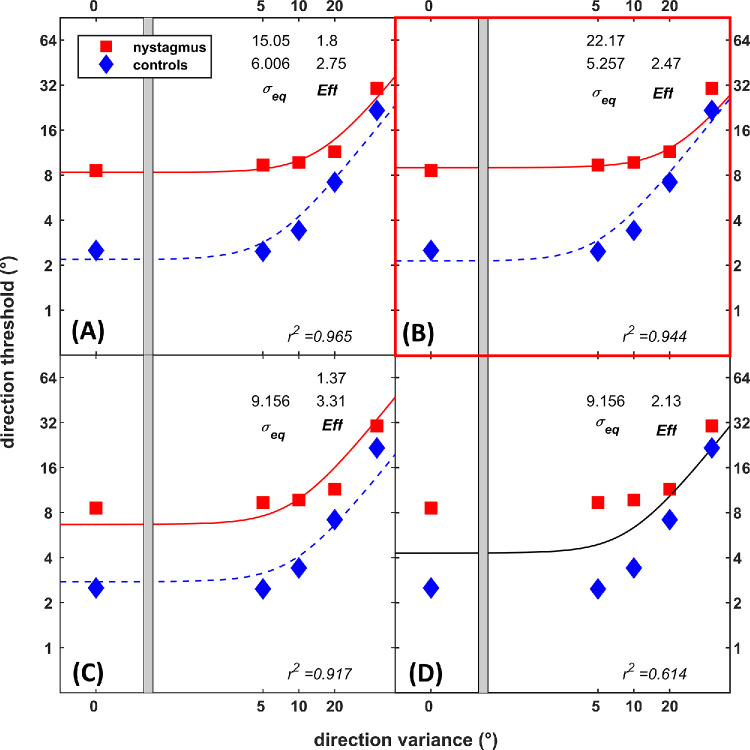 Figure 6
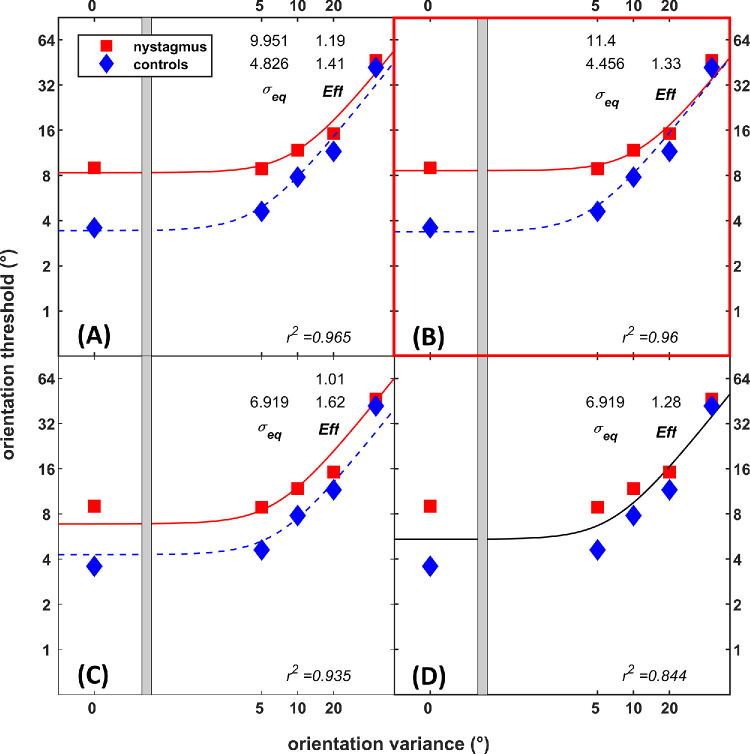 Figure 7
Peer Reviews
No public reviews on file for this paper yet. If you reviewed it on a platform where reviews are public (OpenReview, ICLR, NeurIPS, ICML), you can paste yours below so the community can read it here.
Videos
No videos yet. Explain this paper in a talk, walkthrough, or lecture? Add one.
Taxonomy
TopicsVisual perception and processing mechanisms · Vestibular and auditory disorders · Tactile and Sensory Interactions