A comparison of multiple amyloid PET radiotracers for Down syndrome clinical trials
Matthew Zammit, Julie Price, Bradley Christian, Michael Rafii, Beau M Ances, Beau M Ances, Howard F Andrews, Karen Bell, Rasmus M Birn, Adam M Brickman, Peter Bulova, Jeff Burns, Amrita Cheema, Kewei Chen, Bradley T Christian, Isabel Clare, Ann D Cohen, Eric W Doran

TL;DR
This study compares different amyloid PET radiotracers used in Down syndrome clinical trials and finds they estimate similar amyloid onset ages despite varying sensitivity.
Contribution
The study provides a direct comparison of amyloid PET radiotracers in Down syndrome, showing consistent amyloid onset age estimates across tracers.
Findings
Pittsburgh compound B showed greater sensitivity to measure longitudinal amyloid change compared to florbetapir.
NAV4694 and Pittsburgh compound B had similar sensitivity to detect longitudinal amyloid increase.
Estimated age at amyloid onset was consistent across all tested radiotracers.
Abstract
Adults with Down syndrome carry high risk of developing Alzheimer’s disease and efforts to include this population in clinical trials remain limited. A barrier to recruitment for anti-amyloid trials includes the availability of the same amyloid PET radiotracer to multiple treatment centres. The objective of the study is to compare longitudinal rates of change between different amyloid PET radiotracers, particularly Pittsburgh compound B and florbetapir, in Down syndrome and to compare the estimated age at amyloid-positivity derived from these radiotracers. Two hundred thirty-seven adults with Down syndrome from the Trial Ready Cohort-Down syndrome and Alzheimer’s Biomarker Consortium-Down syndrome studies were imaged using T1-weighted MRI and using PET images of Pittsburgh compound B, florbetapir, NAV4694 or flutemetamol to screen for amyloid plaque burden. Currently, Pittsburgh…
Genes, proteins, chemicals, diseases, species, mutations and cell lines named across the full text — each resolved to its canonical identifier and authoritative record.
Click any figure to enlarge with its caption.
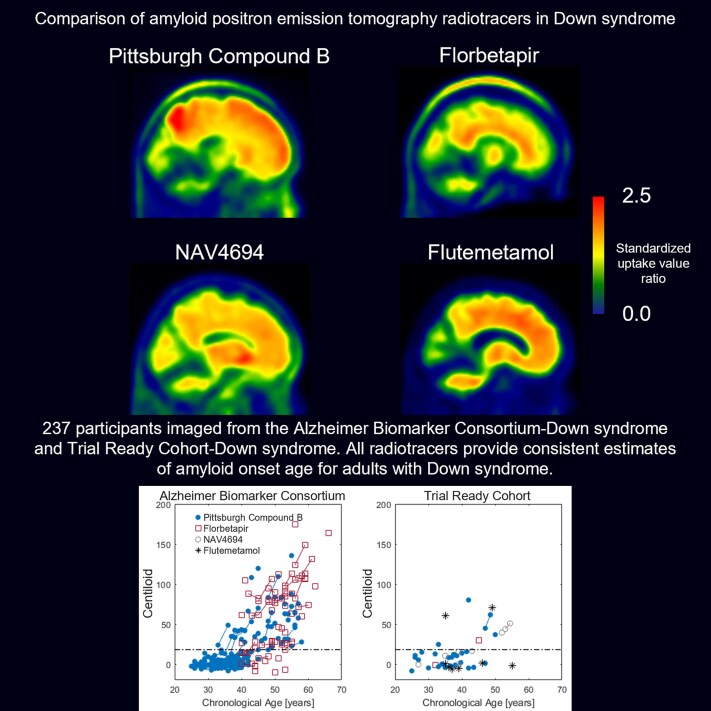 Figure 1
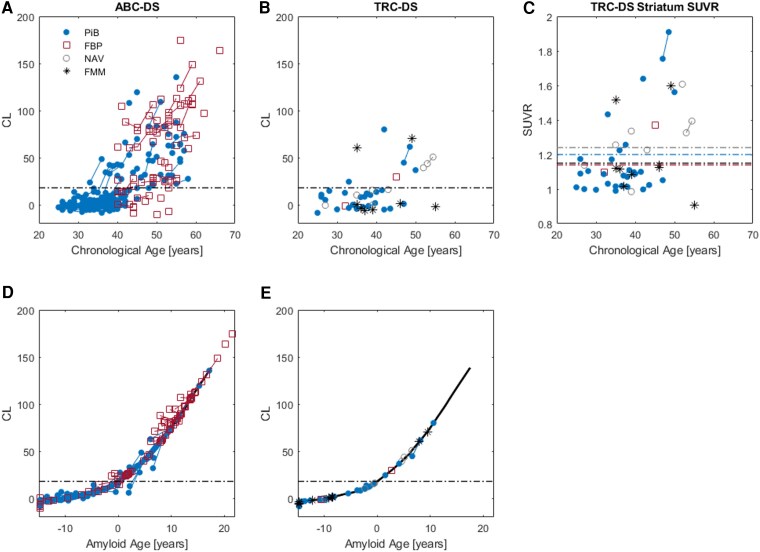 Figure 2
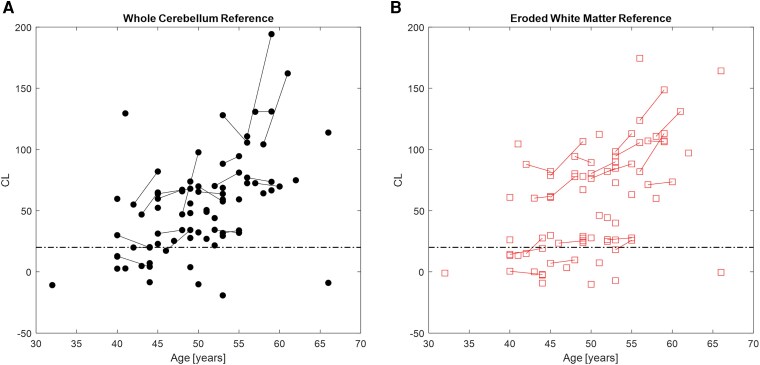 Figure 3
Peer Reviews
No public reviews on file for this paper yet. If you reviewed it on a platform where reviews are public (OpenReview, ICLR, NeurIPS, ICML), you can paste yours below so the community can read it here.
Videos
No videos yet. Explain this paper in a talk, walkthrough, or lecture? Add one.
Taxonomy
TopicsMedical Imaging Techniques and Applications · Down syndrome and intellectual disability research