Muscle-Restricted Nicotinamide Adenine Dinucleotide Phosphate Oxidase 4 Knockout Partially Corrects Muscle Contractility After Spinal Cord Injury in Mice
Carlos A. Toro, Rita De Gasperi, Abdurrahman Aslan, Nicholas Johnson, Mustafa M. Siddiq, Christine Chow, Wei Zhao, Lauren Harlow, Zachary Graham, Xin-Hua Liu, Junichi Sadoshima, Ravi Iyengar, Christopher P. Cardozo

TL;DR
Disabling Nox4 in mouse muscles partially improves muscle strength after spinal cord injury.
Contribution
This study shows that muscle-specific Nox4 knockout improves muscle contractility after SCI in mice.
Findings
SCI reduced peak twitch force by 42% in control mice but improved by 43% in Nox4 KO mice.
Nox4 expression and RyR1 oxidation were not increased in gastrocnemius muscle after SCI.
Nox4 appears to directly contribute to reduced muscle force after SCI.
Abstract
Spinal cord injury (SCI) results in severe atrophy of skeletal muscle in paralyzed regions, and a decrease in the force generated by muscle per unit of cross-sectional area. Oxidation of skeletal muscle ryanodine 1 receptors (RyR1) reduces contractile force as a result of reduced binding of calstabin 1 to RyR1. One cause of RyR1 oxidation is nicotinamide adenine dinucleotide phosphate (NADPH) oxidase 4 (Nox4). We have previously shown that, in rats, RyR1 was oxidized and bound less to calstabin 1 at 56 days after SCI by spinal cord transection. Here, we used a conditional knockout (KO) mouse model of Nox4 in skeletal muscle to investigate the role of Nox4 in reduced muscle specific force after SCI. Peak twitch force of extensor digitorum longus muscles in control mice after SCI was reduced by 42% compared with sham-operated controls, but was increased by ∼43% in SCI Nox4 conditional KO…
Genes, proteins, chemicals, diseases, species, mutations and cell lines named across the full text — each resolved to its canonical identifier and authoritative record.
Click any figure to enlarge with its caption.
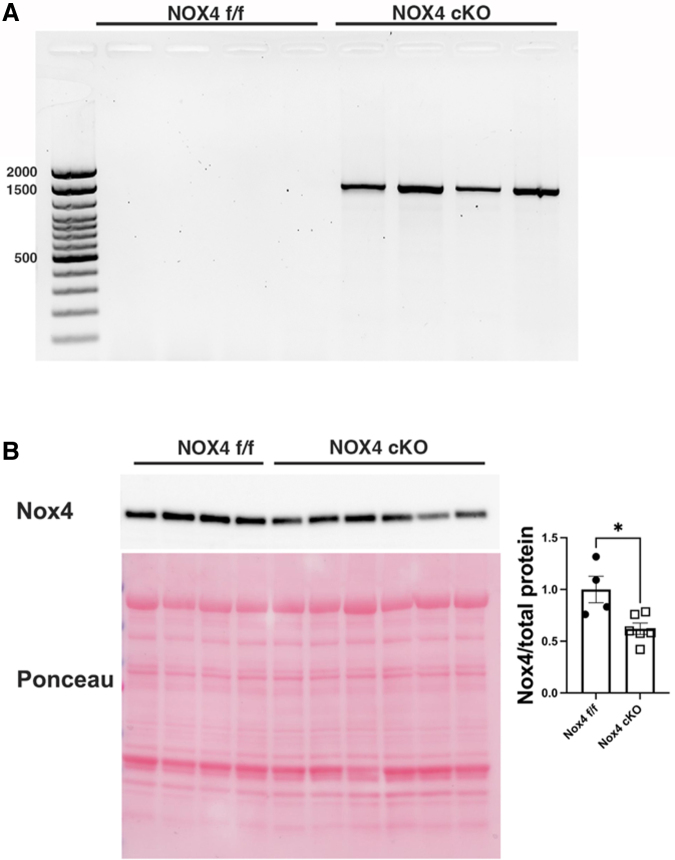 Figure 1
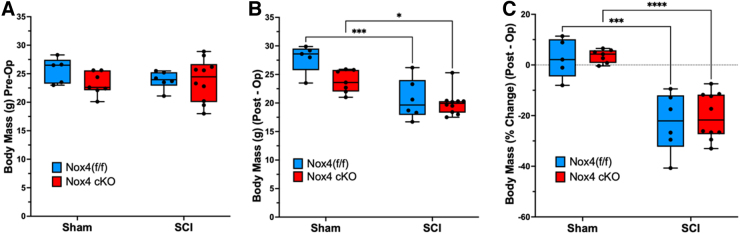 Figure 2
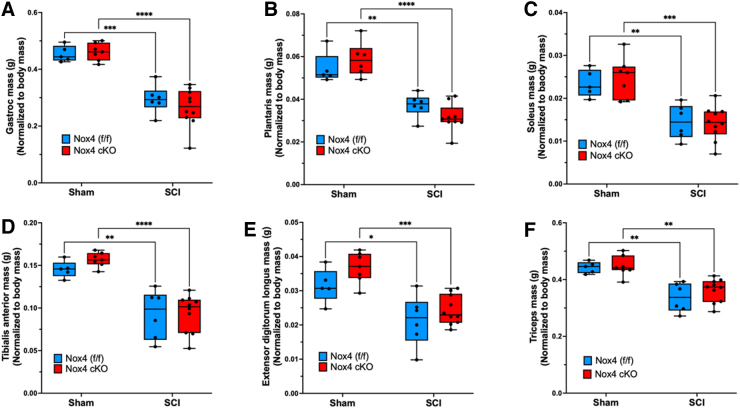 Figure 3
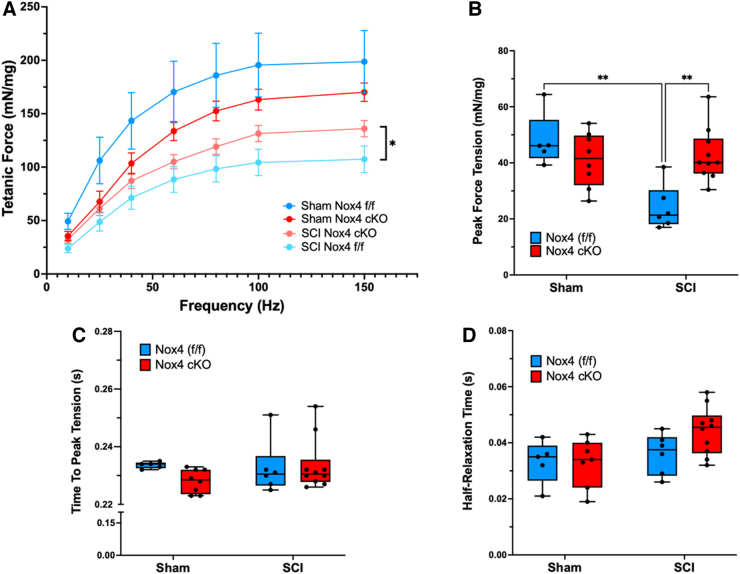 Figure 4
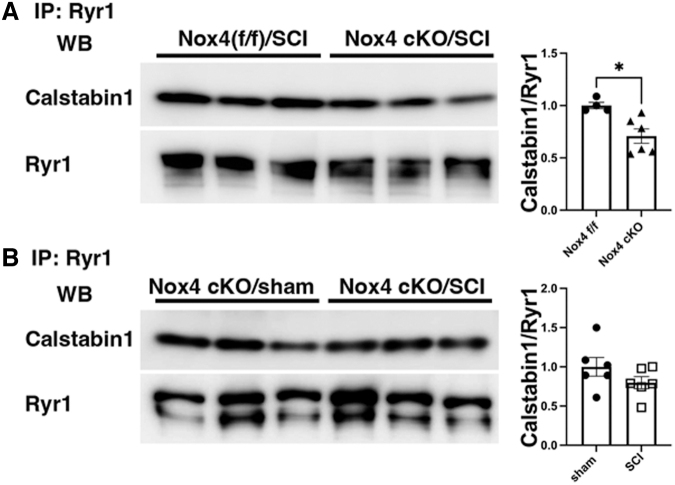 Figure 5
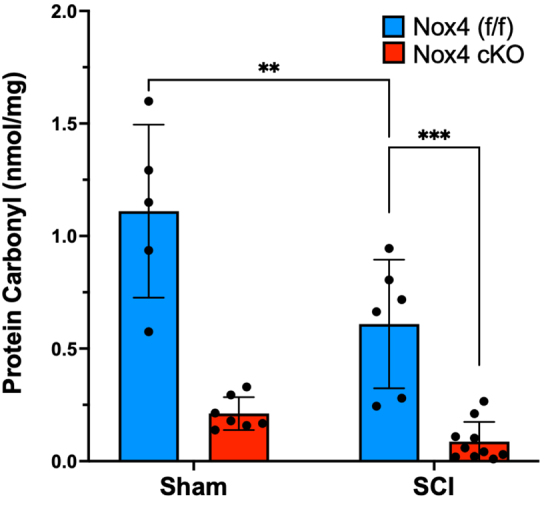 Figure 6
Peer Reviews
No public reviews on file for this paper yet. If you reviewed it on a platform where reviews are public (OpenReview, ICLR, NeurIPS, ICML), you can paste yours below so the community can read it here.
Videos
No videos yet. Explain this paper in a talk, walkthrough, or lecture? Add one.
Taxonomy
TopicsNeutrophil, Myeloperoxidase and Oxidative Mechanisms · Spinal Cord Injury Research · Nitric Oxide and Endothelin Effects