PKPy: a Python-based framework for automated population pharmacokinetic analysis
Hyunseung Kong, Inyoung Kim, Byoung-Tak Zhang

TL;DR
PKPy is an open-source Python framework that automates population pharmacokinetic analysis, offering accurate and efficient parameter estimation with minimal user input.
Contribution
PKPy introduces an automated, accessible Python-based framework for population pharmacokinetic analysis with support for multiple models and robust validation.
Findings
PKPy achieved robust parameter estimation with bias below 3% and recovery rates over 98% in one-compartment models.
The framework successfully identified true covariate relationships with 100% accuracy and maintained high model fit quality (R2 ≥ 0.97).
PKPy demonstrated computational efficiency, with significantly faster installation and analysis times compared to existing software.
Abstract
We present PKPy, an open-source Python framework designed to automate population pharmacokinetic analysis workflows. The framework emphasizes user accessibility by minimizing the need for manual parameter initialization while maintaining analytical rigor. PKPy implements both one-compartment and two-compartment pharmacokinetic models (with and without first-order absorption) with integrated capabilities for parameter estimation, covariate analysis, and comprehensive diagnostics. The framework’s performance was evaluated through simulation studies across varying sample sizes (20–100 subjects) and model complexities. Results demonstrated robust parameter estimation for clearance and volume of distribution, with bias consistently below 3% and recovery rates exceeding 98% in one-compartment models. The framework successfully identified true covariate relationships with 100% accuracy across…
Genes, proteins, chemicals, diseases, species, mutations and cell lines named across the full text — each resolved to its canonical identifier and authoritative record.
Click any figure to enlarge with its caption.
 Figure 1
 Figure 2
 Figure 3
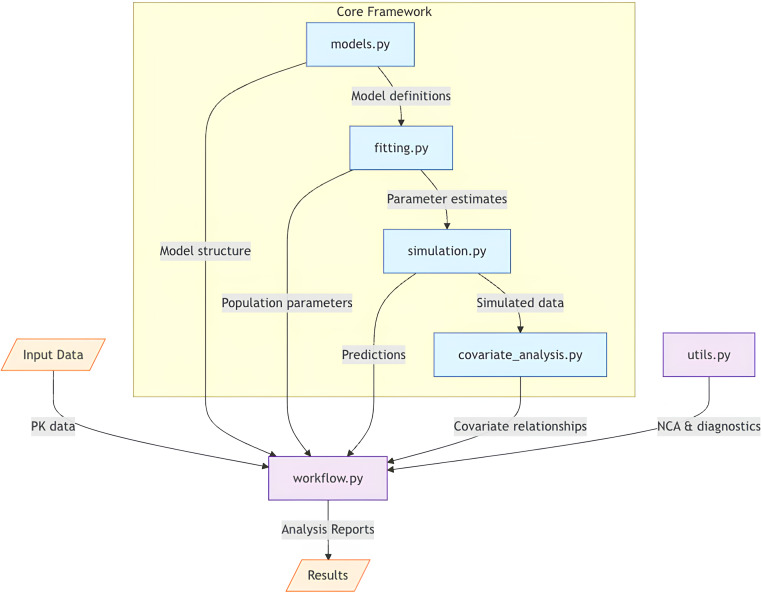 Figure 4
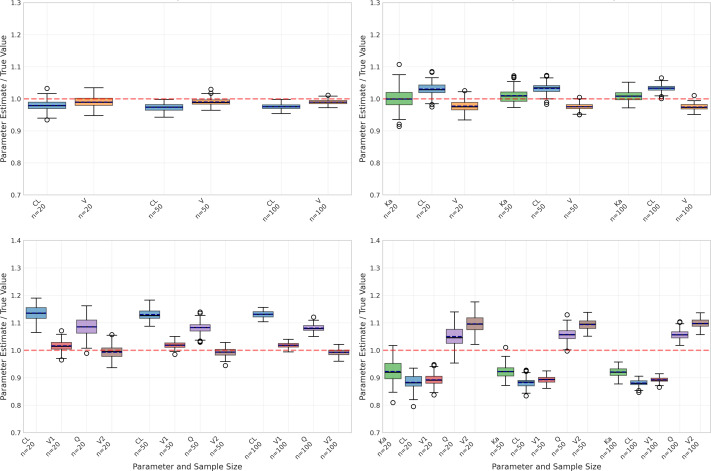 Figure 5
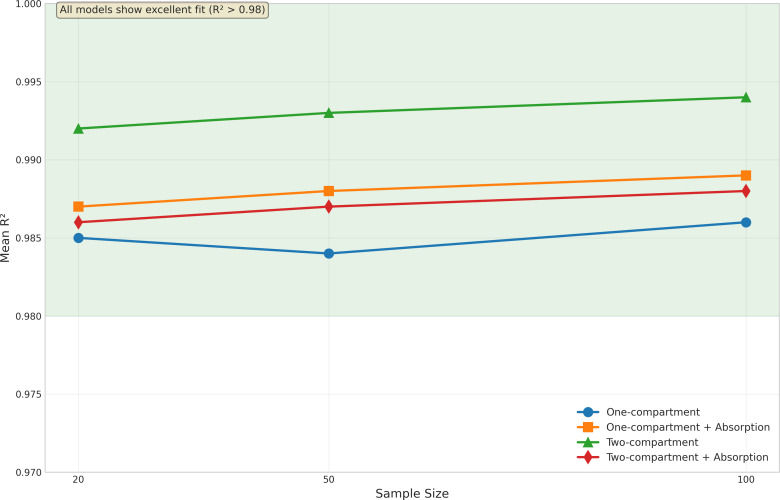 Figure 6
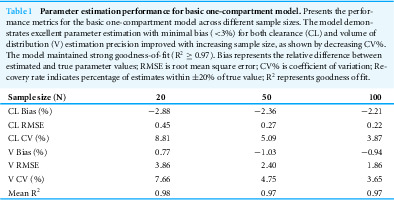 Figure 7
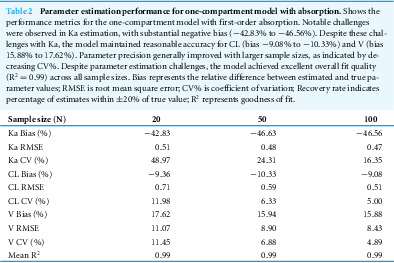 Figure 8
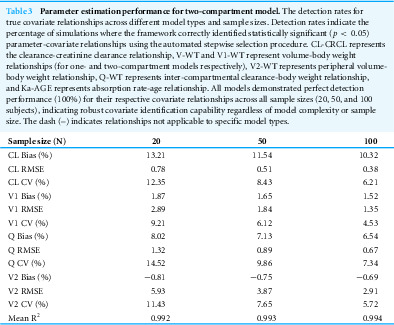 Figure 9
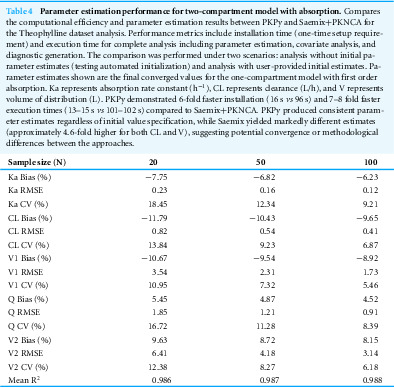 Figure 10
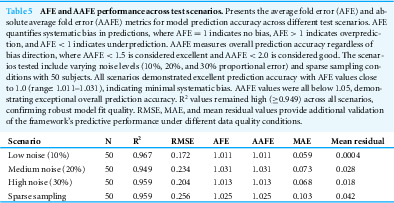 Figure 11
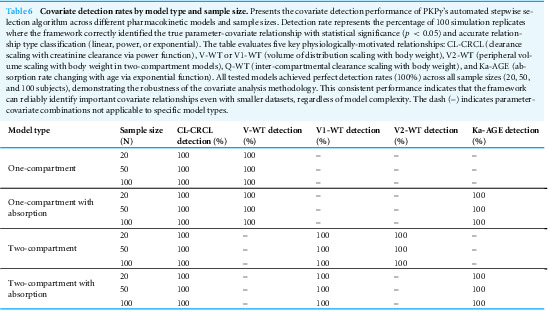 Figure 12
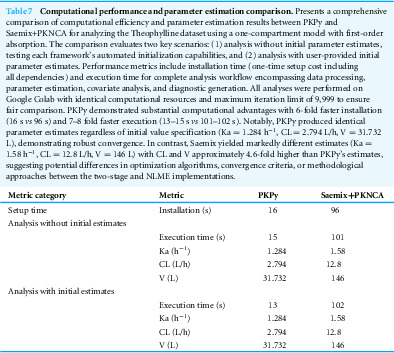 Figure 13
Peer Reviews
No public reviews on file for this paper yet. If you reviewed it on a platform where reviews are public (OpenReview, ICLR, NeurIPS, ICML), you can paste yours below so the community can read it here.
Videos
No videos yet. Explain this paper in a talk, walkthrough, or lecture? Add one.
Taxonomy
TopicsPharmacogenetics and Drug Metabolism · Analytical Chemistry and Chromatography · Metabolomics and Mass Spectrometry Studies