The role of cerebral blood flow volume in cortical inhibition during postural changes
Arlan F. Sagirov, Timofey V. Sergeev, Maria V. Kuropatenko, Alexander V. Shabrov, Elizaveta A. Agapova, Alexey A. Anisimov, Alexander Z. Yafarov

TL;DR
This study explores how posture changes affect brain blood flow and electrical activity, suggesting that increased blood flow in a supine position may lead to reduced brain activity, especially in men.
Contribution
The study introduces a novel method combining EEG and REG to investigate the relationship between cerebral blood flow and cortical inhibition during postural changes.
Findings
Male participants showed a significant drop in alpha wave power when transitioning to a supine position.
Dynamic tilting had mixed effects on brain activity and minimal impact on cerebral blood flow.
Strong negative correlations between cerebral blood flow and alpha wave power were observed in men but not in women.
Abstract
This study investigated how body posture impacts cerebral hemodynamics and brain bioelectrical activity, aiming to understand the mechanisms by which increased cerebral blood flow in a supine position might lead to cortical inhibition, potentially indicated by a reduction in alpha wave presence. The study also explored the neurovascular effects of dynamic tilting. Simultaneous electroencephalographic (EEG) and rheoencephalographic (REG) recordings were conducted on 40 healthy participants (mean age = 21.3 ± 1.4 years; 20 men and 20 women) during two postural tests. In Test 1, participants transitioned between sitting upright and lying supine. Test 2 followed a similar design, with the addition of dynamic tilting through passive oscillations between +10° and −10° on a tilt table. Results indicated that REG parameters –specifically rheographic wave amplitude (RWA), venous outflow (VO),…
Genes, proteins, chemicals, diseases, species, mutations and cell lines named across the full text — each resolved to its canonical identifier and authoritative record.
Click any figure to enlarge with its caption.
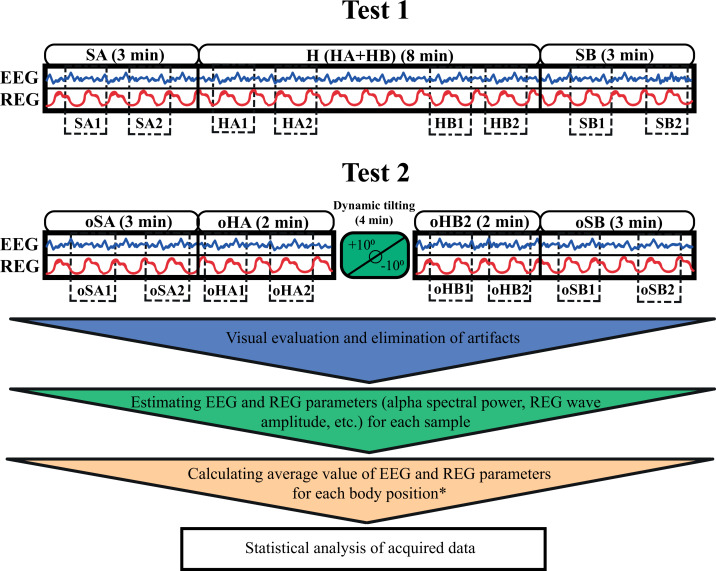 Figure 1
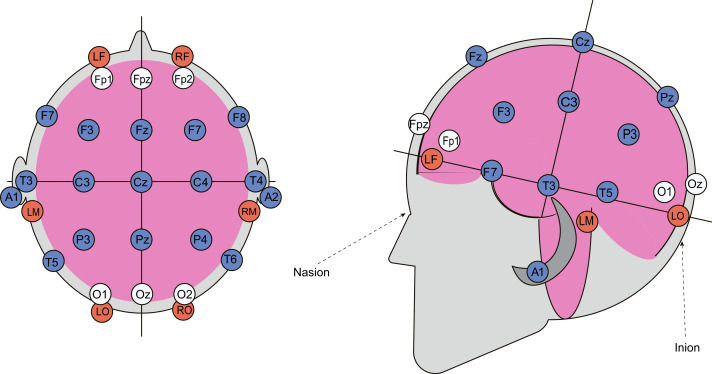 Figure 2
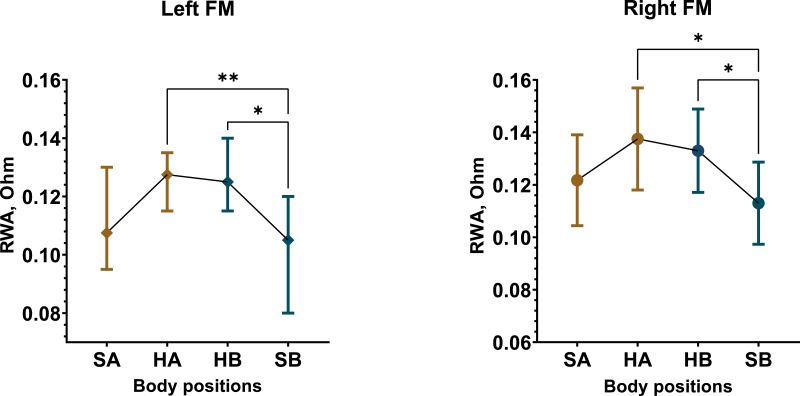 Figure 3
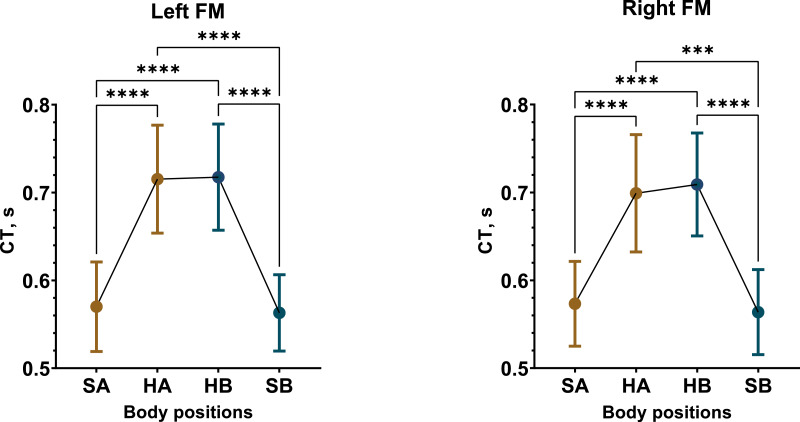 Figure 4
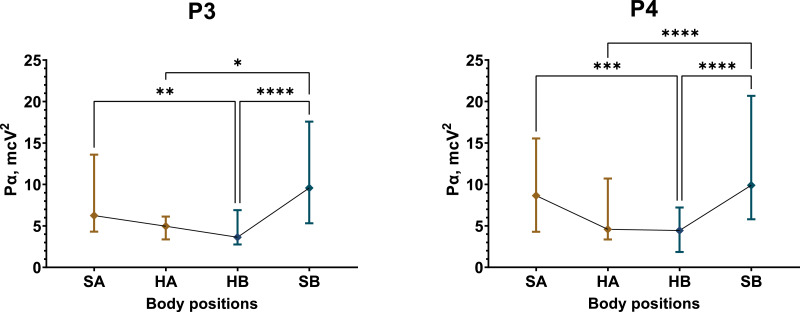 Figure 5
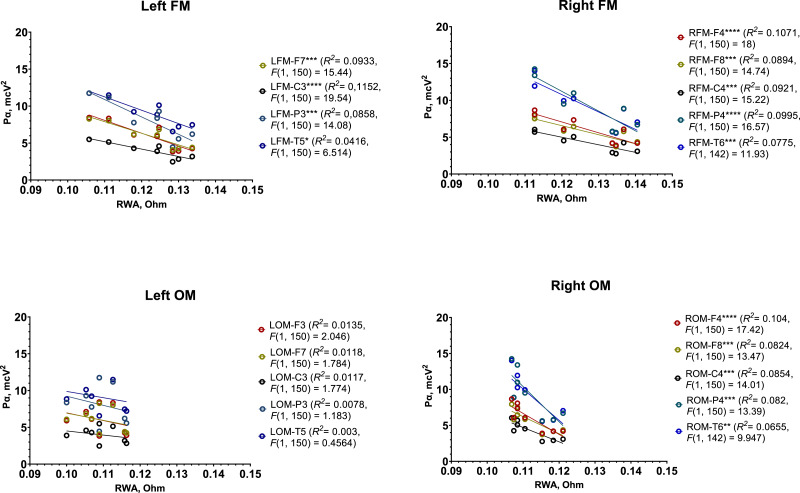 Figure 6
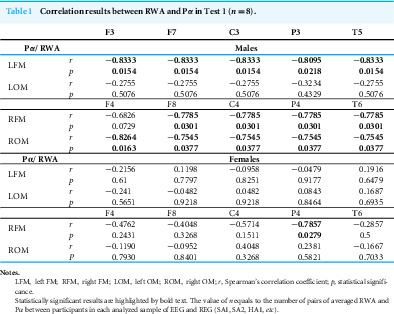 Figure 7
Peer Reviews
No public reviews on file for this paper yet. If you reviewed it on a platform where reviews are public (OpenReview, ICLR, NeurIPS, ICML), you can paste yours below so the community can read it here.
Videos
No videos yet. Explain this paper in a talk, walkthrough, or lecture? Add one.
Taxonomy
TopicsFunctional Brain Connectivity Studies · Traumatic Brain Injury and Neurovascular Disturbances · Optical Imaging and Spectroscopy Techniques