Evidence of an upper entrainment limit for walking with fractal auditory stimuli
Cecilia R. Power, Kristen L. Sorensen, Janessa D.M. Drake, William H. Gage

TL;DR
This study finds that humans can only adapt their walking patterns to a certain level of complexity in auditory cues, which could help improve gait rehabilitation strategies.
Contribution
The study identifies an upper limit for gait adaptability to fractal auditory stimuli, which was previously unknown.
Findings
Gait fractal scaling index (FSI) reaches a maximum of approximately 1.00 when adapting to auditory metronomes.
Adaptability diminishes when metronome FSI exceeds 1.15, causing gait FSI to drop below uncued levels.
Other gait metrics like velocity and cadence remain unaffected by changes in metronome FSI.
Abstract
Variability exists in all biological signals, and in human gait research it has been found to be an indicator of neuromuscular system functioning. Detrended fluctuation analysis (DFA), a nonlinear method used to quantify the strength of long-range correlations in the temporal structure of stride-to-stride gait variability, has revealed gait differences in certain populations that are not observed with traditional linear measures like standard deviation. Previous research suggests that humans can adapt gait patterns to match different variability structures through sensory cues, such as auditory metronomes. However, the upper limits of adaptability and the strength of long-term correlations in gait variability remain unclear. Exploring these limits not only deepens our understanding of neuromuscular control mechanisms but could also inform the design of targeted interventions, such as…
Genes, proteins, chemicals, diseases, species, mutations and cell lines named across the full text — each resolved to its canonical identifier and authoritative record.
Click any figure to enlarge with its caption.
 Figure 1
 Figure 2
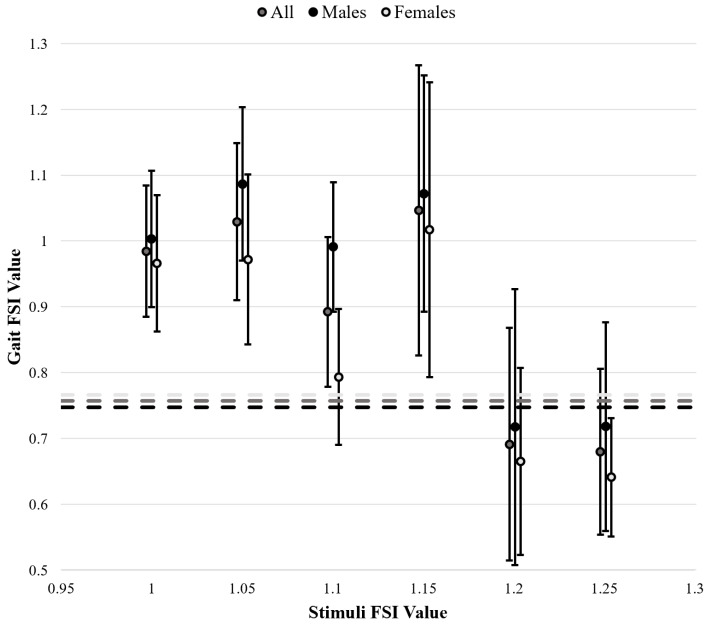 Figure 3
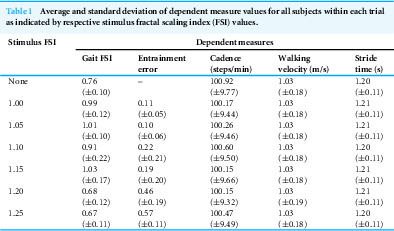 Figure 4
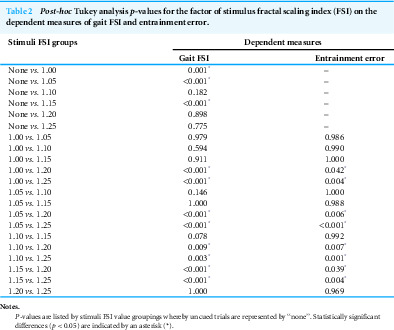 Figure 5
Peer Reviews
No public reviews on file for this paper yet. If you reviewed it on a platform where reviews are public (OpenReview, ICLR, NeurIPS, ICML), you can paste yours below so the community can read it here.
Videos
No videos yet. Explain this paper in a talk, walkthrough, or lecture? Add one.
Taxonomy
TopicsSports Dynamics and Biomechanics · Anomaly Detection Techniques and Applications · Time Series Analysis and Forecasting