FastST: an efficient tool for inferring decomposition and directionality of microbial communities
Joung Min Choi, Xiaowei Wu, Liqing Zhang

TL;DR
FastST is a new tool that efficiently tracks the sources and direction of microbial communities, outperforming existing methods in speed and accuracy.
Contribution
FastST introduces a novel computational framework for microbial source tracking that infers decomposition and directionality efficiently.
Findings
FastST outperforms existing methods in accuracy and computational efficiency with high-dimensional data.
The method achieves over 90% accuracy in inferring directionality across multiple source scenarios.
FastST maintains consistent execution times even with increasing numbers of source environments.
Abstract
Microbiomes play crucial roles in human health, disease development, and global ecosystem functioning. Understanding the origins, movements, and compositions of microbial communities is essential for unraveling the principles governing microbial ecology. Microbial source tracking (MST) approaches have emerged as valuable tools for quantifying the proportions of different microbial sources within target communities, enabling researchers to track transmissions between hosts and environments, identify similarities between microbiome samples, and determine sources of contamination in various settings. Current MST methods like SourceTracker2 and FEAST have advanced the field by employing Bayesian and expectation-maximization approaches, respectively, but are limited by computational inefficiency with high-dimensional data and inability to infer directionality in source-sink relationships.…
Genes, proteins, chemicals, diseases, species, mutations and cell lines named across the full text — each resolved to its canonical identifier and authoritative record.
Click any figure to enlarge with its caption.
 Figure 1
 Figure 2
 Figure 3
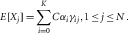 Figure 4
 Figure 5
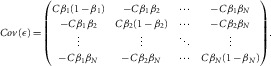 Figure 6
 Figure 7
 Figure 8
 Figure 9
 Figure 10
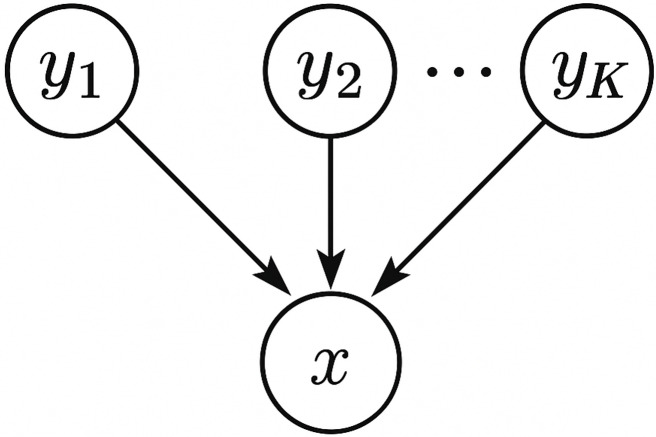 Figure 11
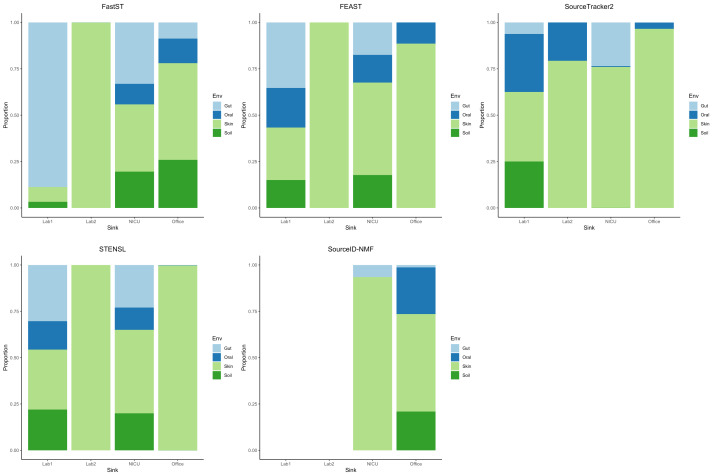 Figure 12
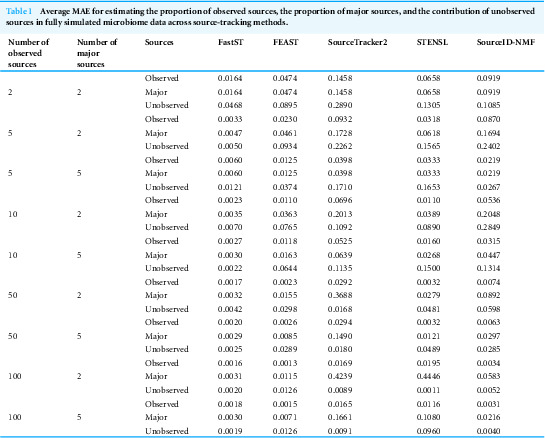 Figure 13
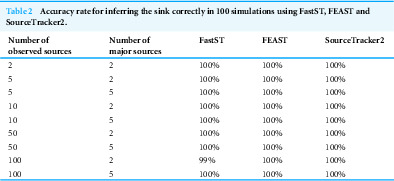 Figure 14
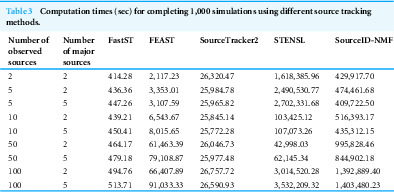 Figure 15
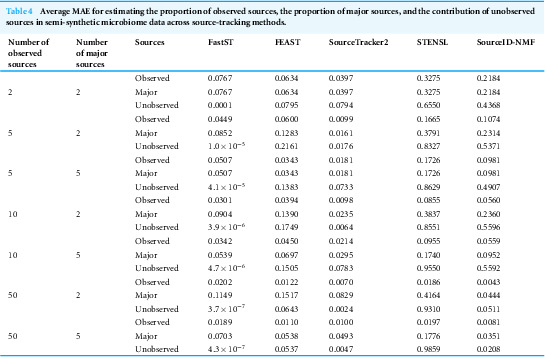 Figure 16
 Figure 17
 Figure 18
 Figure 19
 Figure 20
 Figure 21
Peer Reviews
No public reviews on file for this paper yet. If you reviewed it on a platform where reviews are public (OpenReview, ICLR, NeurIPS, ICML), you can paste yours below so the community can read it here.
Videos
No videos yet. Explain this paper in a talk, walkthrough, or lecture? Add one.
Taxonomy
TopicsGut microbiota and health · Microbial Community Ecology and Physiology · Probiotics and Fermented Foods