All-Plastic Organic Lasers with Top-Layer Polymeric Resonators: Tunable Emission through Bending and Application to Refractive Index Sensing
Pablo Pasqués-Gramage, Gema Calvillo-Solís, Pedro G. Boj, José A. Quintana, José M. Villalvilla, María A. Díaz-García

TL;DR
Researchers developed flexible all-plastic organic lasers that can change their emission wavelength when bent, with potential uses in adjustable optical systems and sensing.
Contribution
The novelty lies in creating all-plastic organic lasers with tunable emission via bending and demonstrating their use for refractive index sensing.
Findings
Emission wavelength can be tuned by ~10 nm through mechanical deformation due to changes in the grating period.
Lasers perform comparably to those on fused silica substrates but use cost-effective cellulose acetate substrates.
Devices show potential for refractive index sensing and scalable, low-cost optical applications.
Abstract
All-plastic thin-film organic lasers, in which all the layers comprising the device (active medium, resonator and substrate) are of polymeric nature, are very interesting because they offer the possibility to tune the emission laser wavelength through mechanical deformation (bending). Here, we report all-plastic distributed feedback (DFB) lasers based on top-layer dichromated gelatin resonators (one-dimensional gratings), active layers of polystyrene doped with perylene orange and substrates of cellulose acetate (CA), showing a successful laser performance, comparable to devices based on fused silica substrates. Remarkably, the emission wavelength of the prepared lasers can be tuned by approximately 10 nm through mechanical deformation (bending) thanks to the polymeric nature of all the layers involved in the device. This tuning is primarily due to changes in the grating period, while…
Genes, proteins, chemicals, diseases, species, mutations and cell lines named across the full text — each resolved to its canonical identifier and authoritative record.
Click any figure to enlarge with its caption.
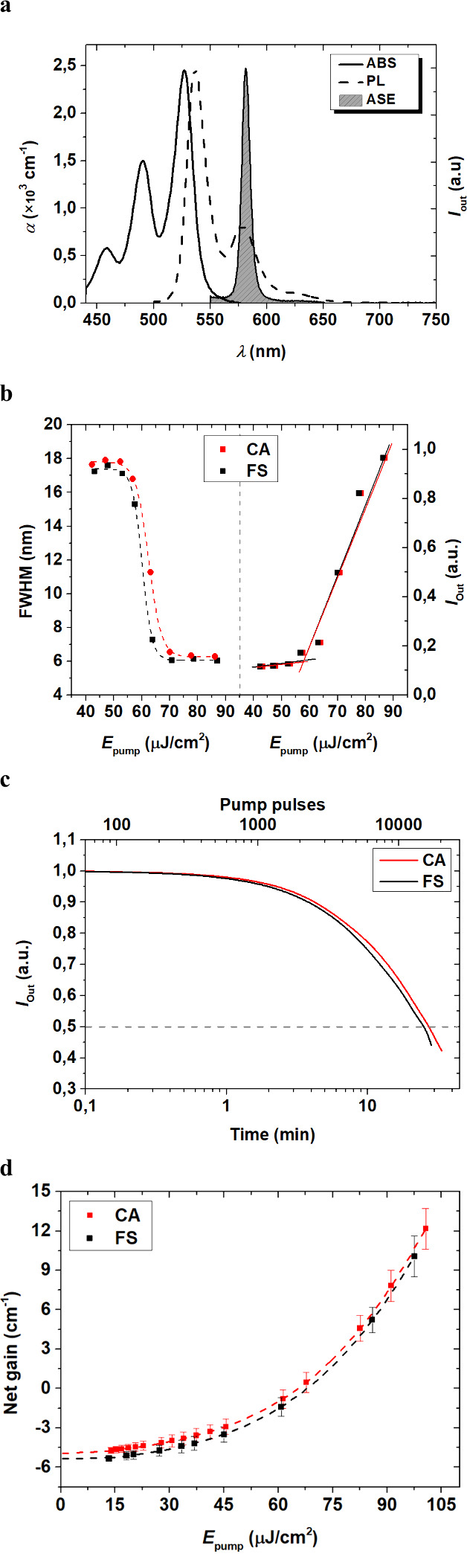 Figure 1
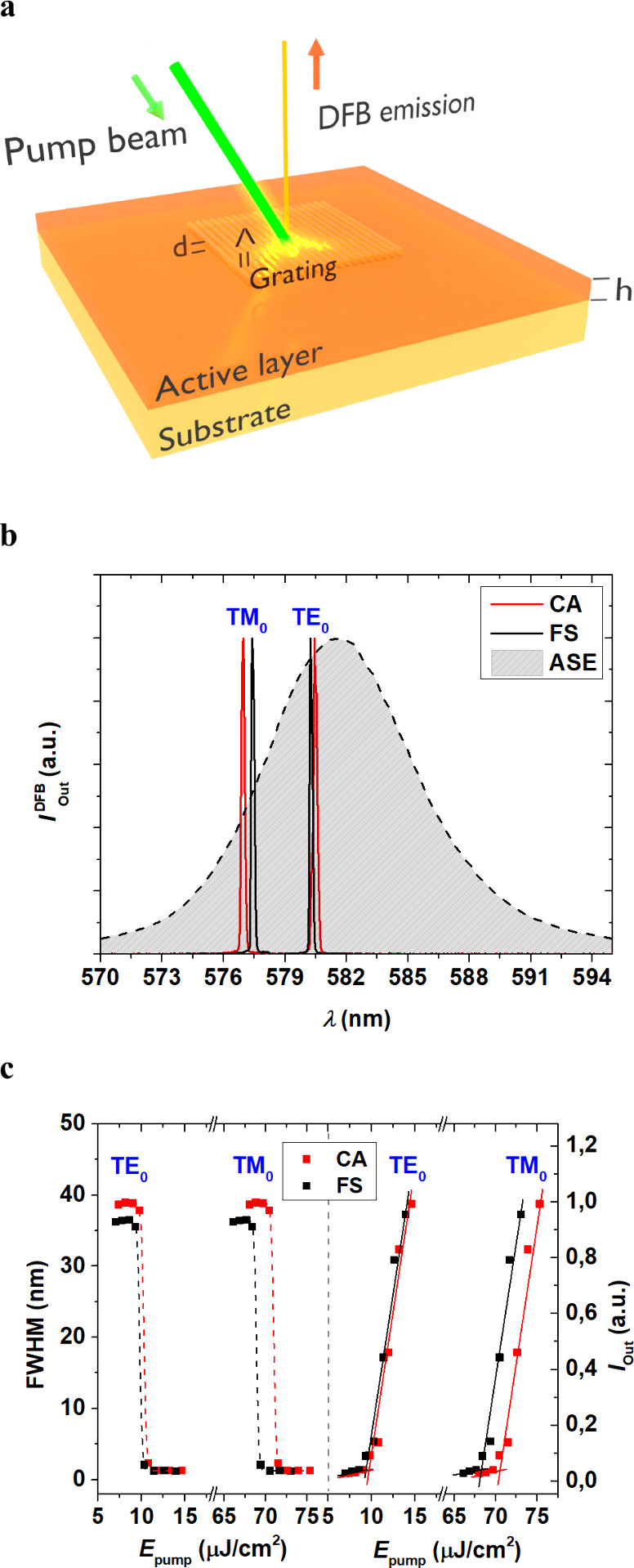 Figure 2
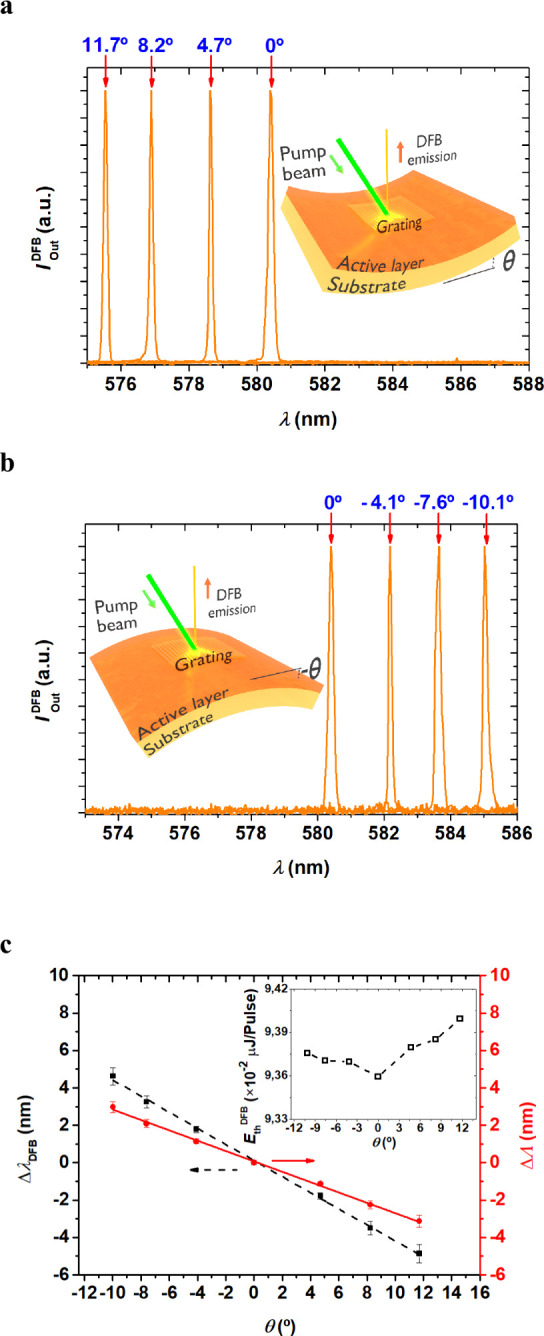 Figure 3
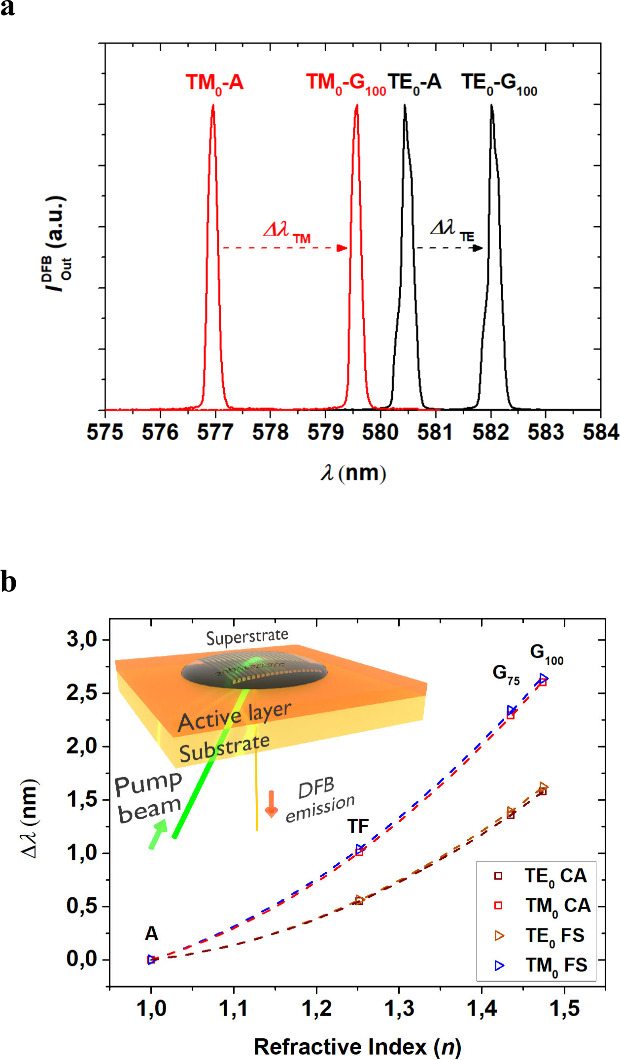 Figure 4
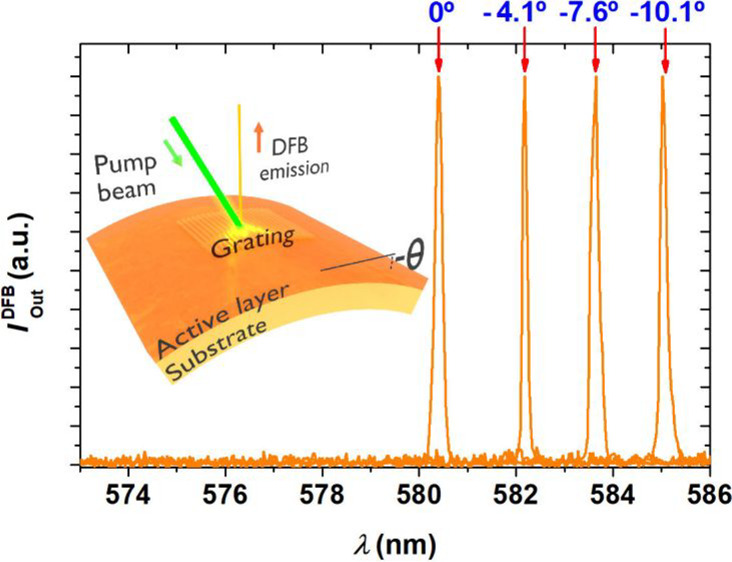 Figure 5
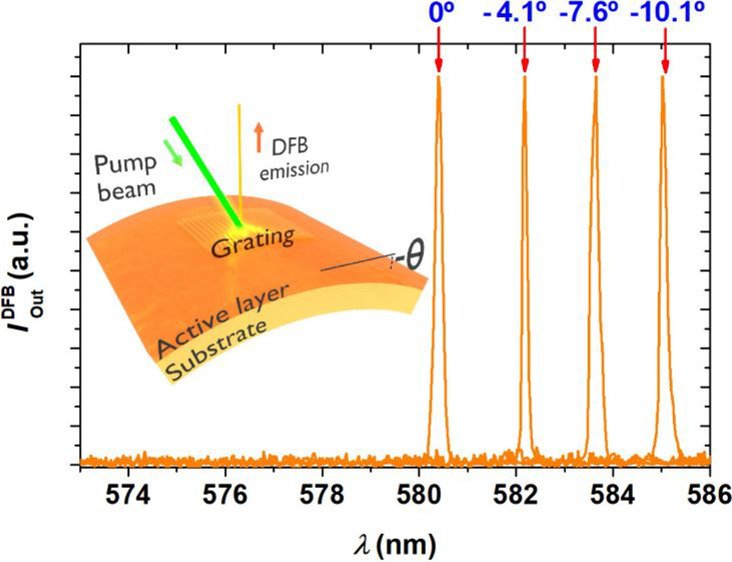 Figure 6
 Figure 7
 Figure 8
Peer Reviews
No public reviews on file for this paper yet. If you reviewed it on a platform where reviews are public (OpenReview, ICLR, NeurIPS, ICML), you can paste yours below so the community can read it here.
Videos
No videos yet. Explain this paper in a talk, walkthrough, or lecture? Add one.
Taxonomy
TopicsPhotonic and Optical Devices · Luminescence and Fluorescent Materials · Organic Electronics and Photovoltaics