Tracing microbial carbon sources in hydrothermal sediments by 13C isotopic analysis of bacterial and archaeal ribosomal RNA
Barbara MacGregor, Henricus T. S. Boschker, Daniel Hoer, Daniel B. Albert, Howard Mendlovitz, Andreas Teske

TL;DR
This study uses carbon isotope analysis to trace microbial carbon sources in hydrothermal sediments, showing how methane and other compounds influence bacterial and archaeal communities.
Contribution
The paper introduces 13C isotopic analysis of rRNA to trace microbial carbon sources in hydrothermal sediments, revealing distinct patterns of carbon assimilation.
Findings
δ13C-rRNA values in hydrothermal sediments are lighter than TOC and DIC, indicating methane assimilation by microbes.
Petroleum presence does not alter δ13C-rRNA values due to similar isotopic signatures with detrital organic matter.
Short-chain alkanes influence δ13C-rRNA values, with distinct bacterial and archaeal assimilation patterns observed.
Abstract
Microbial communities in hydrothermal sediments of Guaymas Basin assimilate a wide range of carbon sources, detrital organic matter, DIC of hydrothermal and water column origin, as well as methane, light alkanes and petroleum hydrocarbons. Here we analyze the abundances and 13C-isotopic values of these carbon pools, and assess the relative importance of these carbon sources by comparison with δ13C-isotopic composition of bacterial and archaeal rRNA. In almost all hydrothermal sediments, δ13C-rRNA values for bacterial and archaea are lighter (more 13C-depleted) than those of TOC and DIC, indicating that carbon from 13C-depleted methane permeates the microbial food web, with no systematic preference for bacteria or archaea. However, the omnipresence of detrital organic matter of photosynthetic origin means that any methane signal in bacterial and archaeal δ13C-rRNA values is diluted by…
Genes, proteins, chemicals, diseases, species, mutations and cell lines named across the full text — each resolved to its canonical identifier and authoritative record.
Click any figure to enlarge with its caption.
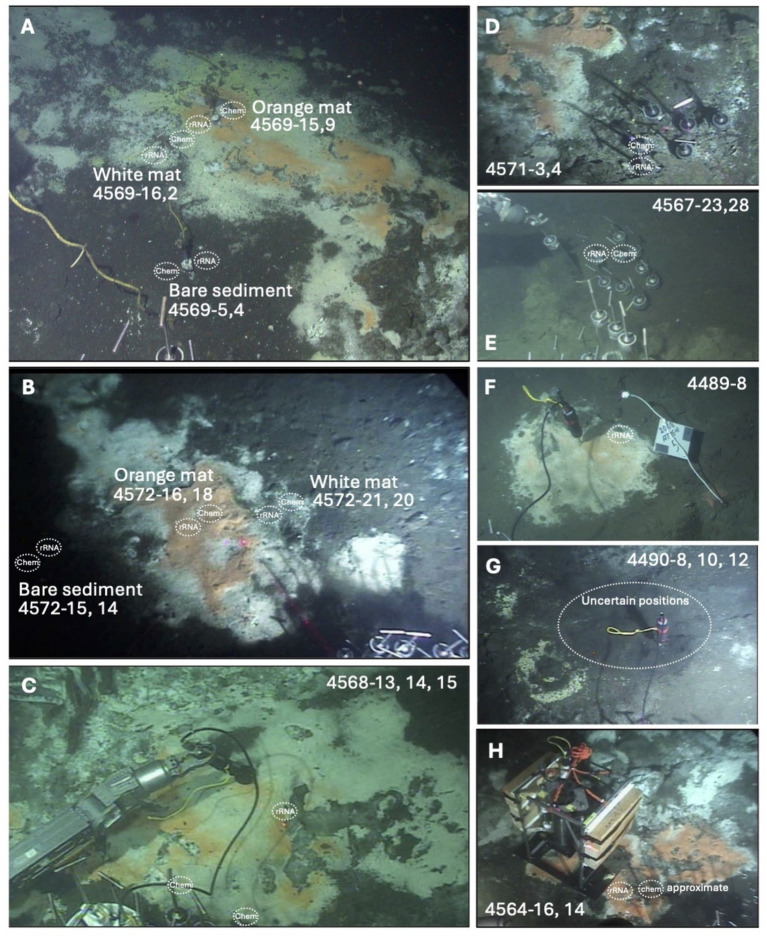 Figure 1
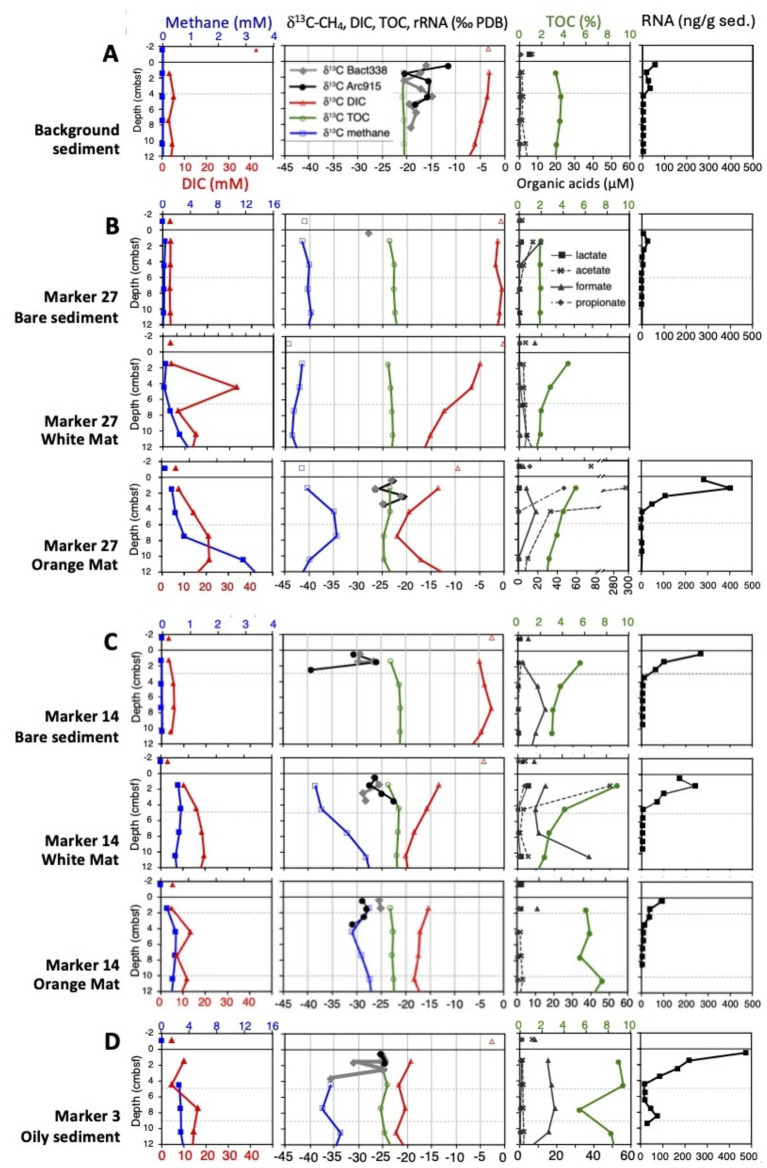 Figure 2
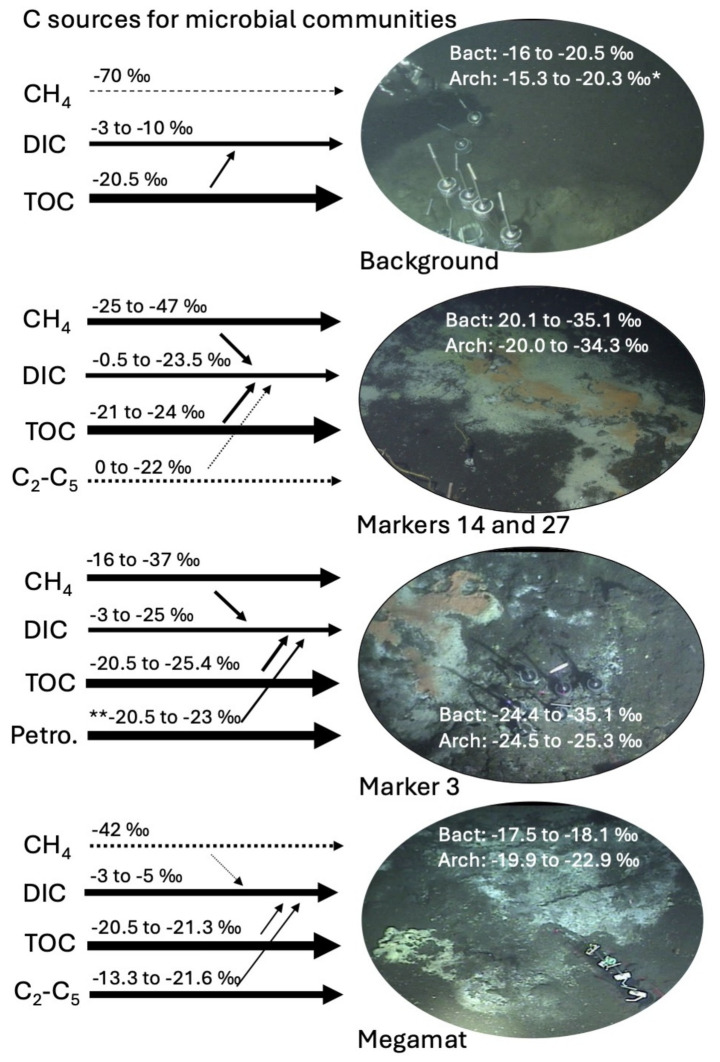 Figure 3
Peer Reviews
No public reviews on file for this paper yet. If you reviewed it on a platform where reviews are public (OpenReview, ICLR, NeurIPS, ICML), you can paste yours below so the community can read it here.
Videos
No videos yet. Explain this paper in a talk, walkthrough, or lecture? Add one.
Taxonomy
TopicsMicrobial Community Ecology and Physiology · Methane Hydrates and Related Phenomena · Genomics and Phylogenetic Studies