Fear of Predators Suppresses Neurogenesis in the Brains of Wild Songbirds
L E Witterick, S Davidge, E C Hobbs, S A MacDougall-Shackleton, M Clinchy, L Y Zanette

TL;DR
Fear of predators can suppress brain cell growth in wild birds, suggesting lasting memories of fear may have evolutionary benefits.
Contribution
This study shows predator-induced fear suppresses neurogenesis in wild songbirds, revealing potential sex differences and adaptive memory retention.
Findings
Males showed suppressed hippocampal cell proliferation after predator cue exposure.
Both sexes had reduced immature neurons in the avian amygdala.
Enduring memory of fear may have adaptive evolutionary value in wild animals.
Abstract
Fear of predation can lead to behavioral changes indicative of an enduring memory of fear, as acknowledged by both ecologists and biomedical scientists studying post-traumatic stress disorder (PTSD). Enduring memories are often linked to suppressed neurogenesis in laboratory rodents as a potential mechanism to prevent the replacement of existing memories. We used predator vocalizations to assess the enduring effects of fear on neurogenesis in a wild songbird, black-capped chickadees (Poecile atricapillus), quantifying cell proliferation (PCNA immunoreactivity), and immature neurons (doublecortin immunoreactivity) in both sexes. Seven days after predator cue exposure, we found suppression of hippocampal cell proliferation in males, with no effect in females, and suppression of immature neurons in the avian amygdala (medial ventral arcopallium) in both sexes. Our results are consistent…
Genes, proteins, chemicals, diseases, species, mutations and cell lines named across the full text — each resolved to its canonical identifier and authoritative record.
Click any figure to enlarge with its caption.
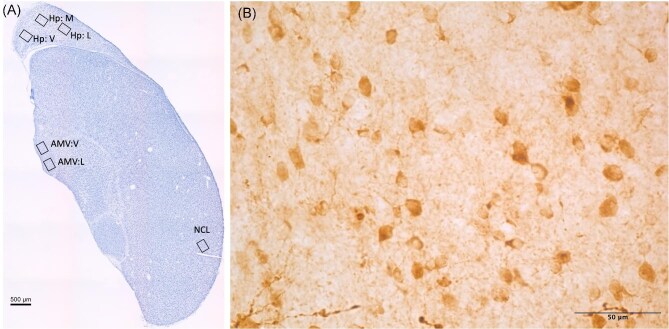 Figure 1
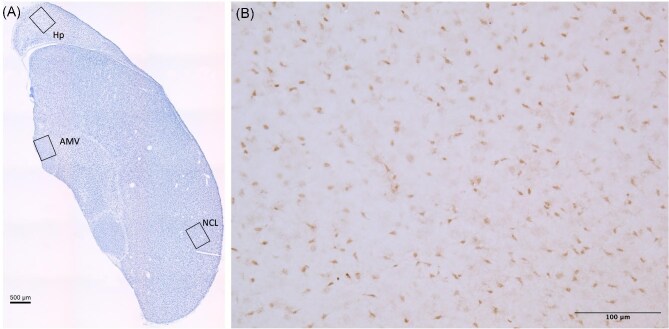 Figure 2
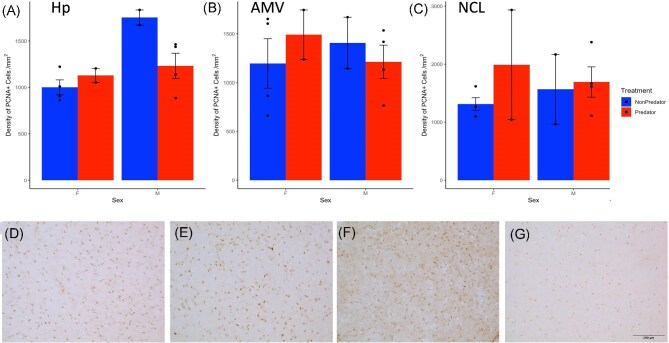 Figure 3
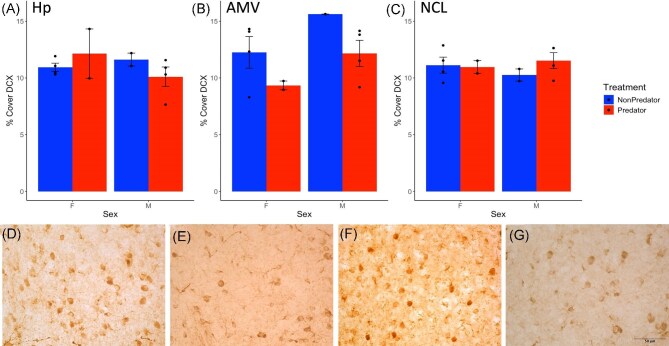 Figure 4
Peer Reviews
No public reviews on file for this paper yet. If you reviewed it on a platform where reviews are public (OpenReview, ICLR, NeurIPS, ICML), you can paste yours below so the community can read it here.
Videos
No videos yet. Explain this paper in a talk, walkthrough, or lecture? Add one.
Taxonomy
TopicsAnimal Vocal Communication and Behavior