Will a “multivitamin” a day keep the “MASLD doctor” away?
Fernando Bril

TL;DR
This paper explores how vitamin cofactors might influence homocysteine levels and liver disease severity, suggesting potential therapeutic strategies for MASLD.
Contribution
The paper introduces a mathematical model to evaluate how vitamin cofactor replacement affects homocysteine metabolism in MASLD.
Findings
Homocysteine metabolism is linked to the histological severity of MASLD.
Replacing cofactors like pyridoxine and folate may lower homocysteine levels in MASLD patients.
Further studies are needed to confirm if modulating homocysteine is a viable MASLD treatment.
Abstract
This commentary discusses the results of a study that assessed the relationship between homocysteine metabolism and histological severity of metabolic dysfunction-associated steatotic liver disease (MASLD), and applied a mathematical model to examine how replacement with different cofactors (pyridoxine, cobalamin, betaine, and folate) may affect homocysteine levels in patients with MASLD. It highlights the clinical implications of the study and examines the pathophysiological support behind the detected associations. It also discusses its limitations, emphasizing the need for further longitudinal and interventional studies to confirm whether modulating homocysteine levels could be a viable therapeutic strategy for MASLD.
Genes, proteins, chemicals, diseases, species, mutations and cell lines named across the full text — each resolved to its canonical identifier and authoritative record.
Click any figure to enlarge with its caption.
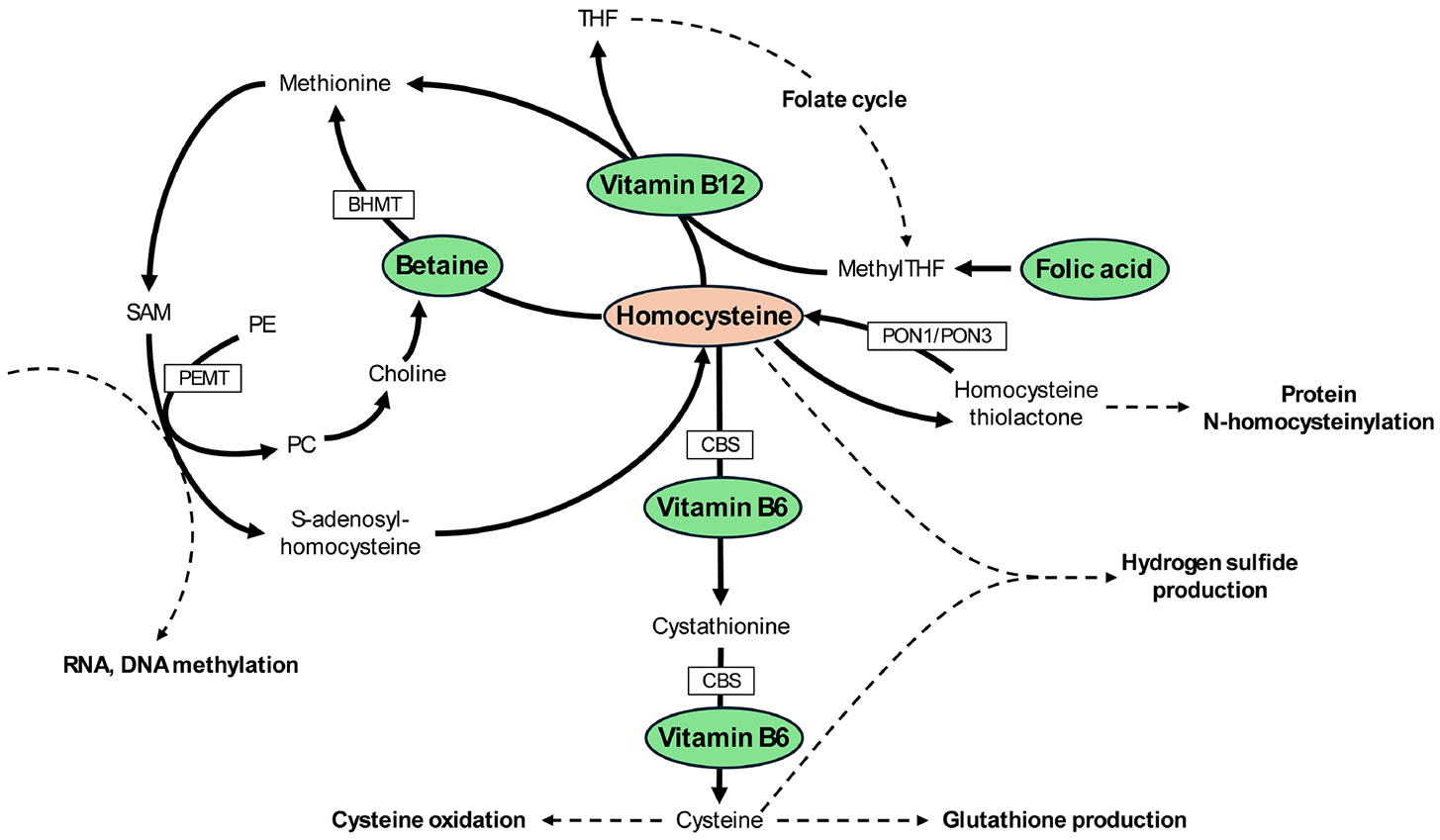 Figure 1
Peer Reviews
No public reviews on file for this paper yet. If you reviewed it on a platform where reviews are public (OpenReview, ICLR, NeurIPS, ICML), you can paste yours below so the community can read it here.
Videos
No videos yet. Explain this paper in a talk, walkthrough, or lecture? Add one.
Taxonomy
TopicsLiver Disease Diagnosis and Treatment · Folate and B Vitamins Research · Liver Disease and Transplantation