Transcriptome analysis revealed the potential molecular mechanism of style bending movement in passion fruit (Passiflora Edulis Sims)
Ling Gao, Jie Wang, Li Xu, Yanan Zhao, Siying Wu, Mei Chen, Dongshan Ying, Linhua Wu, Fusun Yang, Guodao Liu

TL;DR
This study explores how passion fruit styles bend during flowering, revealing molecular mechanisms involving heat stress and lignin accumulation that affect pollination and fruit yield.
Contribution
The study identifies specific genes and pathways involved in style bending, linking heat stress, lignin biosynthesis, and hormone regulation in passion fruit.
Findings
Early style bending is associated with heat shock and DnaJ family proteins in the endoplasmic reticulum pathway.
Lignin accumulation increases significantly during style bending, correlating with reduced S-shaped curvature.
Hormone metabolism, particularly ABA and jasmonic acid, shows distinct accumulation patterns during style development.
Abstract
Passion fruit has a difficult natural fruiting process and low yield due to its approach herkogamy. Understanding the molecular mechanism of passion fruit style bending is crucial as it enhances pollination efficiency by optimizing stigma-anther alignment, overcoming herkogamy and improving fruit yield. In this study, we used the purple passion fruit variety ‘Tainong 1’ as experimental material. We observed that its style bends into an “S”-shape after flowering. As development progresses, the degree of this S-shaped curvature gradually weakens. Simultaneously, the style also exhibits a spatial bending from top to bottom during this process. In order to identify the genes specifically induced during the style bending process, transcriptome analysis was conducted on styles at T1 (flowering), T2 (30 min post-flowering), and T5 (120 min post-flowering). 226 DEGs were identified to be…
Genes, proteins, chemicals, diseases, species, mutations and cell lines named across the full text — each resolved to its canonical identifier and authoritative record.
Click any figure to enlarge with its caption.
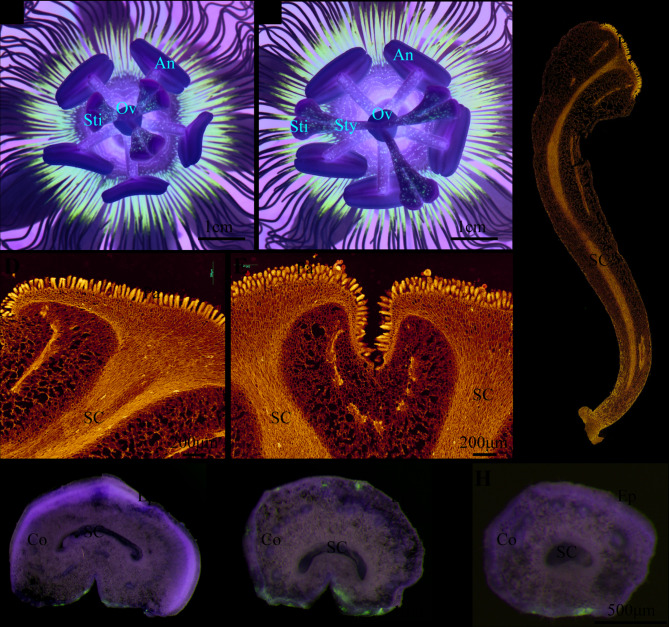 Figure 1
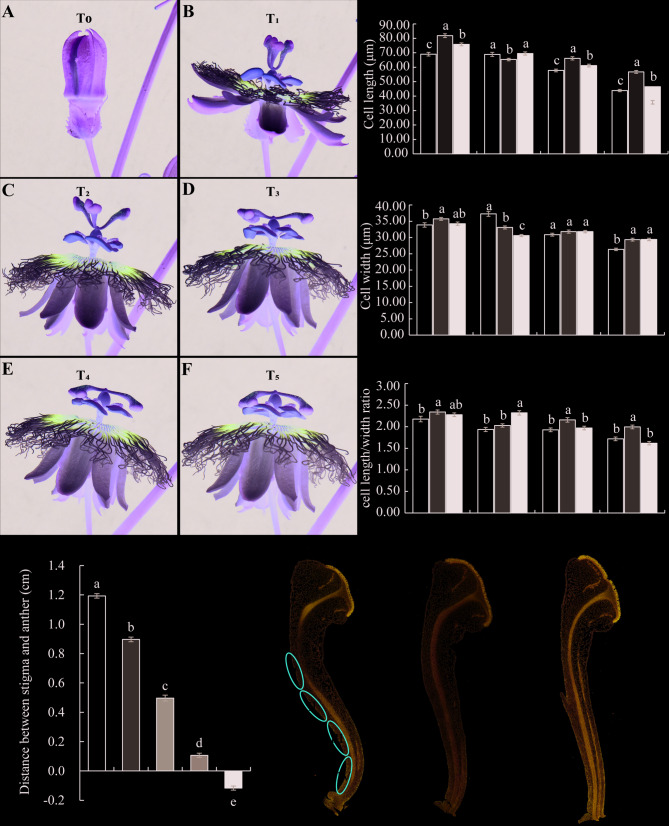 Figure 2
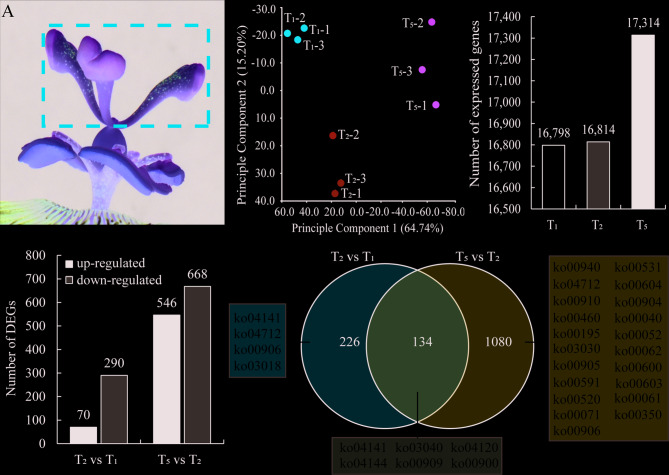 Figure 3
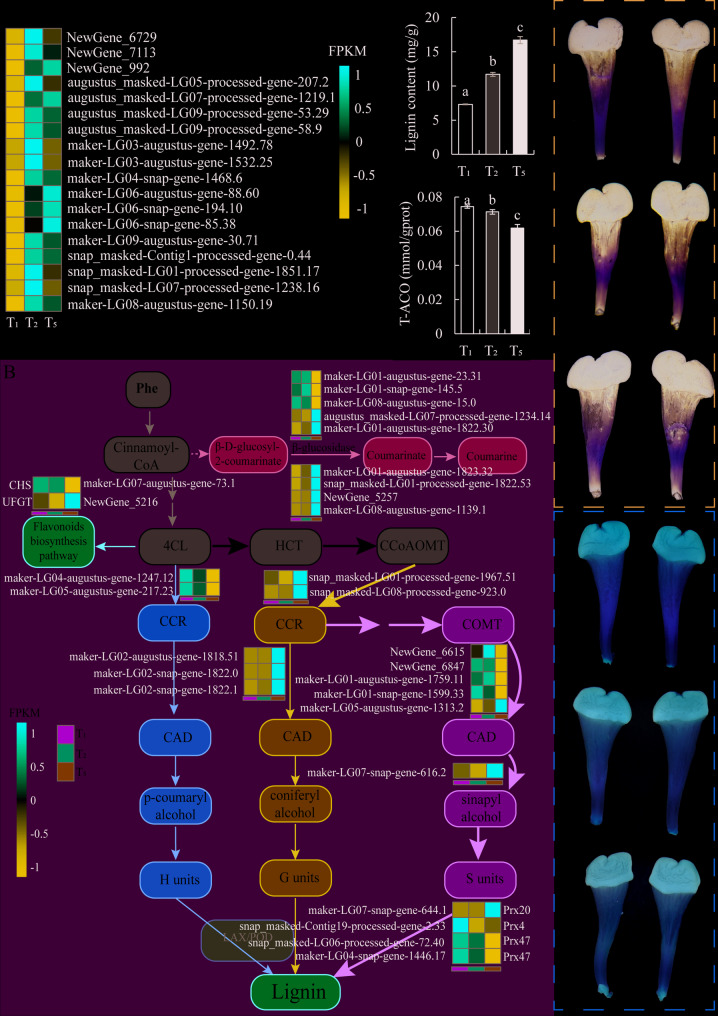 Figure 4
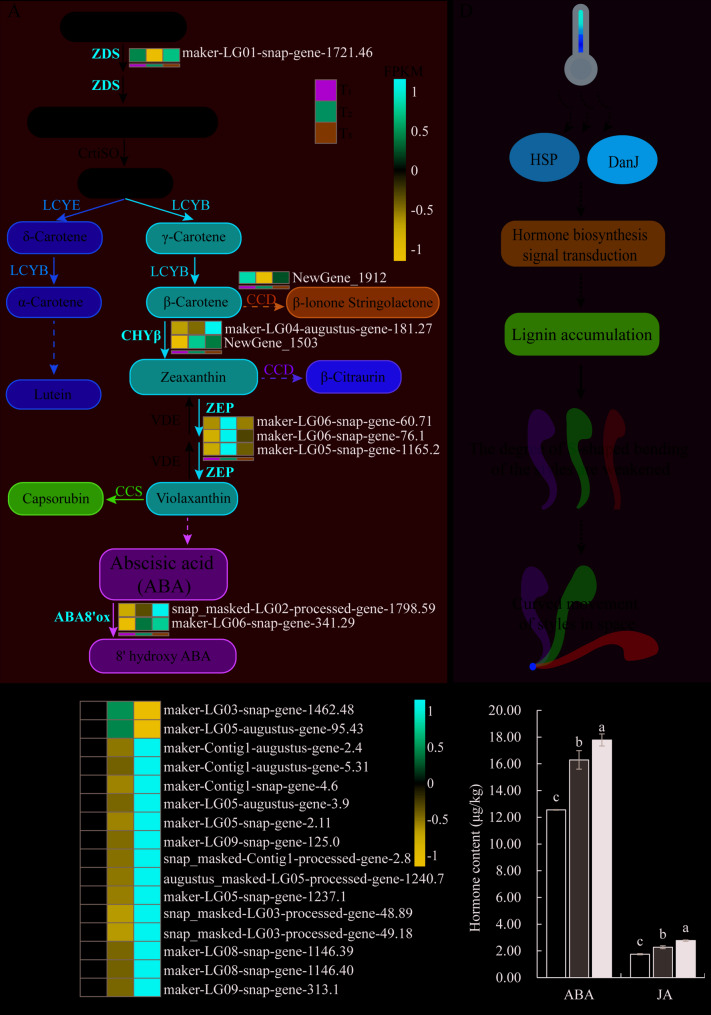 Figure 5
 Figure 6
Peer Reviews
No public reviews on file for this paper yet. If you reviewed it on a platform where reviews are public (OpenReview, ICLR, NeurIPS, ICML), you can paste yours below so the community can read it here.
Videos
No videos yet. Explain this paper in a talk, walkthrough, or lecture? Add one.
Taxonomy
TopicsPlant Molecular Biology Research · Postharvest Quality and Shelf Life Management · Plant Physiology and Cultivation Studies