Using longitudinal, multi-partner qualitative data to evaluate the implementation of a diabetes prevention and management intervention among South Asians Americans
Shahmir H. Ali, Deborah Onakomaiya, Nabeel I. Saif, Fardin Rahman, Farhan M. Mohsin, Sadia Mohaimin, Ashlin Rakhra, Shinu Mammen, Sarah Hussain, Jennifer Zanowiak, Sahnah Lim, Donna Shelley, Nadia S. Islam

TL;DR
This study evaluates how a diabetes prevention program for South Asian Americans was implemented over time, highlighting the importance of adaptability and collaboration.
Contribution
The study introduces a real-time, longitudinal qualitative approach to assess the implementation of a diabetes intervention in a minoritized community.
Findings
Community health workers adapted the program to meet patient needs and changing circumstances, such as the shift to remote delivery during the pandemic.
Strong partner engagement and structured communication helped navigate challenges like policy changes and resource fluctuations.
The study shows how program adaptability and peer mentorship training improved implementation and community connections.
Abstract
Community-clinical linkage models (CCLM) display significant potential to address the unique, multi-level type 2 diabetes risk factors facing minoritized communities, such as South Asian Americans. However, there lacks a systematic, longitudinal evaluation of how such tailored CCLMs can be better implemented in dynamic, real-world settings. This study aims to leverage multi-partner insights, collected in real time, to explore the barriers and facilitators to implement a South Asian American diabetes management and prevention intervention (the DREAM intervention). The DREAM intervention, a two-arm randomized controlled trial, was implemented from 2019–2022; partners involved in its implementation were interviewed annually to understand their experiences of the program. Implementation partners included community health workers (CHWs), participating healthcare providers, community…
Genes, proteins, chemicals, diseases, species, mutations and cell lines named across the full text — each resolved to its canonical identifier and authoritative record.
Click any figure to enlarge with its caption.
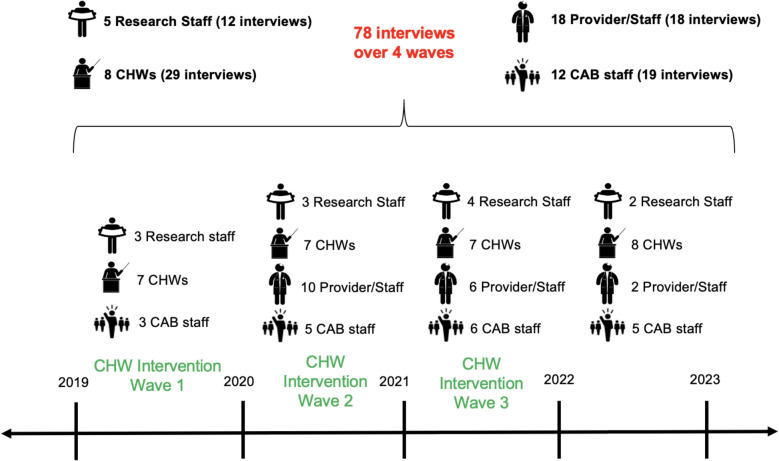 Figure 1
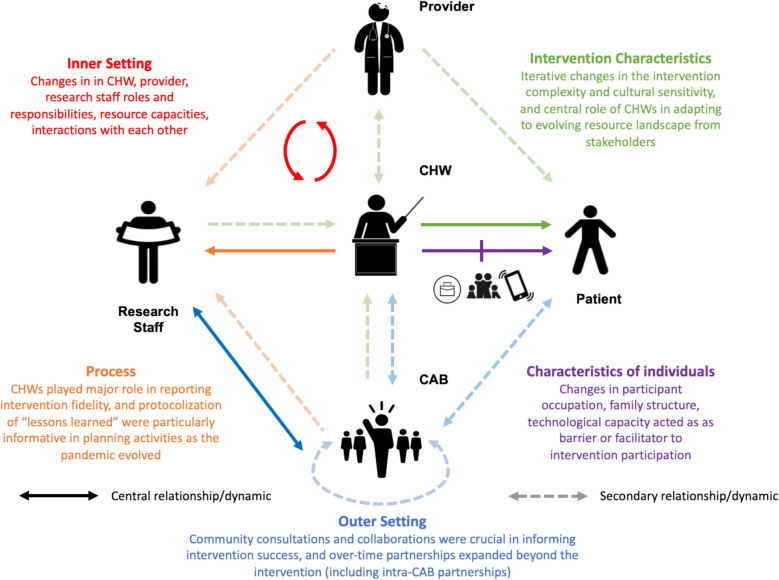 Figure 2
Peer Reviews
No public reviews on file for this paper yet. If you reviewed it on a platform where reviews are public (OpenReview, ICLR, NeurIPS, ICML), you can paste yours below so the community can read it here.
Videos
No videos yet. Explain this paper in a talk, walkthrough, or lecture? Add one.
Taxonomy
TopicsDiabetes Management and Education · Community Health and Development · Health Policy Implementation Science