Japanese value set for the Functional Assessment of Cancer Therapy Eight Dimension (FACT-8D) cancer-specific preference-based quality of life instrument
T. Shiroiwa, M. T. King, R. Campbell, T. Murata, K. Shimozuma, T. Fukuda, R. Norman

TL;DR
This study created a Japanese version of the FACT-8D tool, which measures cancer patients' quality of life in a way that can be used to calculate quality-adjusted life years.
Contribution
The study provides a new Japanese value set for the FACT-8D instrument using a population-based discrete choice experiment.
Findings
The Japanese value set showed that Pain and Nausea had the strongest negative impact on health utilities.
The worst health state in Japan scored -0.60, significantly lower than in other countries like the UK and Australia.
The study confirmed the feasibility of deriving health utilities from the widely used FACT-G questionnaire.
Abstract
The Functional Assessment of Cancer Therapy General (FACT-G) questionnaire is frequently used to assess health-related quality of life (HRQOL) in cancer patients. However, data obtained using the FACT-G cannot be directly used to calculate quality-adjusted life years (QALYs). The newly developed FACT Eight Dimensions (FACT-8D) is a preference-based measure that generates health utilities scores from 9 of the 27 FACT-G items, representing eight HRQOL domains (Nausea, Pain, Fatigue, Sleep, Work, Worry, Sadness, Support from family/friends). This study aimed to create a Japanese FACT-8D value set. A cross-sectional online survey of the Japanese general population recruited participants via a Japanese online panel, quota sampled by age (≥ 18 years) and sex. FACT-8D valuation data were collected with a discrete choice experiment. The valuation task required each participant to consider 16…
Genes, proteins, chemicals, diseases, species, mutations and cell lines named across the full text — each resolved to its canonical identifier and authoritative record.
Click any figure to enlarge with its caption.
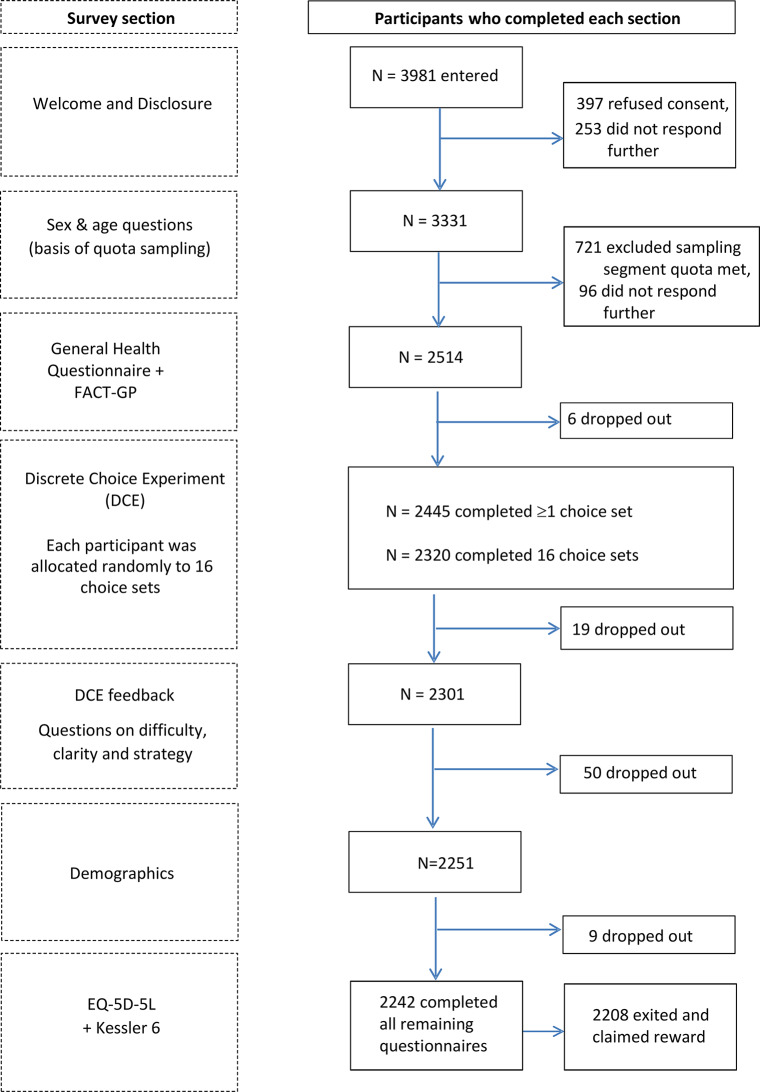 Figure 1
 Figure 2
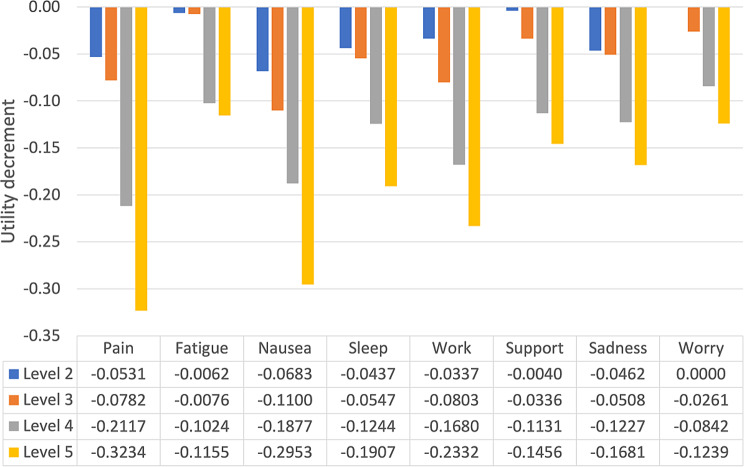 Figure 3
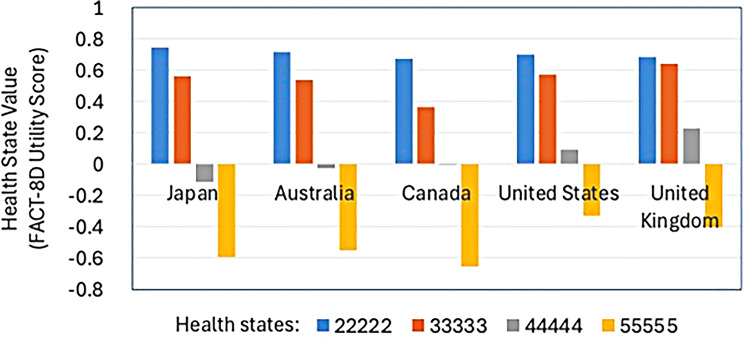 Figure 4
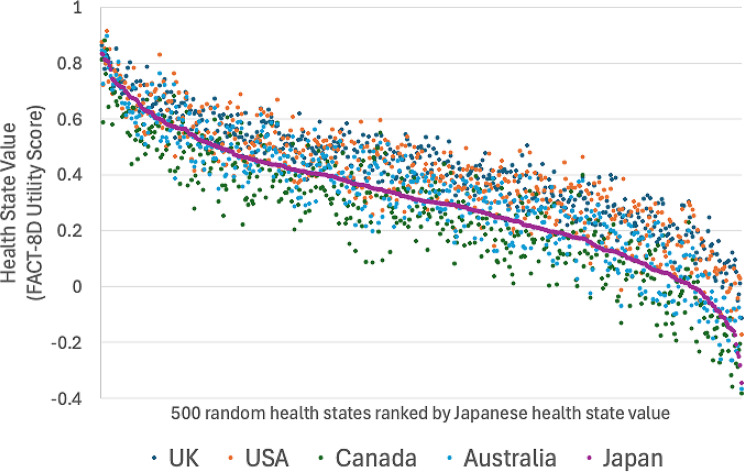 Figure 5
Peer Reviews
No public reviews on file for this paper yet. If you reviewed it on a platform where reviews are public (OpenReview, ICLR, NeurIPS, ICML), you can paste yours below so the community can read it here.
Videos
No videos yet. Explain this paper in a talk, walkthrough, or lecture? Add one.
Taxonomy
TopicsHealth Systems, Economic Evaluations, Quality of Life · Cancer survivorship and care · Palliative Care and End-of-Life Issues