Comparing in-person and remote consent of people with dementia into a primary care-based cluster randomised controlled trial: lessons from the Dementia PersonAlised Care Team (D-PACT) feasibility study
T. M. Oh, S. Batool, C. Musicha, L. Greene, H. Wheat, L. Smith, S. Griffiths, A. Gude, L. Weston, H. Shafi, K. Stevens, C. Sutcliffe, W. Taylor, W. Ingram, B. Hussain, P. Clarkson, I. Sherriff, O. C. Ukoumunne, S. Creanor, R. Byng

TL;DR
This study compares in-person and remote recruitment methods for dementia patients in a UK trial, finding that remote methods can be as effective but require more time.
Contribution
The study introduces a feasible remote consent process for dementia patients, including those without capacity, during the pandemic.
Findings
Remote consent achieved similar recruitment rates to in-person methods but required more time per participant.
Interviews showed remote processes were generally acceptable but information overload was a concern.
A hybrid recruitment approach is recommended to improve inclusivity and person-centered care in dementia research.
Abstract
Complex socio-cultural, psychological, geographical, and service-related challenges are faced when recruiting people with dementia for clinical trials. The aim of Phase 1 of the Dementia PersonAlised Care Team (D-PACT) project was to assess the feasibility of recruiting (identifying, approaching and consenting) people with dementia, including those without capacity to consent, to a cluster randomized controlled trial of a primary care-based personalized dementia support intervention in England. COVID-19 necessitated a shift to remote working, creating the opportunity to compare recruitment strategies before and under lockdown constraints. This paper shares the adaptations made to enable remote consent and capacity judgement with people with dementia, as well as lessons learned. Consent was conducted in person from September 2019 to March 2020. Remote consent was implemented from…
Genes, proteins, chemicals, diseases, species, mutations and cell lines named across the full text — each resolved to its canonical identifier and authoritative record.
Click any figure to enlarge with its caption.
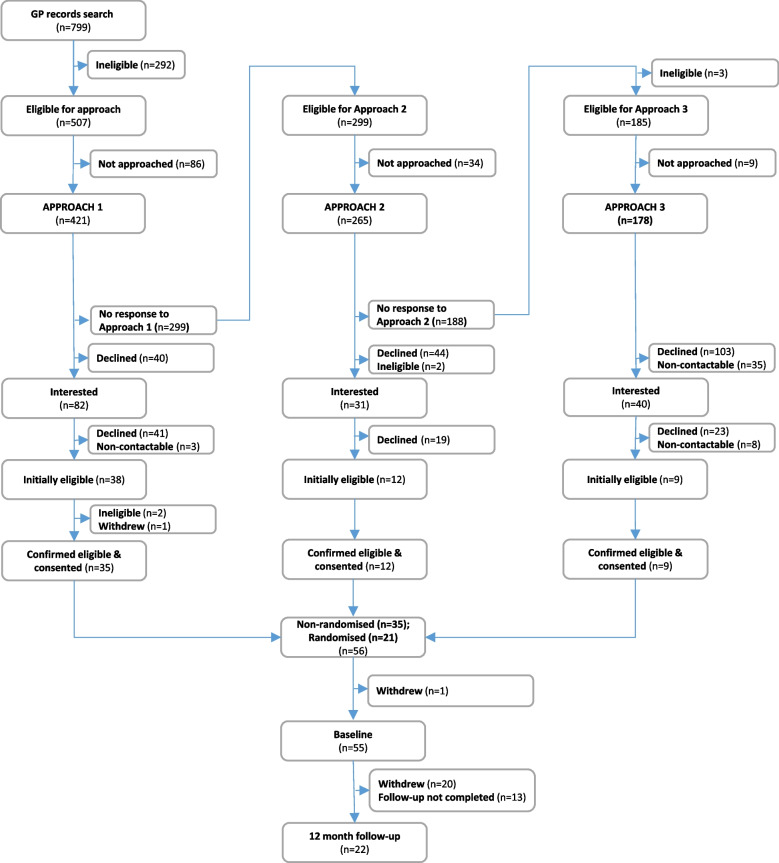 Figure 1
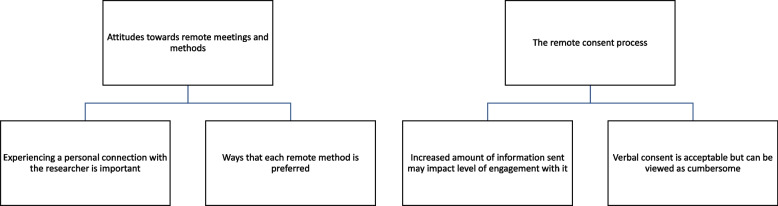 Figure 2
Peer Reviews
No public reviews on file for this paper yet. If you reviewed it on a platform where reviews are public (OpenReview, ICLR, NeurIPS, ICML), you can paste yours below so the community can read it here.
Videos
No videos yet. Explain this paper in a talk, walkthrough, or lecture? Add one.
Taxonomy
TopicsHealthcare Decision-Making and Restraints · Patient Dignity and Privacy · Education, Healthcare and Sociology Research