Biopsychological pattern underlying the psychosomatic symptoms of patients with Hwabyung from a universal perspective
Han Chae, Soo Jin Lee, Seok In Yoon, Hui-Yeong Park, Jong Woo Kim

TL;DR
This study explores the biopsychological patterns of Hwabyung, a Korean psychosomatic condition, using a universal framework to better understand and treat it.
Contribution
The study introduces a universal biopsychological framework for Hwabyung, integrating traditional East Asian medical psychology insights.
Findings
SPQ subscales explained 26.0% of psychological and 14.3% of somatic Hwabyung symptoms.
Three Hwabyung subgroups (mild, moderate, severe) were identified based on symptom severity.
Severe Hwabyung patients showed high SPQ-B, low SPQ-C, and low SPQ-E scores, indicating specific biopsychological traits.
Abstract
Hwabyung is a psychiatric syndrome originally described in Korea that presents as chronic psychosomatic distress with emotional dysregulation and heightened somatic arousal. However, no objective analysis to clarify its progressive mechanism within a universal biopsychological framework has as yet been done that incorporates insights from traditional East Asian medical psychology. We recruited 118 patients with Hwabyung and assessed their psychological and somatic symptoms using the Hwabyung Test (HB). Levels of depression, anxiety, and anger expression, as well as biopsychological features were evaluated with the Sasang Personality Questionnaire (SPQ). Psychological and somatic symptoms of Hwabyung were predicted through a regression analysis that used three SPQ subscales: behavioral activation (SPQ-B), cognitive flexibility (SPQ-C), and emotional responsiveness (SPQ-E). Hwabyung…
Genes, proteins, chemicals, diseases, species, mutations and cell lines named across the full text — each resolved to its canonical identifier and authoritative record.
Click any figure to enlarge with its caption.
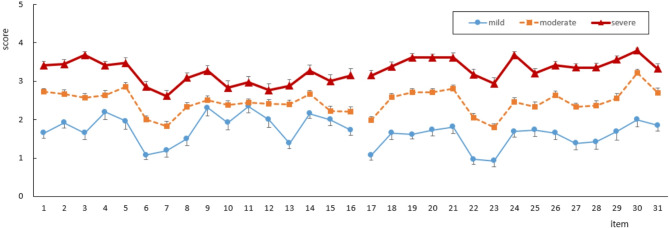 Figure 1
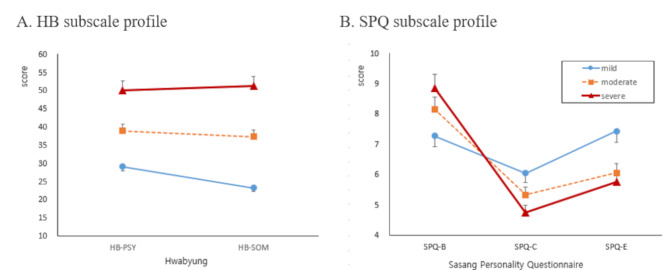 Figure 2
Peer Reviews
No public reviews on file for this paper yet. If you reviewed it on a platform where reviews are public (OpenReview, ICLR, NeurIPS, ICML), you can paste yours below so the community can read it here.
Videos
No videos yet. Explain this paper in a talk, walkthrough, or lecture? Add one.
Taxonomy
TopicsTraditional Chinese Medicine Studies · Psychosomatic Disorders and Their Treatments · Medical Case Reports and Studies