Antimicrobial film from poly(butylene succinate) and cymophenol as a sustainable approach to food waste reduction: antimicrobial properties and its effects on soil microorganism, brine shrimp (Artemia salina) and fresh strawberry
Benjatham Sukkaneewat, Kamonchai Cha-aim, Sirijutaratana Covavisaruch, Phisut Naknaen, Jakkid Sanetuntikul, Nawadon Petchwattana

TL;DR
This paper introduces a sustainable antimicrobial film made from poly(butylene succinate) and cymophenol that helps reduce food waste by extending the shelf life of strawberries while being safe for the environment.
Contribution
The novel contribution is the development of a biodegradable antimicrobial film with enhanced mechanical and functional properties for food packaging.
Findings
The film effectively inhibited Staphylococcus aureus and Escherichia coli growth at specific cymophenol concentrations.
Thicker films showed higher cymophenol migration and improved mechanical properties like stretchability.
The films did not harm soil microorganisms and extended strawberry shelf life by reducing mold and yeast growth.
Abstract
To develop antimicrobial films for active food packaging applications, poly(butylene succinate) (PBS) was fabricated into films of varying thicknesses (50, 75 and 100 μm) and incorporated with different cymophenol concentrations (0 to 10 wt%). The results demonstrated that cymophenol functioned not only as an antimicrobial agent but also as a plasticizer, enhancing the essential properties required for food packaging films. The films effectively inhibited the growth of Staphylococcus aureus and Escherichia coli at cymophenol concentrations of 6 and 8 wt%, respectively. Both increased cymophenol content and film thickness contributed to improved mechanical properties, particularly by elevating stretchability. Release tests indicated that thicker films exhibited higher cymophenol migration, which correlated with an increased diffusion coefficient. Besides packaging film properties, the…
Genes, proteins, chemicals, diseases, species, mutations and cell lines named across the full text — each resolved to its canonical identifier and authoritative record.
Click any figure to enlarge with its caption.
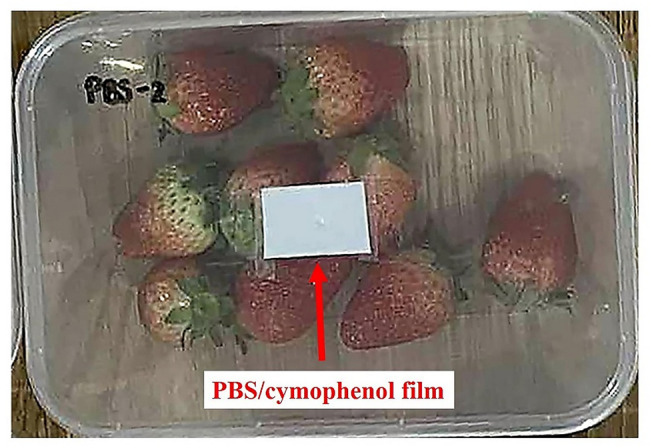 Figure 1
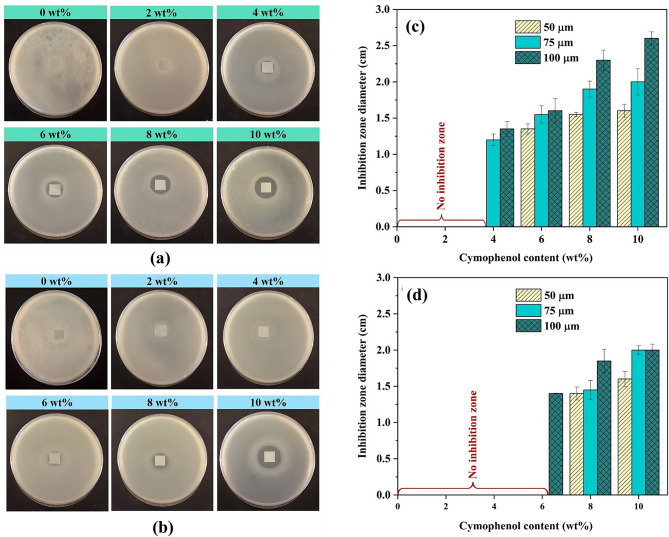 Figure 2
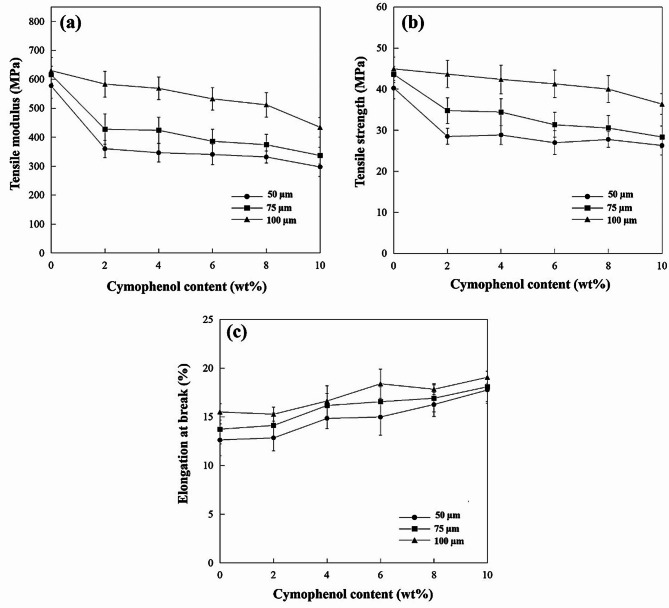 Figure 3
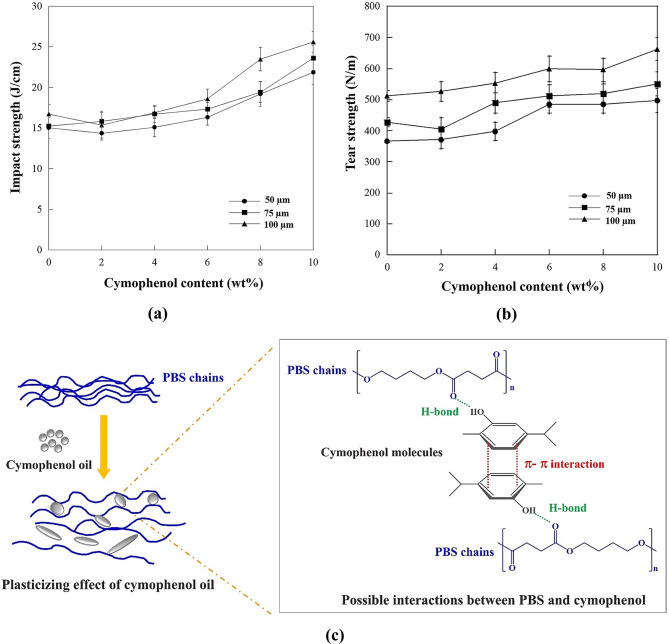 Figure 4
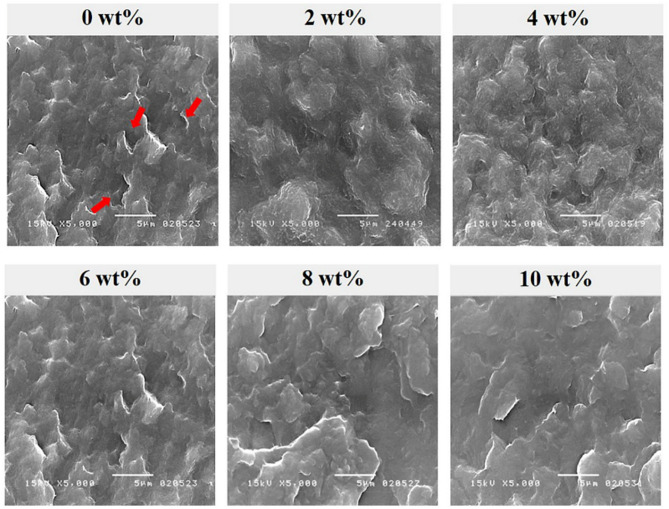 Figure 5
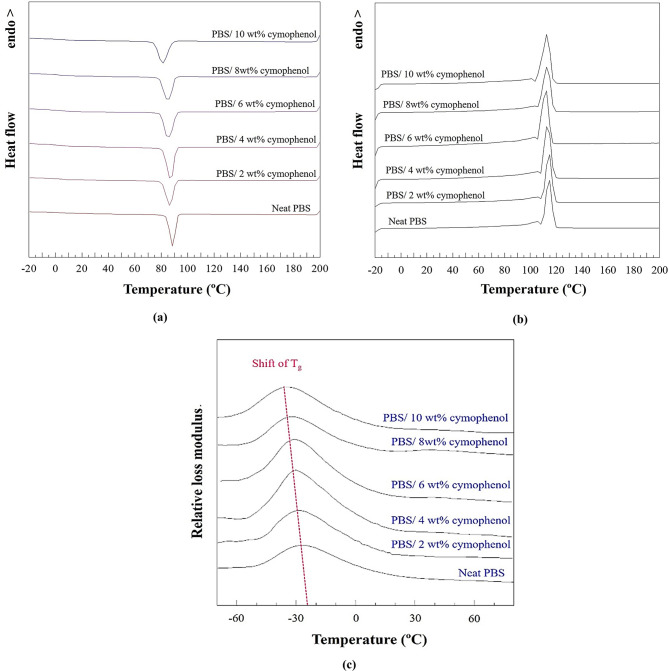 Figure 6
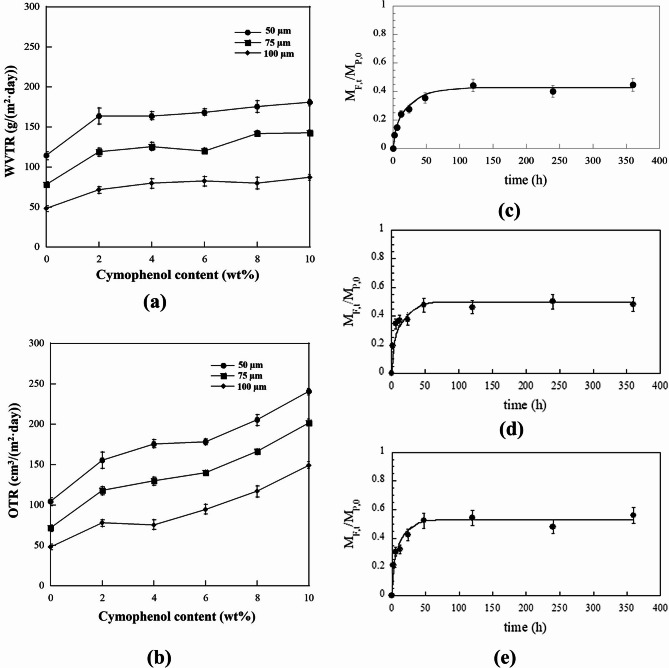 Figure 7
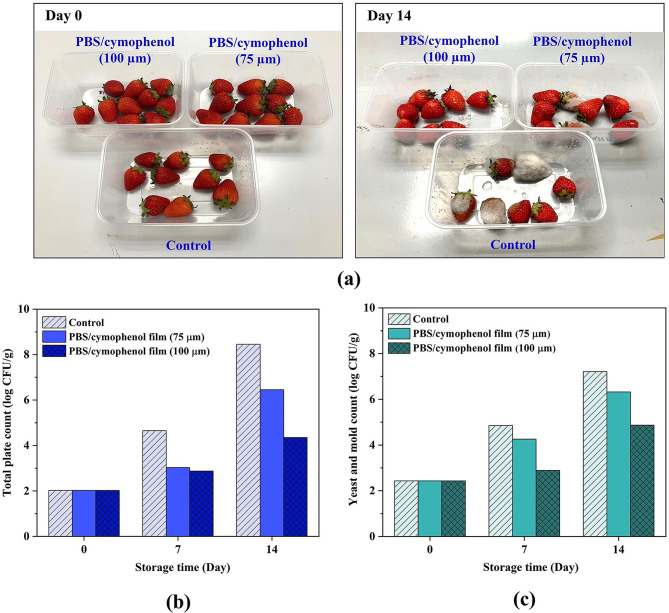 Figure 8
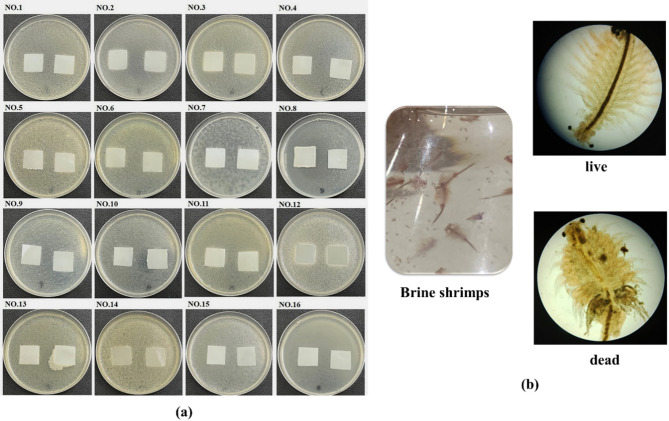 Figure 9
Peer Reviews
No public reviews on file for this paper yet. If you reviewed it on a platform where reviews are public (OpenReview, ICLR, NeurIPS, ICML), you can paste yours below so the community can read it here.
Videos
No videos yet. Explain this paper in a talk, walkthrough, or lecture? Add one.
Taxonomy
TopicsNanocomposite Films for Food Packaging · biodegradable polymer synthesis and properties · Microplastics and Plastic Pollution