Pore Network Percolation in Polymers of Intrinsic Microporosity Examined by Gaseous and Antimatter Probes
Darin Sukalingum, Tianran Zhai, Marc H. Weber, Sohraab A. Khan, Thant H. Htut, Jeremy I. Feldblyum

TL;DR
This paper explores how pore accessibility in a type of polymer called PIMs is influenced by network percolation using both gaseous and antimatter probes.
Contribution
The study introduces a percolation model to explain pore accessibility in PIMs and uses antimatter probes to detect buried pores.
Findings
Buried pores in PIMs are detected using positron-based Doppler broadening spectroscopy.
Pore accessibility in PIMs is linked to network percolation behavior.
Nonpercolated networks in PIMs contain inaccessible pores.
Abstract
Synthesis of polymers with tailored properties requires an understanding of the underlying phenomena leading to these properties. Polymers of intrinsic microporosity (PIMs) are non-network polymers with a substantial guest-accessible free volume. Their BET surface areas have been reported to be as high as 1000 m2/g, and their porosity has led to the demonstration of some of the best membrane-based gas separations to date. However, it has been challenging to predict porosity in PIMs a priori, in part due to an incomplete framework for understanding the origins of porosity in these materials. Here, porosity in several archetypal PIMs is examined through the lens of a percolation model, whereby porosity in oligomers follows behavior expected for nonpercolated and percolated networks. Positron-based Doppler broadening spectroscopy is used to examine buried pores in samples whose pores are…
Genes, proteins, chemicals, diseases, species, mutations and cell lines named across the full text — each resolved to its canonical identifier and authoritative record.
Click any figure to enlarge with its caption.
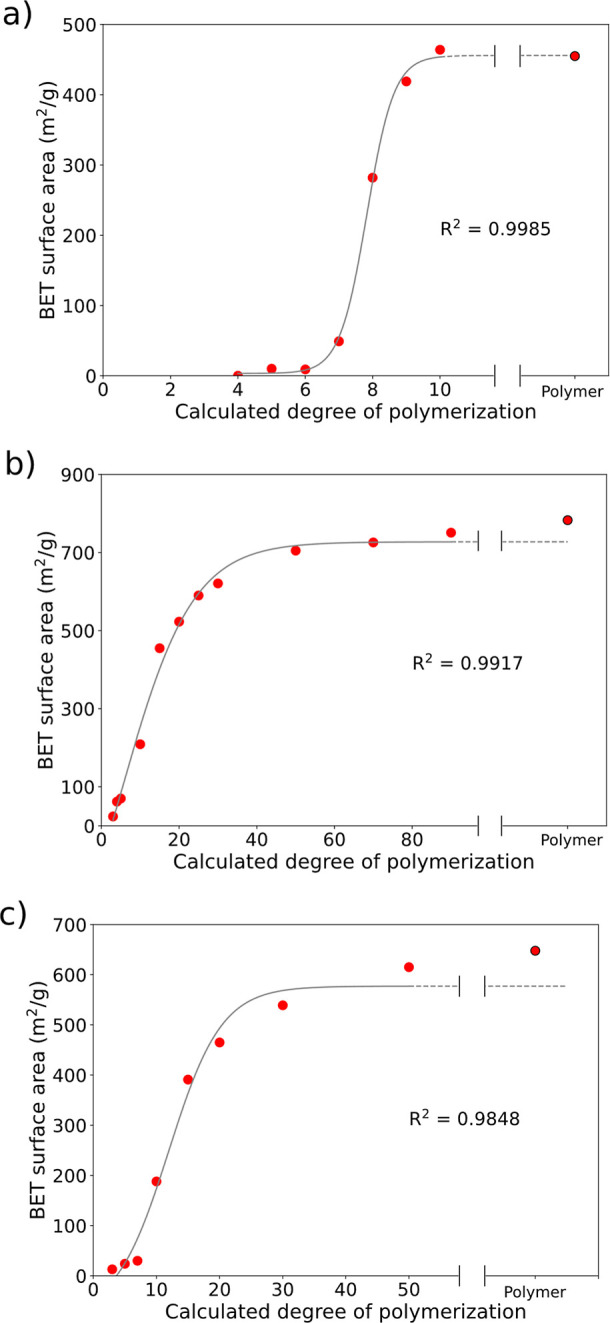 Figure 1
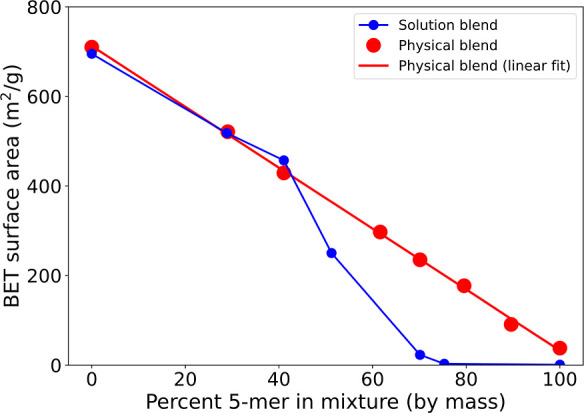 Figure 2
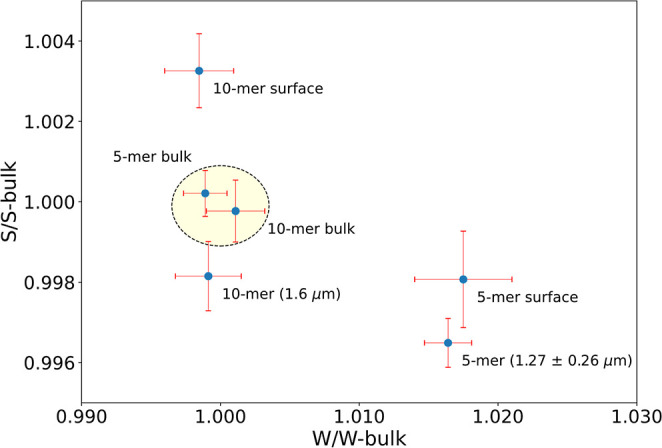 Figure 3
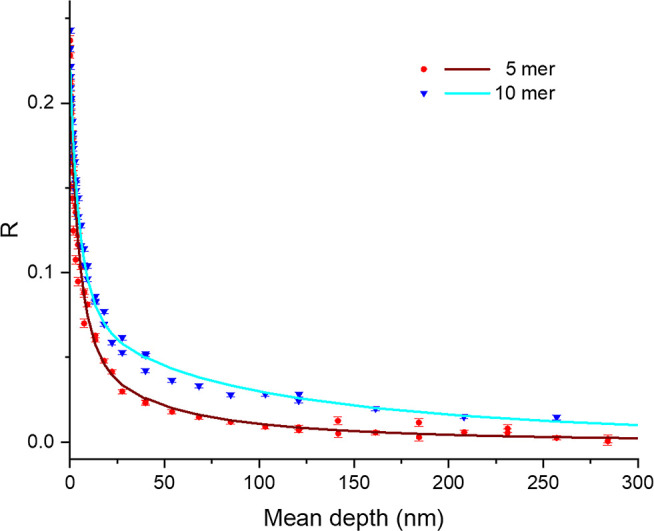 Figure 4
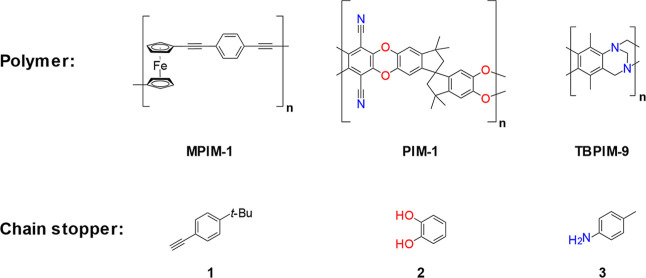 Figure 5
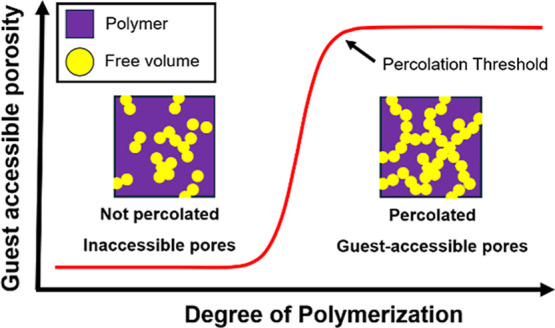 Figure 6
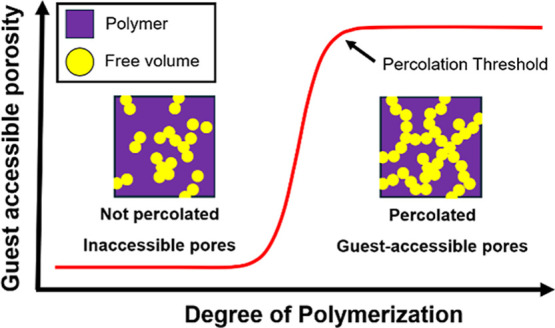 Figure 7
 Figure 8
Peer Reviews
No public reviews on file for this paper yet. If you reviewed it on a platform where reviews are public (OpenReview, ICLR, NeurIPS, ICML), you can paste yours below so the community can read it here.
Videos
No videos yet. Explain this paper in a talk, walkthrough, or lecture? Add one.
Taxonomy
TopicsMembrane Separation and Gas Transport · Muon and positron interactions and applications · Microfluidic and Capillary Electrophoresis Applications