Structure and Stability of Phospholipid-Based Microbubbles Studied Using a Spin Probe
Lauren E. Jarocha, Jason E. Streeter, Sherwood Ivan Weaver, Andrew McHorse, Natalia V. Lebedeva, Paul A. Dayton, Malcolm D. E. Forbes

TL;DR
This study uses EPR spectroscopy to examine the structure and stability of phospholipid-based microbubbles over time.
Contribution
The study introduces a novel method using a spin probe and EPR to monitor microbubble degradation in real-time.
Findings
The spin probe showed slow motion and ordering in the phospholipid monolayer at room temperature.
Over 12 hours, microbubbles degraded, forming a liquid phase with the spin probe incorporated into liposomes or micelles.
Degradation was attributed to gas exchange and interactions with capillary walls.
Abstract
Steady-state electron paramagnetic resonance (EPR) spectroscopy is used to investigate the structure and stability of surfactant microbubbles made from distearoylphosphatidylcholine (DSPC) phospholipids and a polymeric stabilizer. The spin probe doxyl-5-stearic acid (5DSA) was incorporated into the phospholipid monolayer at an overall concentration of 3 × 10⁻⁷ M. The bubbles were characterized by optical microscopy and found to range in diameter from 0.6 to 10 μm. The EPR spectrum of the spin probe at room temperature exhibited slow motion and ordering. This behavior was simulated using the microscopic order–macroscopic disorder (MOMD) model through the EasySpin software package. During the course of 12 h in the EPR sample tube, a sharper fast-motion nitroxide spectrum appeared, indicating degradation of the bubbles over time. This is attributed to the typical process of microbubble…
Genes, proteins, chemicals, diseases, species, mutations and cell lines named across the full text — each resolved to its canonical identifier and authoritative record.
Click any figure to enlarge with its caption.
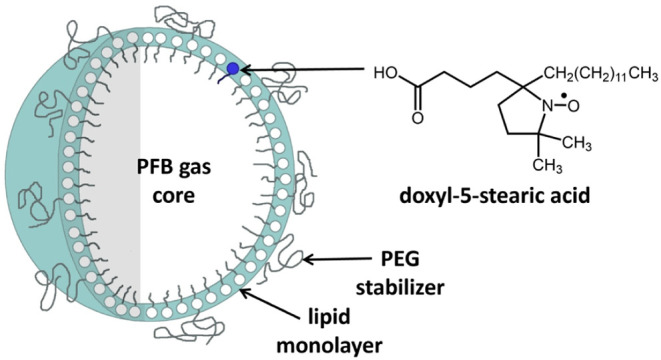 Figure 1
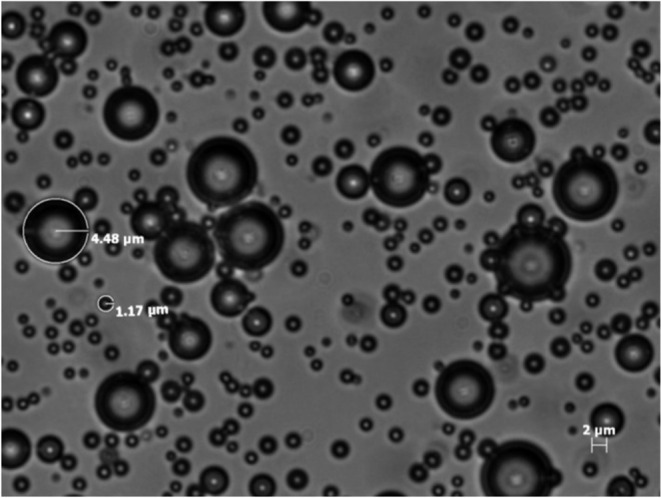 Figure 2
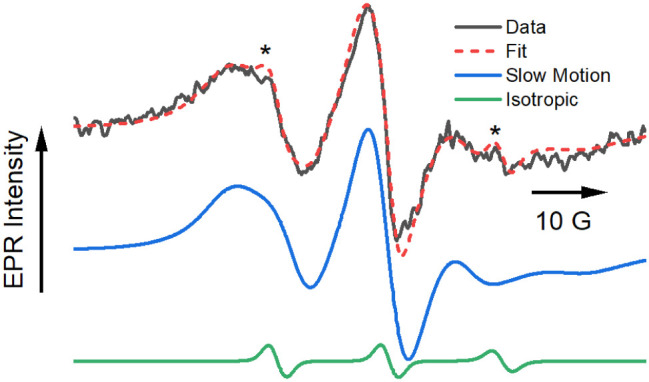 Figure 3
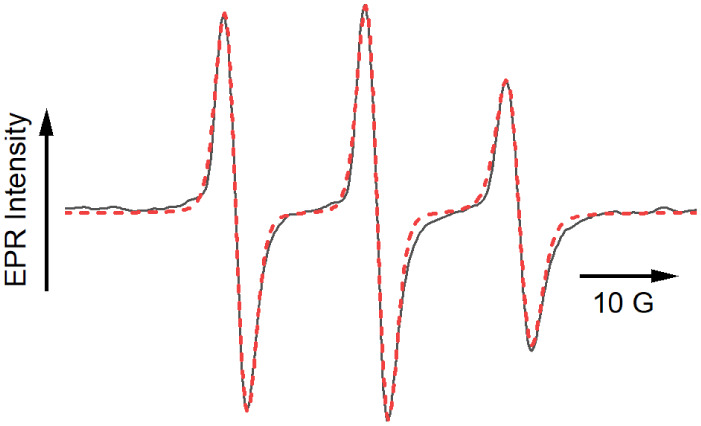 Figure 4
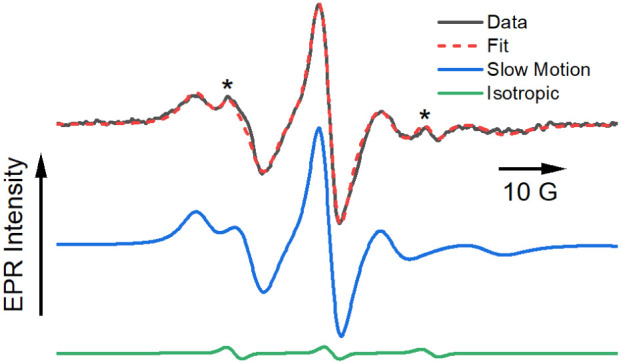 Figure 5
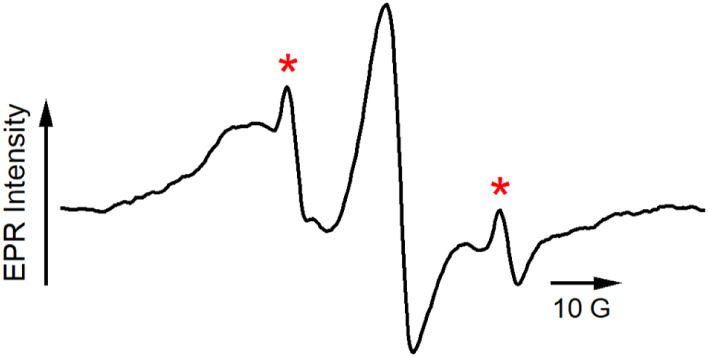 Figure 6
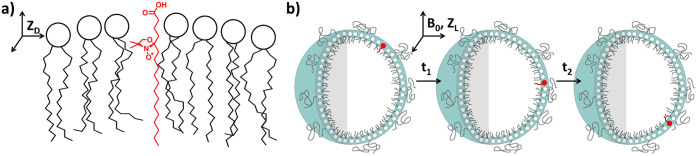 Figure 7
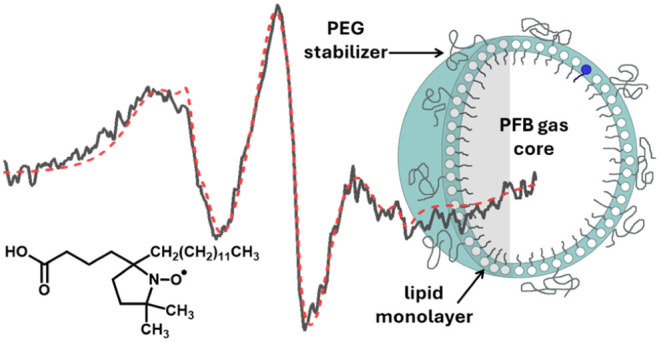 Figure 8
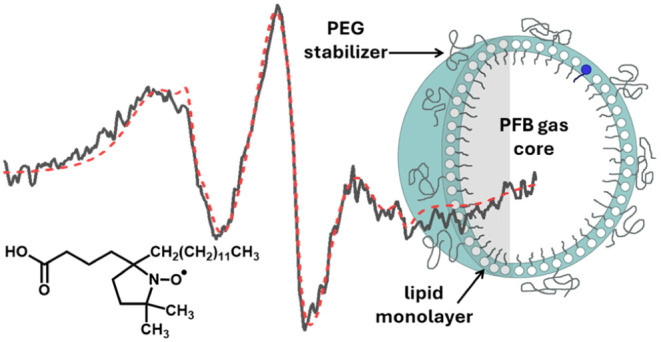 Figure 9
Peer Reviews
No public reviews on file for this paper yet. If you reviewed it on a platform where reviews are public (OpenReview, ICLR, NeurIPS, ICML), you can paste yours below so the community can read it here.
Videos
No videos yet. Explain this paper in a talk, walkthrough, or lecture? Add one.
Taxonomy
TopicsElectron Spin Resonance Studies · Ultrasound and Hyperthermia Applications · Advanced MRI Techniques and Applications