Comparative analysis and forecast of spinal cord injury burden in BRICS countries (1990–2021): insights from the Global Burden of Disease Study 2021
Kongjun Yuan, Mengye Ou, Shaohui Chen, Tian Bai, Hailong Lin, Zhuqiang Luo, Yanli Gao, Xiaoqiang Chen, Sixiong Shi, Dan Zhu

TL;DR
This study analyzes spinal cord injury trends in BRICS countries from 1990 to 2021 and forecasts future patterns, highlighting the need for targeted prevention strategies.
Contribution
The novel contribution is the comparative analysis and forecasting of SCI burden in BRICS countries using GBD 2021 data and ARIMA modeling.
Findings
Age-standardized SCI rates declined in BRICS countries from 1990 to 2021, with South Africa showing the most significant reductions.
Males consistently bore a higher SCI burden, with peak risks shifting to older females.
Falls and road injuries were leading causes of SCI in BRICS countries, with notable regional variations.
Abstract
As major emerging economies, the BRICS (Brazil, Russia, India, China, and South Africa) face a significant and distinct burden of spinal cord injury (SCI). We systematically assessed trends in the burden of SCI and its leading causes from 1990 to 2021 and forecasted trends to 2031, providing evidence to optimize prevention and control strategies. Based on the Global Burden of Disease Study 2021 (GBD 2021), we calculated the age-standardized incidence and prevalence rate (ASIR, ASPR) of SCI in the BRICS, along with the estimated annual percentage change (EAPC) and average annual percentage change (AAPC). Furthermore, we analyzed the etiological composition of the SCI burden and developed an autoregressive integrated moving average (ARIMA) model to forecast its trends from 2022 to 2031. From 1990 to 2021, the absolute number of SCI cases rose in all BRICS countries except Russia;…
Genes, proteins, chemicals, diseases, species, mutations and cell lines named across the full text — each resolved to its canonical identifier and authoritative record.
Click any figure to enlarge with its caption.
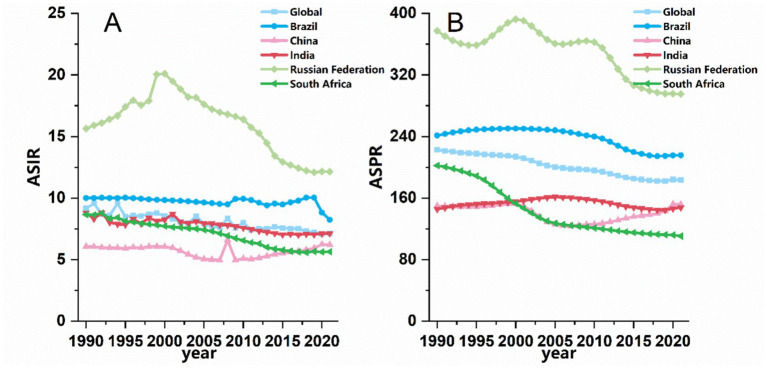 Figure 1
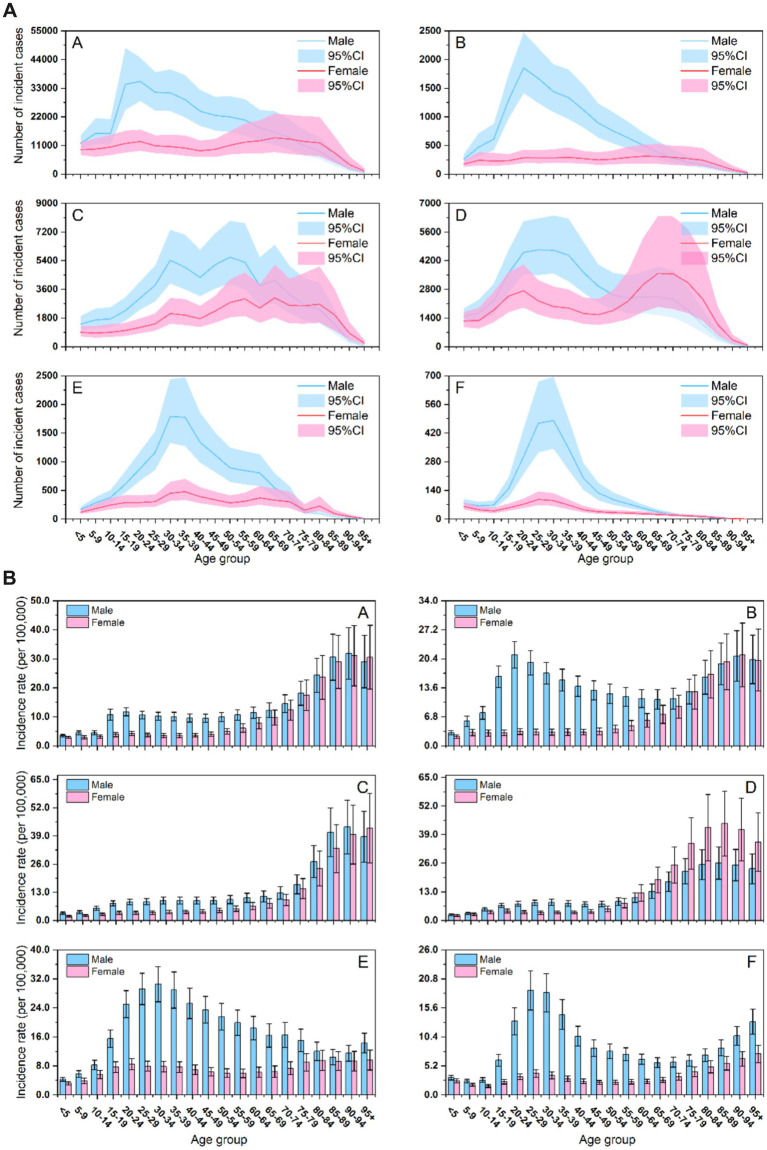 Figure 2
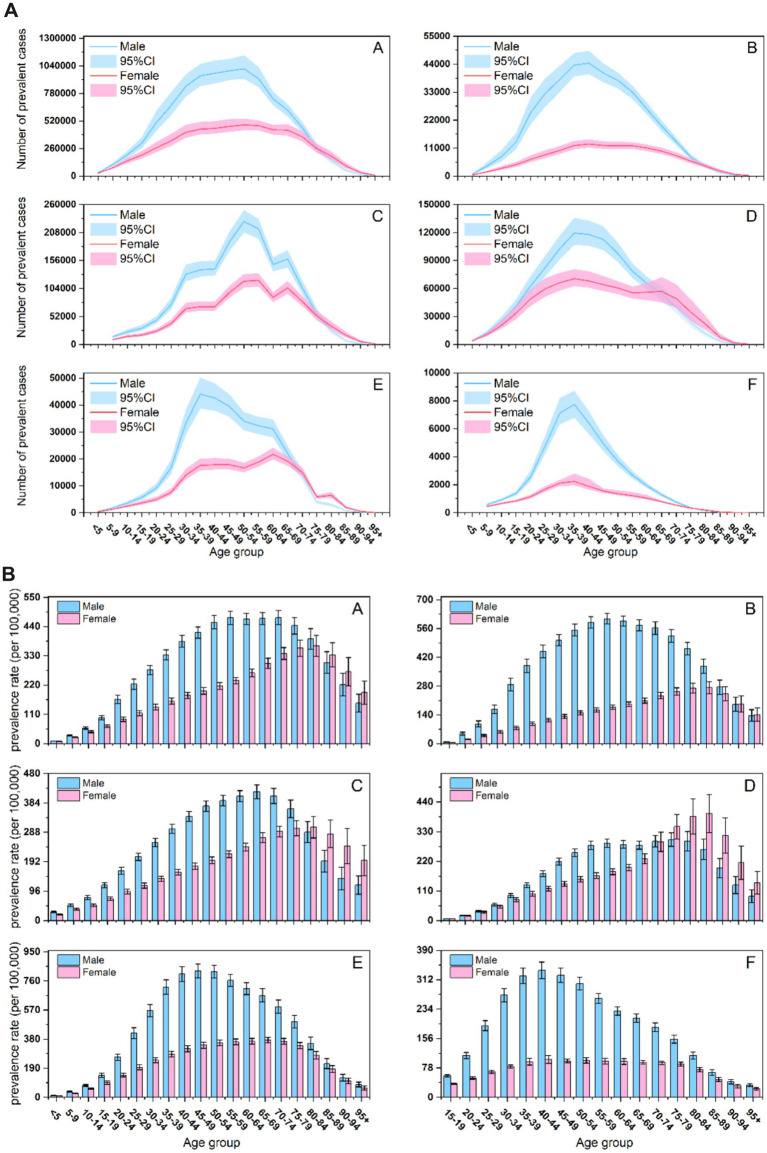 Figure 3
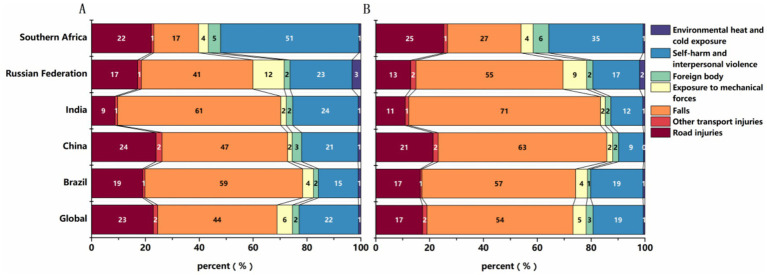 Figure 4
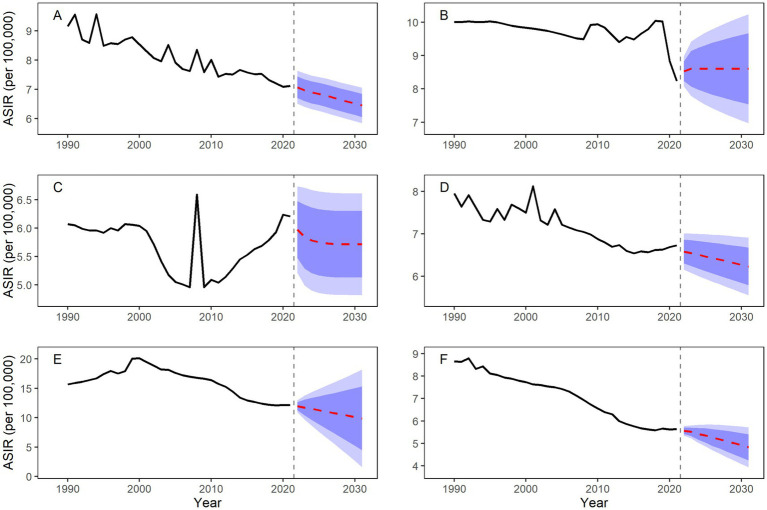 Figure 5
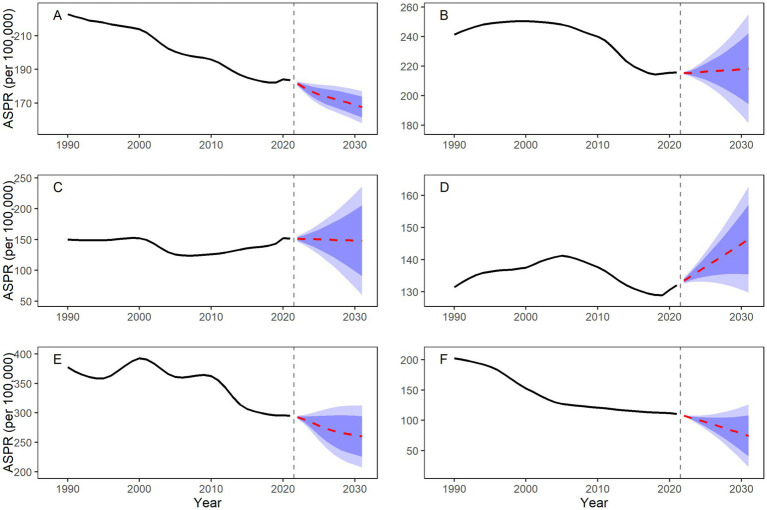 Figure 6
Peer Reviews
No public reviews on file for this paper yet. If you reviewed it on a platform where reviews are public (OpenReview, ICLR, NeurIPS, ICML), you can paste yours below so the community can read it here.
Videos
No videos yet. Explain this paper in a talk, walkthrough, or lecture? Add one.
Taxonomy
TopicsSpinal Cord Injury Research · Trauma and Emergency Care Studies · Diabetic Foot Ulcer Assessment and Management