Equation-of-Motion Coupled-Cluster Variants in Combination with Perturbative Triples Corrections in Strong Magnetic Fields
Marios-Petros Kitsaras, Florian Hampe, Lena Reimund, Stella Stopkowicz

TL;DR
This paper introduces new computational methods to study electronic states of atoms and molecules in strong magnetic fields, aiding in the analysis of white dwarf star spectra.
Contribution
The implementation of EOM-CCSD variants and non-perturbative triples corrections in strong magnetic fields is novel.
Findings
The methods enable the investigation of IPs and EAs in strong magnetic fields for first and second row elements.
Electronic structure calculations for Na, Mg, and Ca in magnetic fields help assign metal lines in white dwarf stars.
Electronic excitations of CH in magnetic fields are studied for applications in WD star atmospheres.
Abstract
In this paper, we report on the implementation of the EOM spin-flip (SF), ionization-potential (IP), and electron-affinity (EA) coupled cluster singles doubles (CCSD) methods for atoms and molecules in strong magnetic fields for energies as well as one-electron properties. Moreover, non-perturbative triples corrections using the EOM-CCSD(T)(a)* scheme were implemented in the finite-field framework for the EE, SF, IP, and EA variants. These developments allow access to a large variety of electronic states as well as the investigation of IPs and EAs in a strong magnetic field. The last two indicate the relative stability of the different oxidation states of elements. The increased flexibility to target challenging electronic states and access to the electronic states of the anion and cation are important for the assignment of spectra from strongly magnetic white dwarf (WD) stars. Here,…
Genes, proteins, chemicals, diseases, species, mutations and cell lines named across the full text — each resolved to its canonical identifier and authoritative record.
Click any figure to enlarge with its caption.
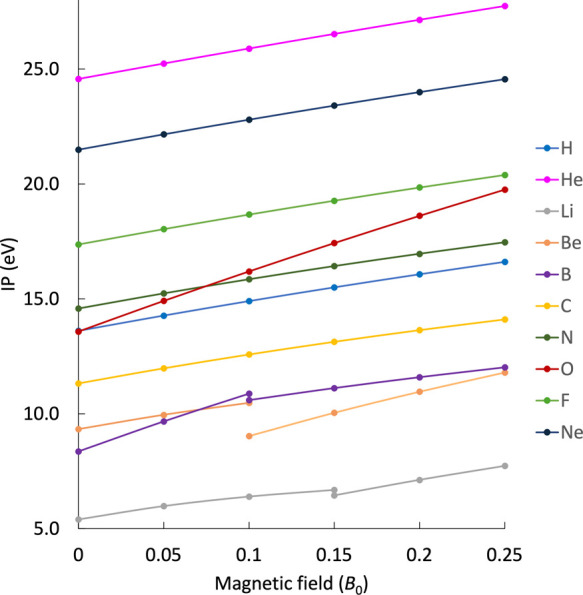 Figure 1
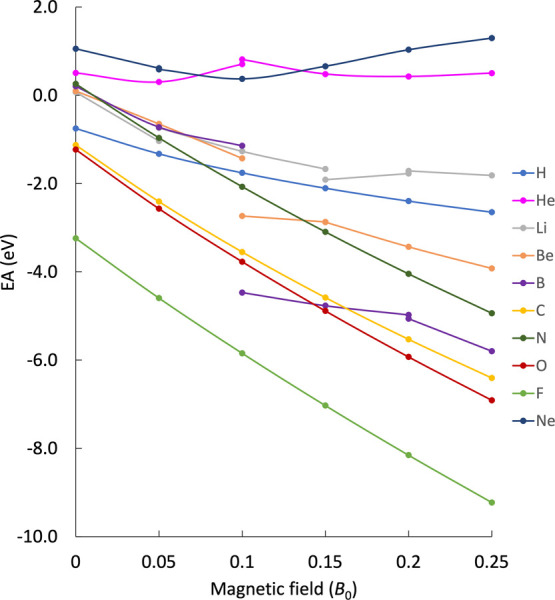 Figure 2
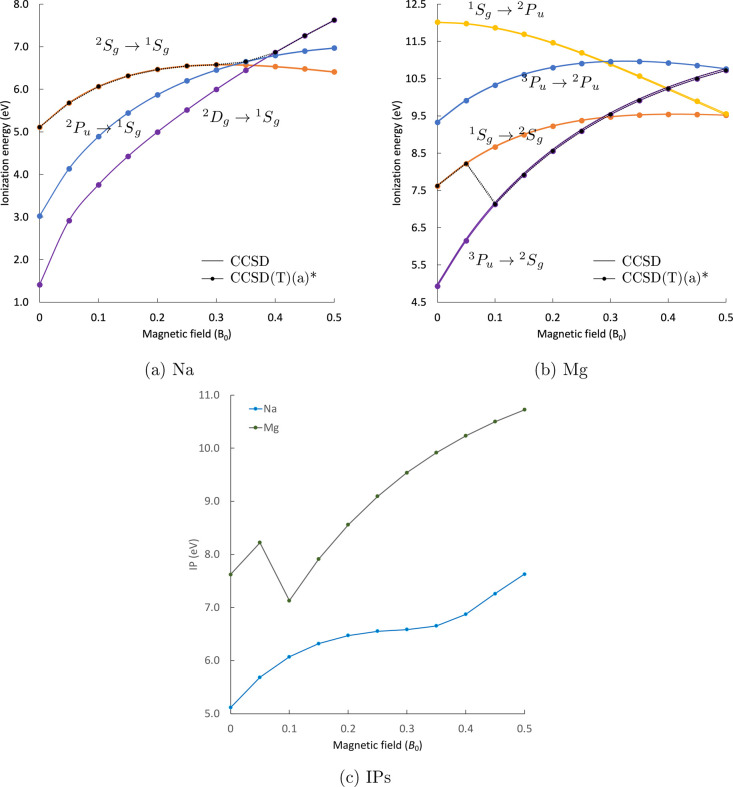 Figure 3
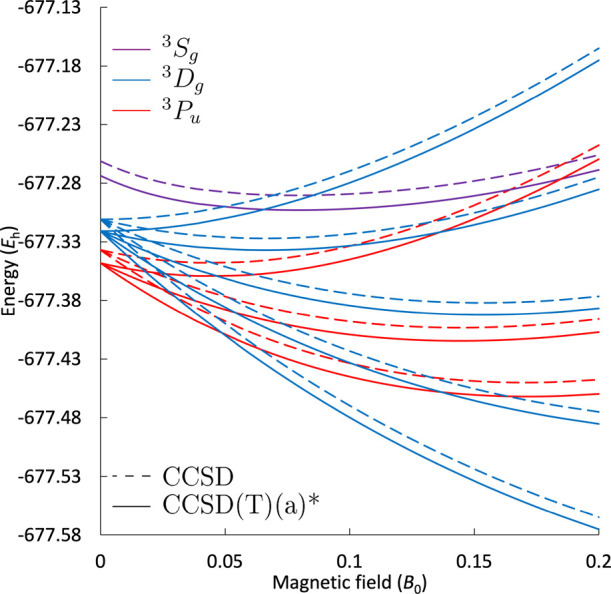 Figure 4
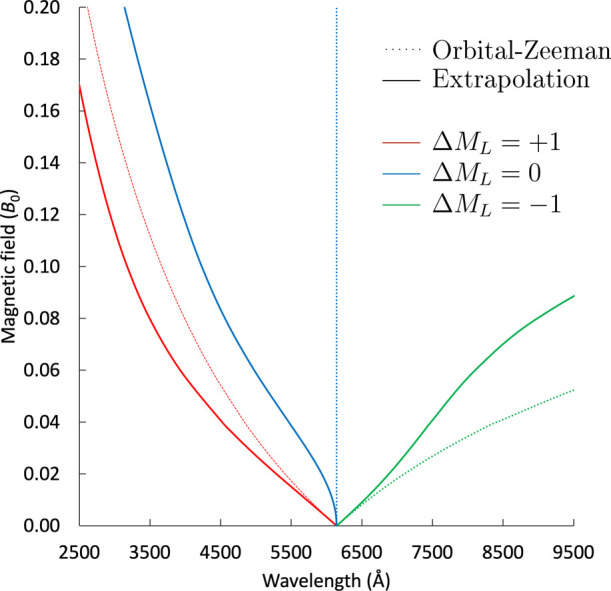 Figure 5
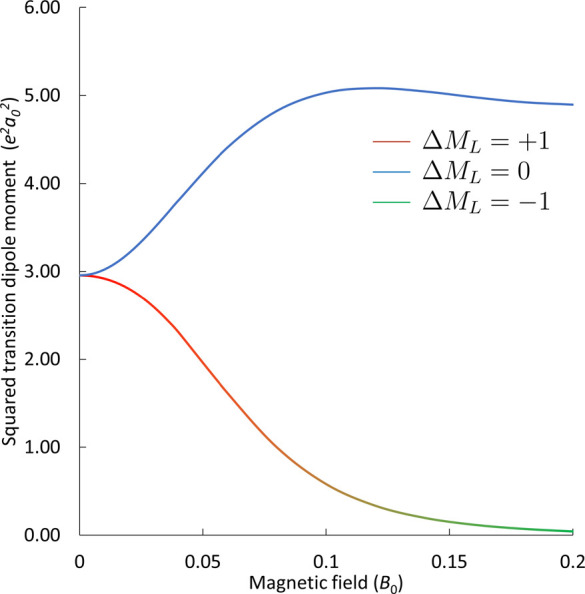 Figure 6
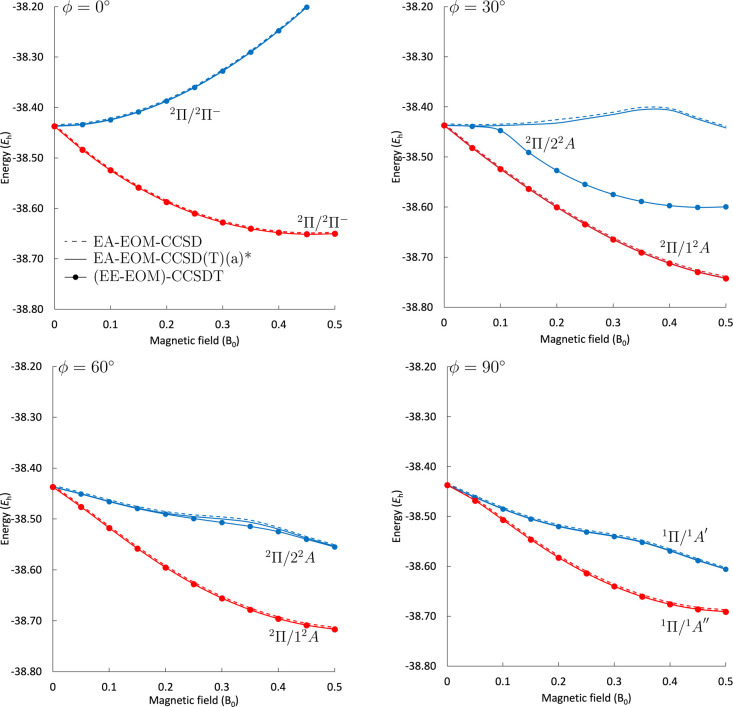 Figure 7
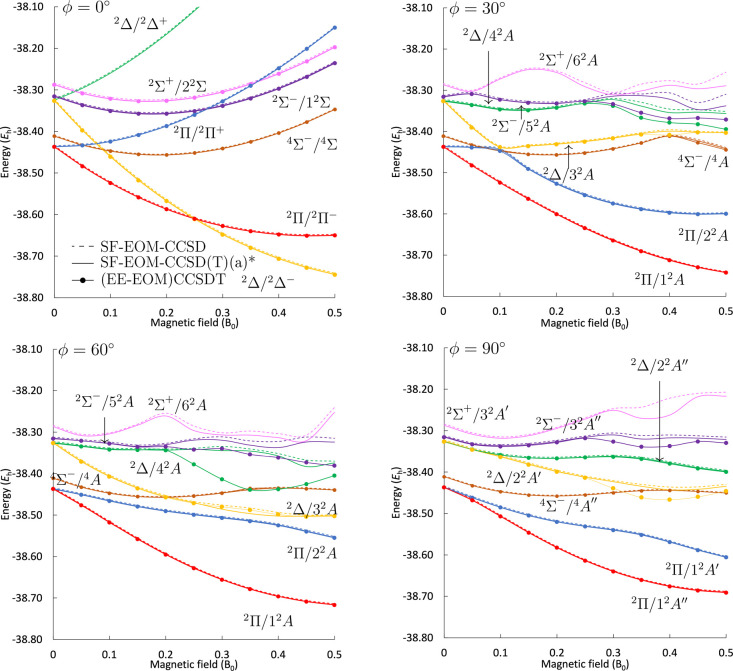 Figure 8
 Figure 9
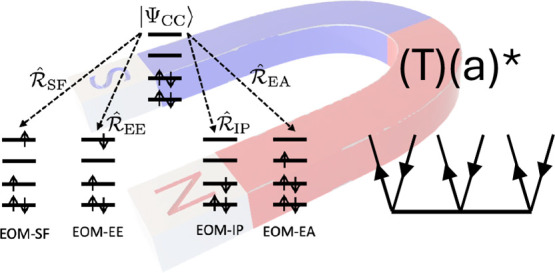 Figure 10
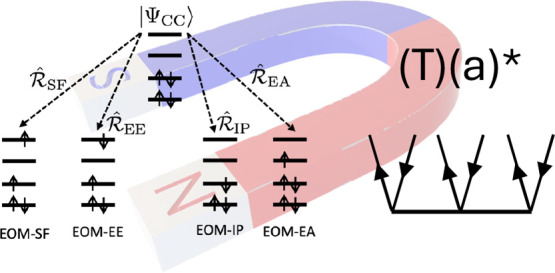 Figure 11
 Figure 12
 Figure 13
 Figure 14
 Figure 15
 Figure 16
 Figure 17
 Figure 18
 Figure 19
 Figure 20
 Figure 21
 Figure 22
 Figure 23
 Figure 24
 Figure 25
 Figure 26
 Figure 27
 Figure 28
 Figure 29
 Figure 30
 Figure 31
 Figure 32
 Figure 33
 Figure 34
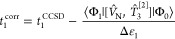 Figure 35
 Figure 36
 Figure 37
 Figure 38
 Figure 39
 Figure 40
 Figure 41
 Figure 42
 Figure 43
 Figure 44
 Figure 45
 Figure 46
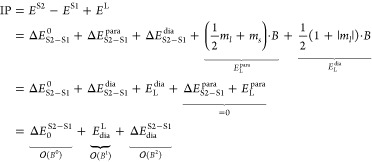 Figure 47
 Figure 48
 Figure 49
 Figure 50
Peer Reviews
No public reviews on file for this paper yet. If you reviewed it on a platform where reviews are public (OpenReview, ICLR, NeurIPS, ICML), you can paste yours below so the community can read it here.
Videos
No videos yet. Explain this paper in a talk, walkthrough, or lecture? Add one.
Taxonomy
TopicsAstro and Planetary Science · Astrophysics and Star Formation Studies · Solar and Space Plasma Dynamics