Black-Box Simulations of Anharmonic Vibrational Chiroptical Spectra: Problems with Property Third Derivatives and the Solvent
Qin Yang, Valery Andrushchenko, Jana Hudecová, Josef Kapitán, Julien Bloino, Isabelle Bowker, Petr Bouř

TL;DR
This paper explores challenges in simulating anharmonic chiroptical spectra and suggests ways to improve accuracy using VPT2 and better solvent models.
Contribution
The paper identifies issues with solvent models in calculating higher-order molecular properties and proposes solutions for reliable simulations.
Findings
PCM solvent models can introduce errors in third derivatives of polarizabilities and dipole moments.
Explicit cavities for hydrogen atoms cause incorrect signs in ROA and VCD bands.
Combining different approximation levels or using non-explicit cavities improves simulation accuracy.
Abstract
Chiroptical methods, including vibrational circular dichroism (VCD) and Raman optical activity (ROA), reveal details about molecular structure. For three model molecules, α-pinene, camphor, and fenchone, we show that increased sensitivity of modern spectrometers makes it possible to record even fine spectral features, such as overtone and combination bands. However, understanding, interpretation, and simulation of them require relatively expensive computations, going beyond the harmonic approximation. For this purpose, vibrational perturbation theory at the second order (VPT2) has proven to provide an excellent price-performance balance. As it becomes more common, inconsistencies in electronic structure calculations, hidden by error compensation at the harmonic level, emerge. In particular, while trying to interpret the spectra, we found that the commonly used polarizable continuum…
Genes, proteins, chemicals, diseases, species, mutations and cell lines named across the full text — each resolved to its canonical identifier and authoritative record.
Click any figure to enlarge with its caption.
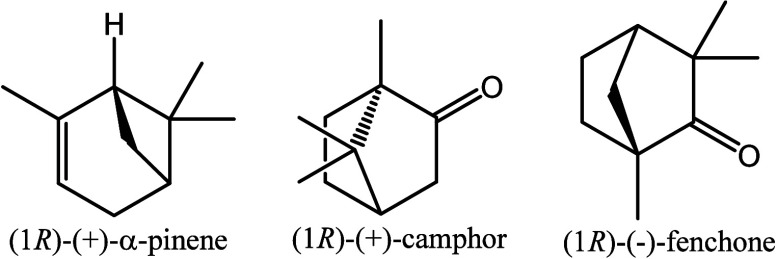 Figure 1
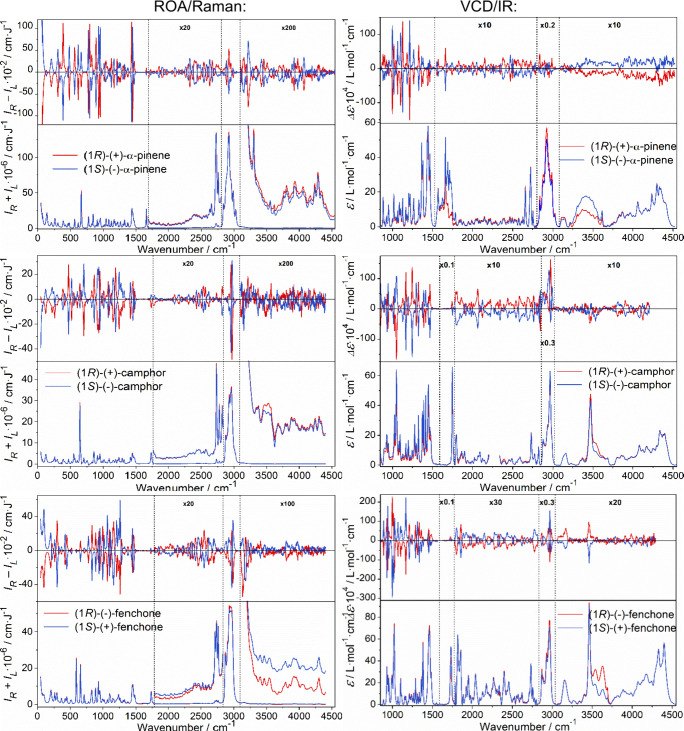 Figure 2
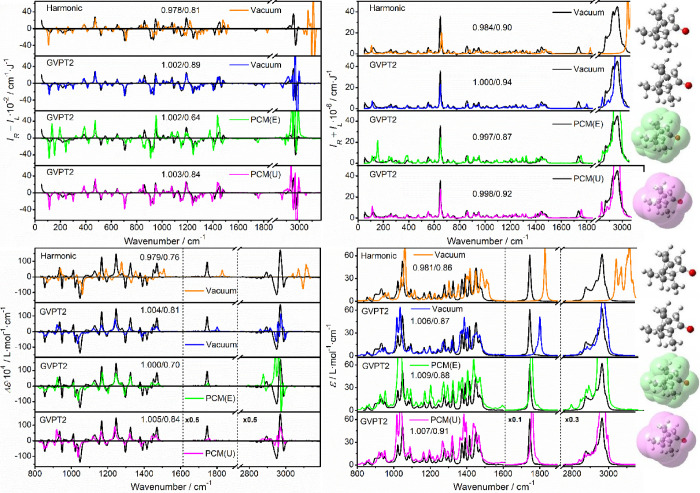 Figure 3
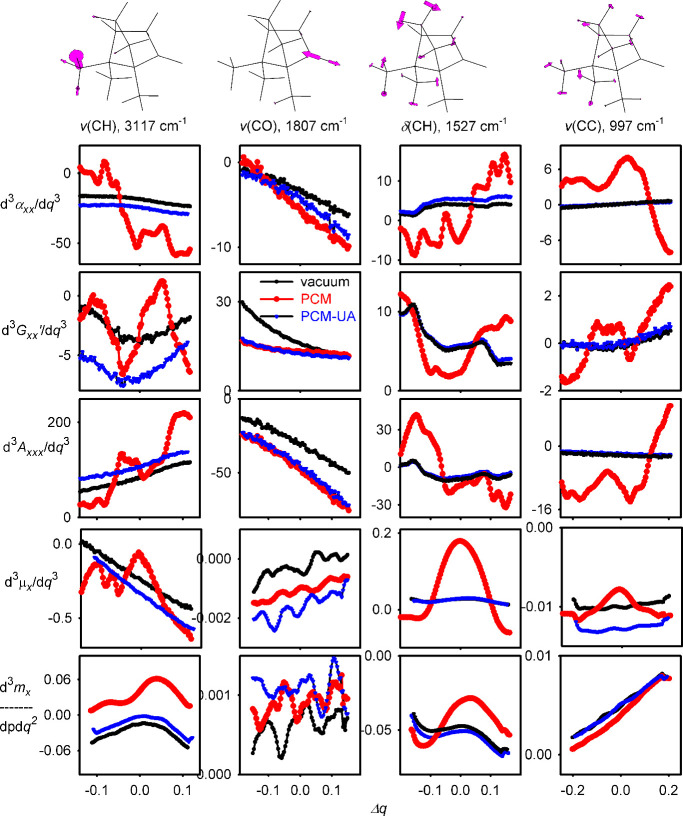 Figure 4
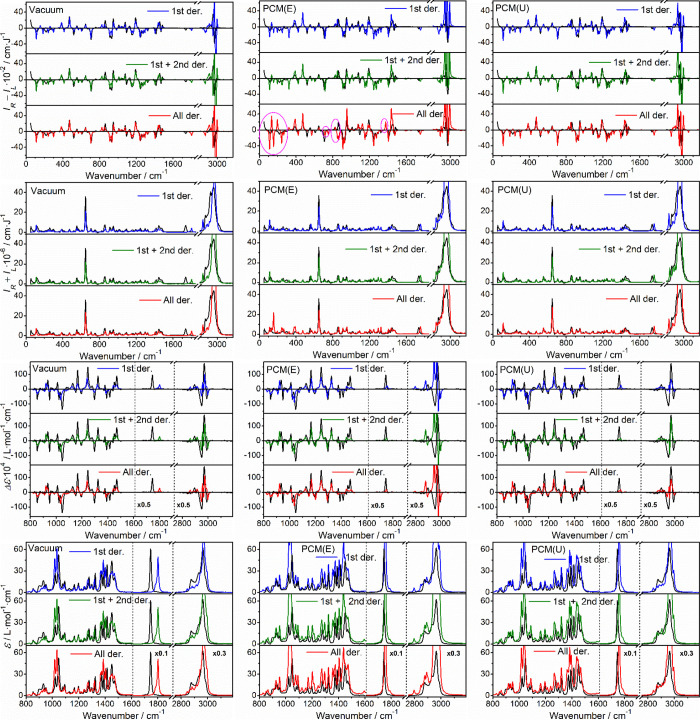 Figure 5
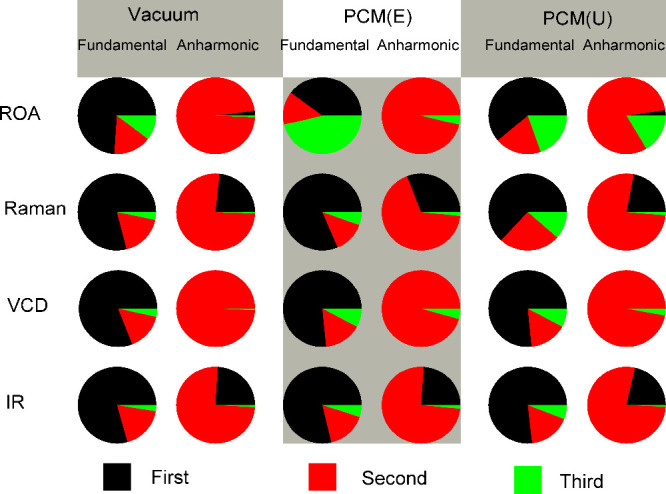 Figure 6
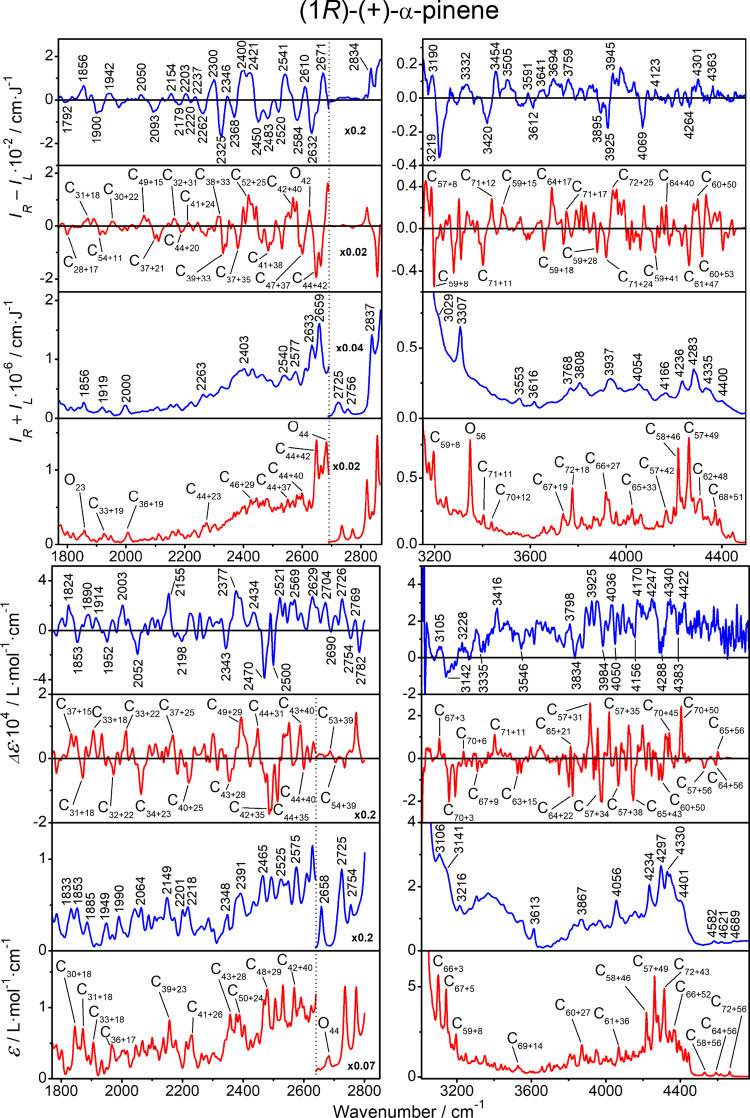 Figure 7
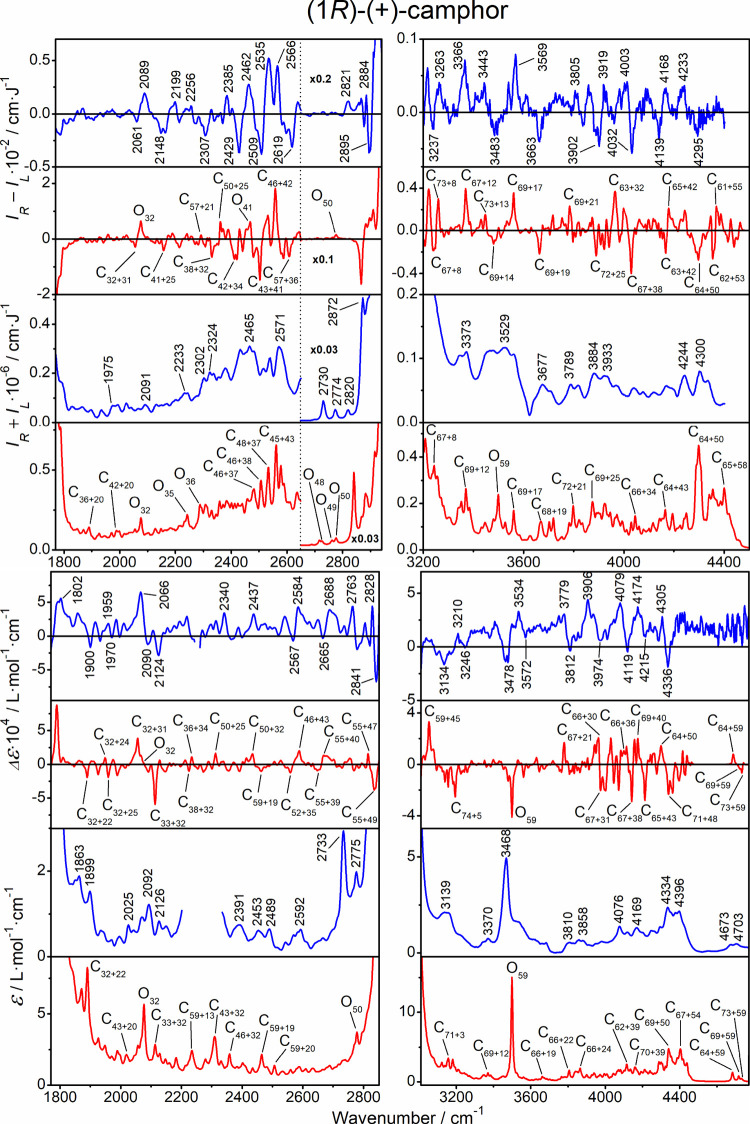 Figure 8
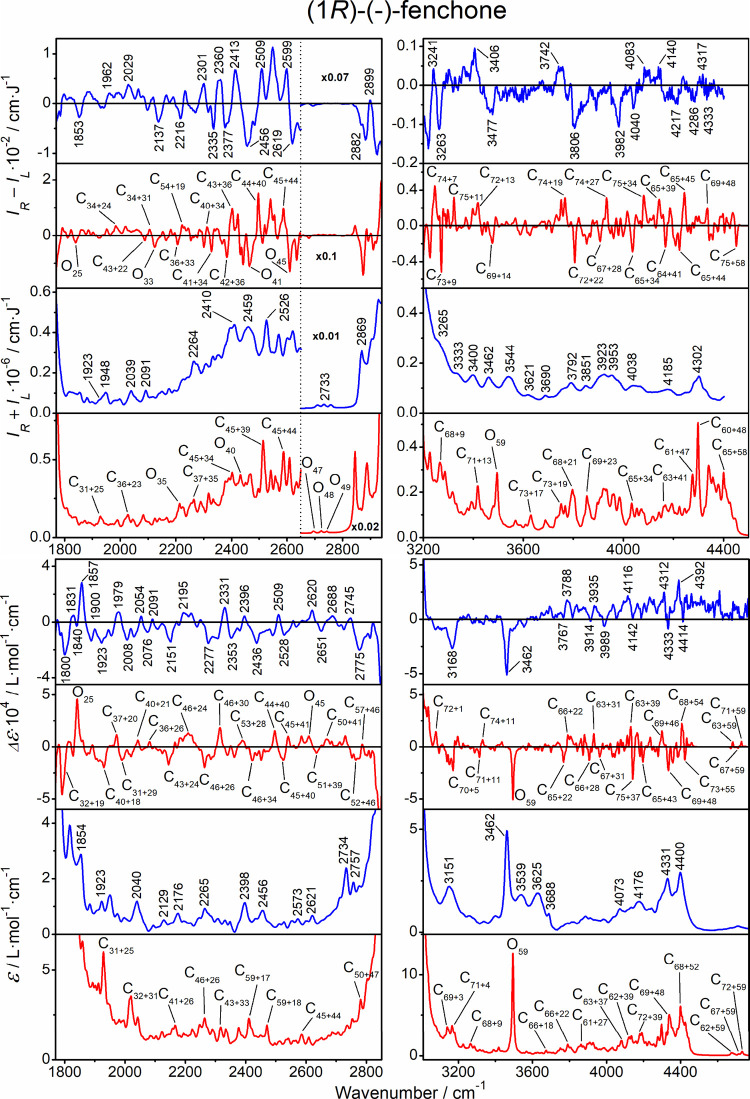 Figure 9
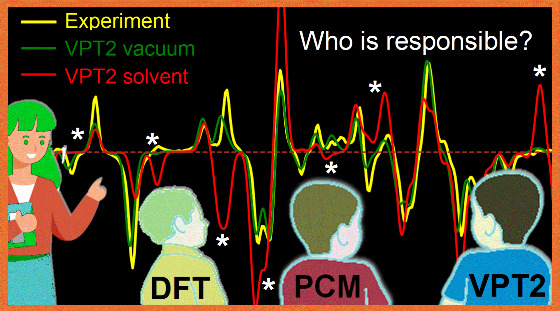 Figure 10
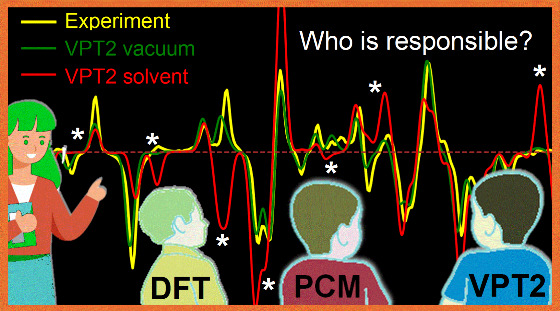 Figure 11
 Figure 12
 Figure 13
 Figure 14
 Figure 15
 Figure 16
 Figure 17
 Figure 18
 Figure 19
 Figure 20
 Figure 21
 Figure 22
 Figure 23
 Figure 24
 Figure 25
 Figure 26
 Figure 27
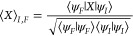 Figure 28
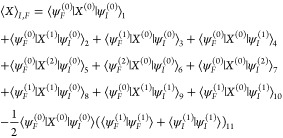 Figure 29
 Figure 30
 Figure 31
 Figure 32
 Figure 33
 Figure 34
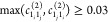 Figure 35
 Figure 36
 Figure 37
 Figure 38
Peer Reviews
No public reviews on file for this paper yet. If you reviewed it on a platform where reviews are public (OpenReview, ICLR, NeurIPS, ICML), you can paste yours below so the community can read it here.
Videos
No videos yet. Explain this paper in a talk, walkthrough, or lecture? Add one.
Taxonomy
TopicsMolecular spectroscopy and chirality · Spectroscopy and Quantum Chemical Studies · Photoreceptor and optogenetics research