Appraisal of ChatGPT's responses to common patient questions regarding acromioclavicular joint dislocations
Eduard Van Eecke, Wouter Schroven, Maxim Vanderstappen, Simran Grewal, Michel P.J. van den Bekerom

TL;DR
This study evaluates ChatGPT's ability to answer patient questions about AC joint dislocations, finding it generally accurate but with limitations in treatment advice.
Contribution
The study introduces a novel evaluation of ChatGPT's medical responses specifically for AC joint dislocations using surgeon ratings and readability metrics.
Findings
ChatGPT's responses averaged a 4/5 quality score with minor inaccuracies.
Treatment-related questions scored lower than rehabilitation or diagnosis questions.
Readability was suitable for high school-level audiences.
Abstract
ChatGPT, an expanding artificial intelligence platform, is rapidly becoming a source of medical knowledge for patients. The purpose of this study is to evaluate the quality and readability of information provided by ChatGPT 4.0 in response to the most frequently asked patients' questions regarding acromioclavicular (AC) joint dislocations. Twenty-five frequently asked patient questions regarding AC joint dislocations were posed to ChatGPT 4.0. The quality and accuracy of the responses was graded by two fellowship-trained shoulder surgeons using a 5-point Likert scale. Responses were analyzed for readability using six established metrics. ChatGPT provided responses to 25 frequently asked questions, with consensus reached on 12 questions. The final average score was 4/5, reflecting good quality with minor inaccuracies. Treatment-related questions scored lower compared to other…
Genes, proteins, chemicals, diseases, species, mutations and cell lines named across the full text — each resolved to its canonical identifier and authoritative record.
Click any figure to enlarge with its caption.
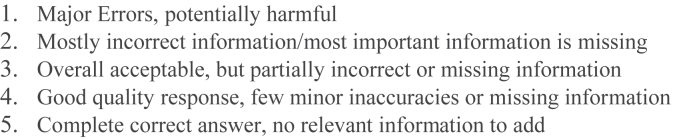 Figure 1
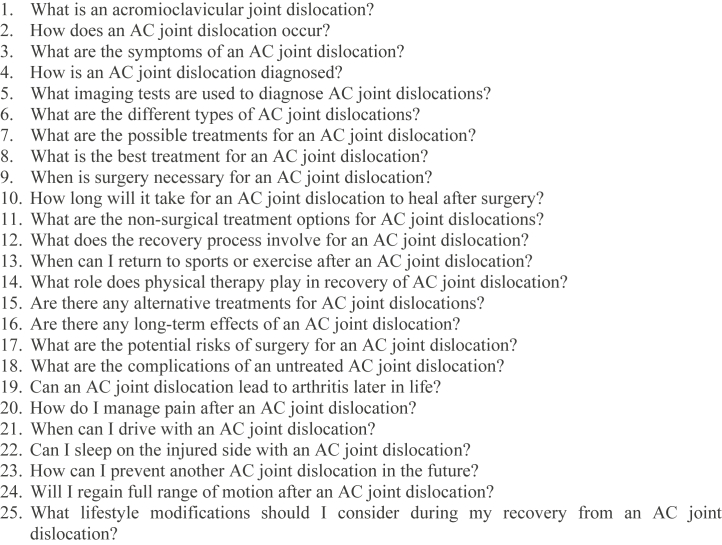 Figure 2
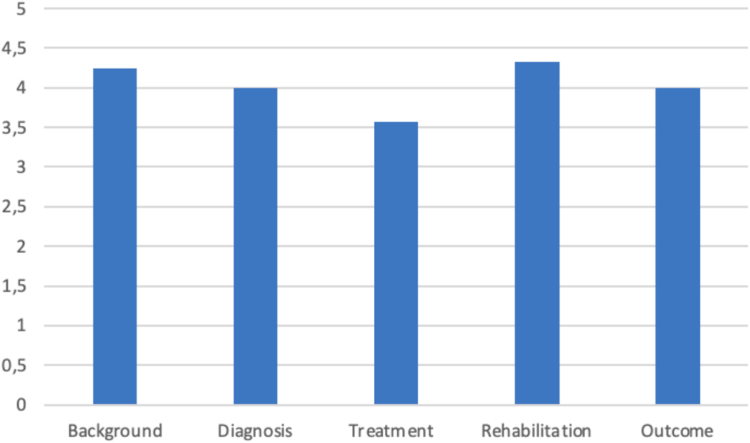 Figure 3
Peer Reviews
No public reviews on file for this paper yet. If you reviewed it on a platform where reviews are public (OpenReview, ICLR, NeurIPS, ICML), you can paste yours below so the community can read it here.
Videos
No videos yet. Explain this paper in a talk, walkthrough, or lecture? Add one.
Taxonomy
TopicsShoulder and Clavicle Injuries · Shoulder Injury and Treatment · Artificial Intelligence in Healthcare and Education