Shoulder joint angles in supine and upright imaging of the preoperative reverse total shoulder arthroplasty patient
Peyton L. King, Jared L. Zitnay, Mitchell S. Kirkham, Kyle B. Christy, Peter N. Chalmers, Robert Z. Tashjian, Heath B. Henninger

TL;DR
This study shows that shoulder joint angles differ significantly between supine and upright positions, which could affect preoperative planning for shoulder surgery.
Contribution
The study quantifies patient-specific variations in joint angles between supine and upright imaging, highlighting implications for preoperative planning.
Findings
The scapula was more downward rotated in upright pose compared to supine (9.3° ± 12.9°, P = .004).
The humerus was more elevated in upright pose compared to supine (13.2° ± 17.6°, P = .020).
Patient-specific variations in joint angles exceeded common thresholds for implant selection and placement.
Abstract
Reverse total shoulder arthroplasty is a common procedure for end-stage glenohumeral arthritis, rotator cuff disease, fracture, or failed arthroplasty. Preoperative planning software allows surgeons to assess implant placement and relies on imported bone models that come from imaging, typically a supine computed tomography (CT) scan. However, daily activities are performed upright. This study quantified the differences in scapulothoracic and glenohumeral joint angles between preoperative supine and upright imaging. Seven patients underwent preoperative supine CT and upright biplane fluoroscopy imaging. Scapulothoracic and glenohumeral joint angles in supine and upright poses were calculated using Euler angles and compared using 2-sided paired t-tests. The scapula was 9.3 ± 12.9° more downward rotated in the upright pose than supine (P = .004), while the humerus was 13.2 ± 17.6° more…
Genes, proteins, chemicals, diseases, species, mutations and cell lines named across the full text — each resolved to its canonical identifier and authoritative record.
Click any figure to enlarge with its caption.
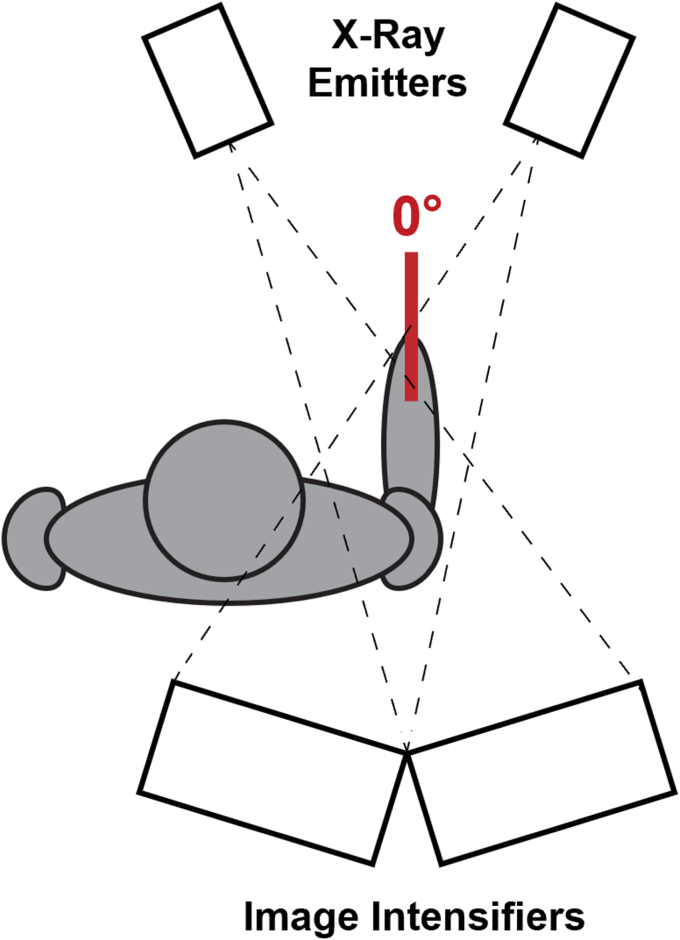 Figure 1
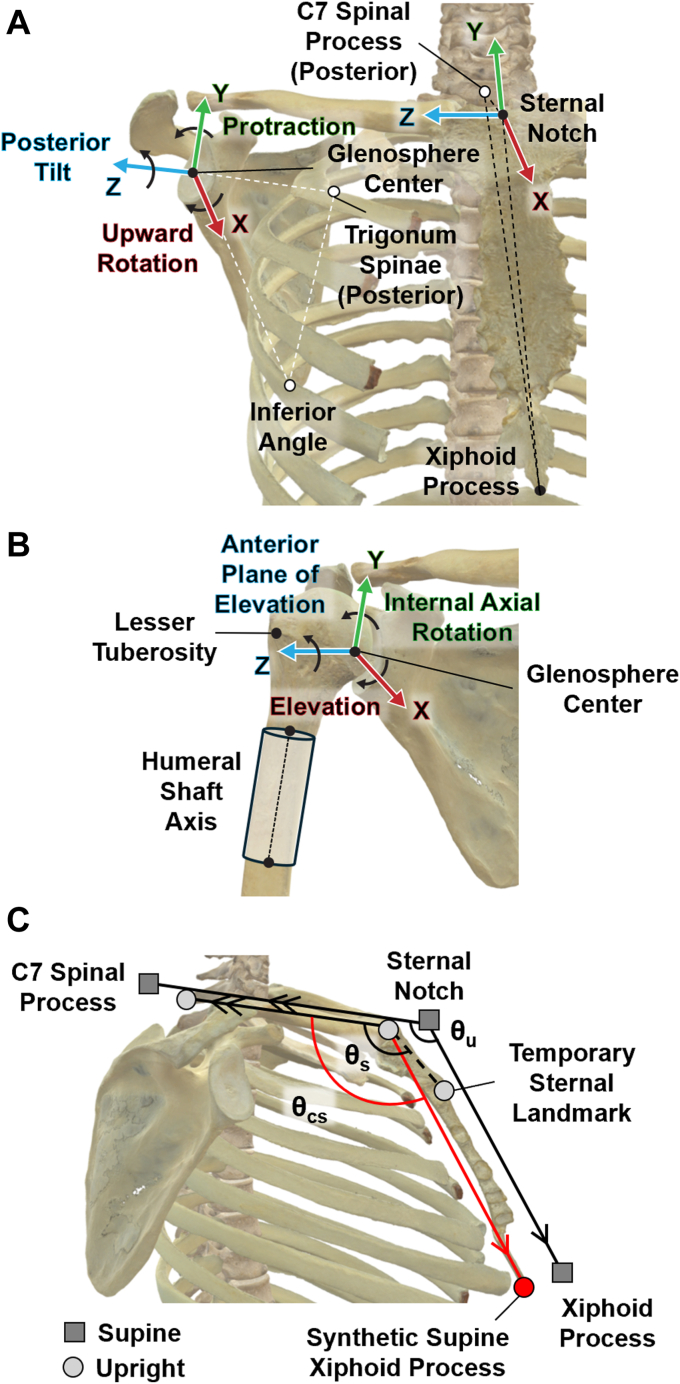 Figure 2
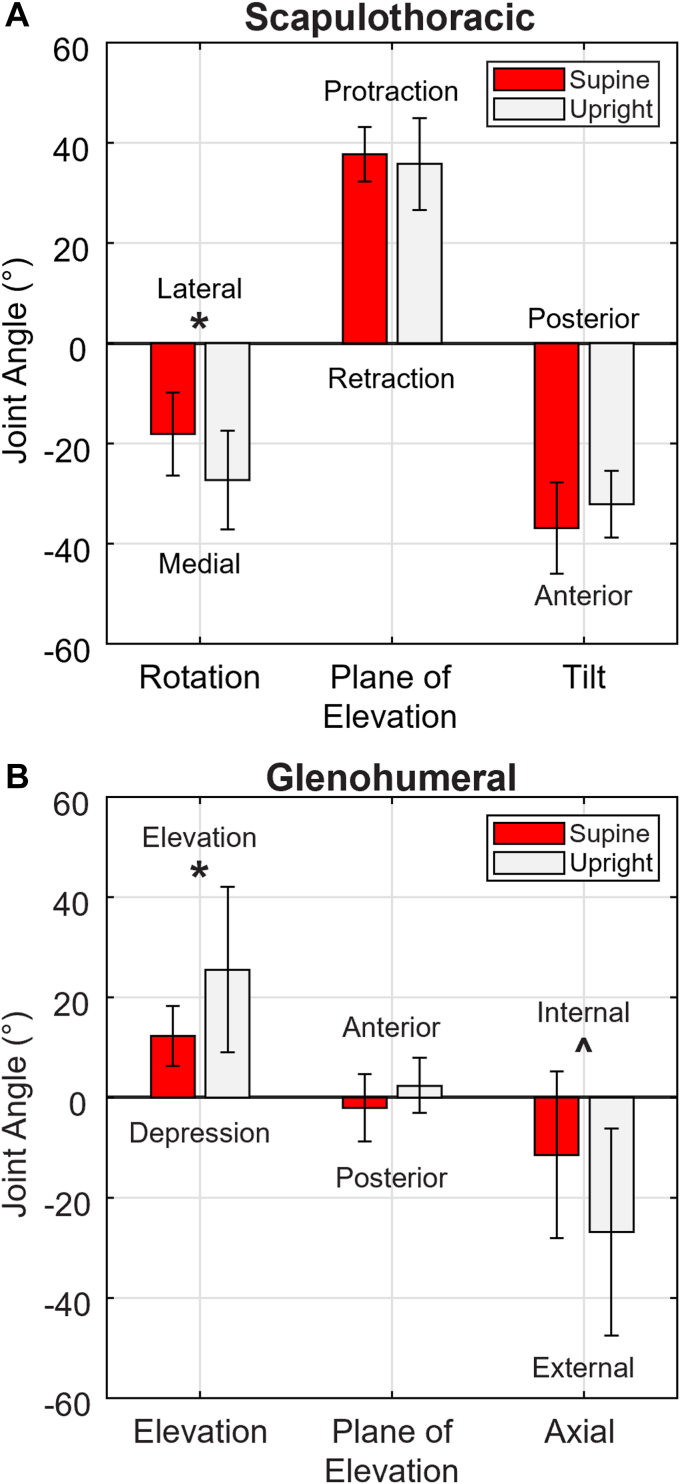 Figure 3
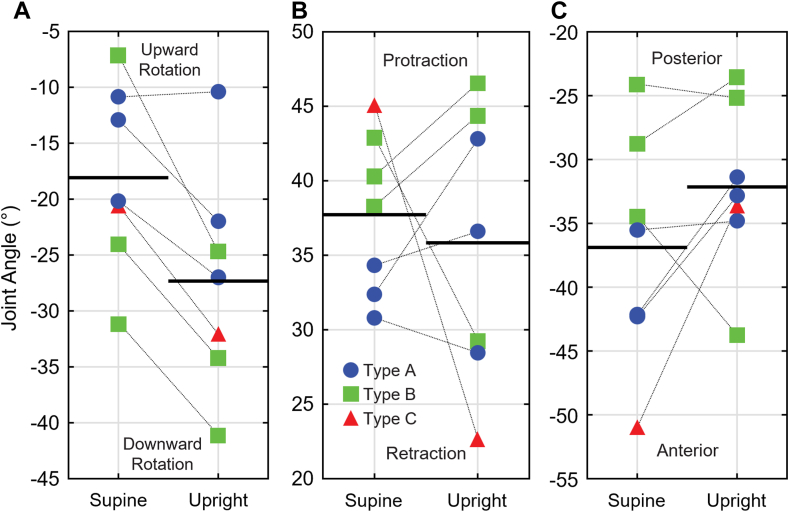 Figure 4
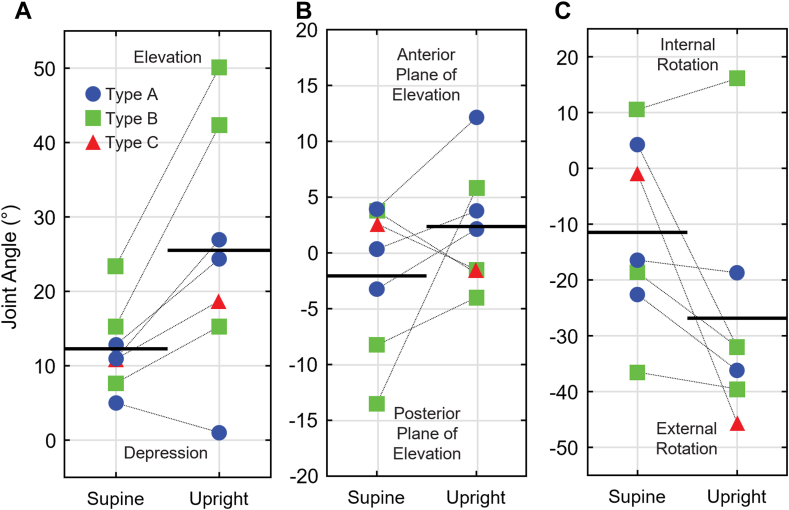 Figure 5
Peer Reviews
No public reviews on file for this paper yet. If you reviewed it on a platform where reviews are public (OpenReview, ICLR, NeurIPS, ICML), you can paste yours below so the community can read it here.
Videos
No videos yet. Explain this paper in a talk, walkthrough, or lecture? Add one.
Taxonomy
TopicsShoulder Injury and Treatment · Shoulder and Clavicle Injuries · Orthopedic Surgery and Rehabilitation