Polyethylene wear rates in reverse total shoulder arthroplasty: a systematic review of biomechanical studies
Sarang Agarwal, Ryan S. Ting, Rachel Farrelly, Bob Jang, John N. Trantalis

TL;DR
This paper reviews how different materials and implant designs affect polyethylene wear in shoulder replacements, finding that highly cross-linked polyethylene reduces wear compared to conventional materials.
Contribution
The study is the first systematic review of biomechanical factors affecting polyethylene wear rates in reverse total shoulder arthroplasty.
Findings
Highly cross-linked polyethylene (HXLPE) significantly reduces wear rates compared to conventional polyethylene in reverse total shoulder arthroplasty.
Larger glenospheres are associated with higher polyethylene wear rates in laboratory settings.
Abstract
Reverse total shoulder arthroplasty (rTSA) was classically indicated in rotator cuff deficient shoulders with osteoarthritis, although its indications and usage worldwide has grown in recent years. Loosening due to polyethylene wear is a significant concern, especially with increasing use of rTSA in younger patients, and as life expectancy increases. In the context of a lack of clinical data on polyethylene wear rates in rTSA, this study aimed to systematically review the biomechanical literature on factors affecting wear rates in rTSA, with comparison between highly cross-linked polyethylene (HXLPE) and non-HXLPE being of particular interest given the clinical differences shown in total hip arthroplasty. The PubMed, EMBASE, and Scopus databases were searched for biomechanical studies involving rTSA measuring polyethylene wear rates from April 4, 2024, to inception in accordance with…
Genes, proteins, chemicals, diseases, species, mutations and cell lines named across the full text — each resolved to its canonical identifier and authoritative record.
Click any figure to enlarge with its caption.
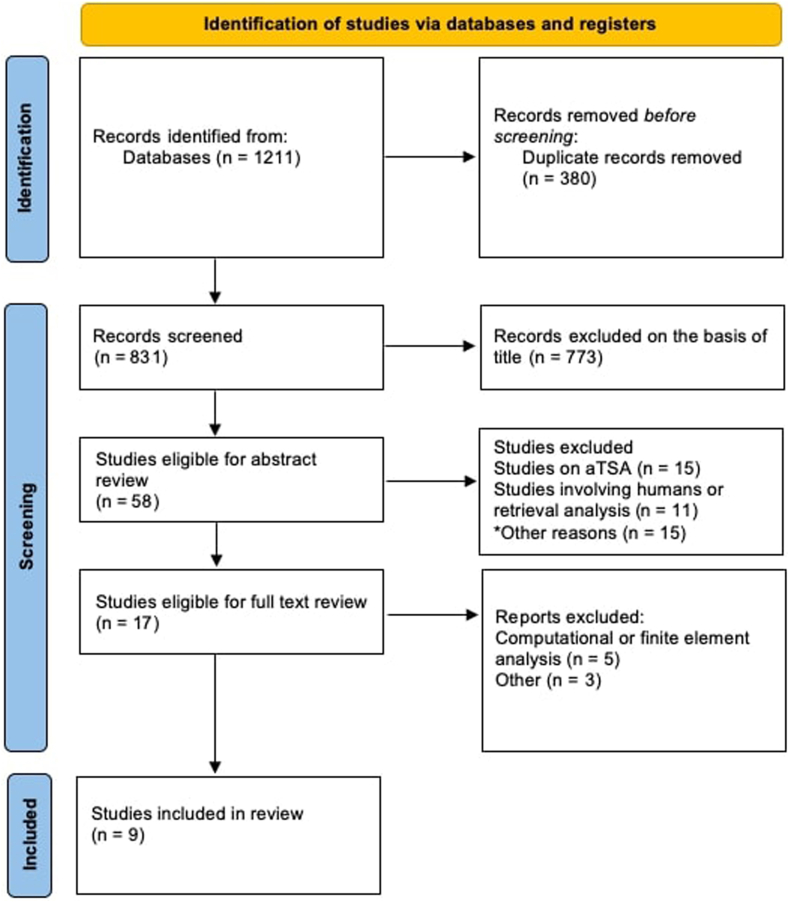 Figure 1
Peer Reviews
No public reviews on file for this paper yet. If you reviewed it on a platform where reviews are public (OpenReview, ICLR, NeurIPS, ICML), you can paste yours below so the community can read it here.
Videos
No videos yet. Explain this paper in a talk, walkthrough, or lecture? Add one.
Taxonomy
TopicsShoulder Injury and Treatment · Shoulder and Clavicle Injuries · Sports injuries and prevention