The influence of learning interest on complex mathematical problem-solving ability: the mediating effect of classroom disruptive behavior and self-efficacy
Yongzhao Wang, Bingqing Xie, Lijun Zhou, Lisha Wang, Hua Jin

TL;DR
This study explores how learning interest affects math problem-solving skills, with classroom behavior and self-efficacy playing mediating roles, using data from students in four countries.
Contribution
It identifies direct and indirect effects of learning interest on math ability through classroom behavior and self-efficacy, with cross-cultural differences.
Findings
Learning interest, classroom disruptive behavior, and self-efficacy significantly correlate with complex math problem-solving ability.
Learning interest influences math ability both directly and indirectly through classroom behavior and self-efficacy.
Regional differences exist in how these factors affect math problem-solving across Taiwan, China, the U.S., and Turkey.
Abstract
The ability to solve complex mathematical problems has become a key indicator of students' mathematical literacy and innovative capacity. Based on the TIMSS 2023 data and focused on eighth-grade students in Taiwan, China, the United States, and Turkey, the study investigates the interaction mechanisms among students' learning interest (LI), classroom disruptive behavior (CDB), self-efficacy (SE), and complex mathematical problem-solving ability (CMPSA) through constructing a structural equation model. LI, CDB, and SE are significantly correlated with CMPSA and can predict CMPSA. In addition, LI not only influences CMPSA directly, but also has an indirect effect through CDB and SE, including both parallel and chain mediation effects. Cross-cultural analysis further reveals significant regional differences in the impact mechanisms of CMPSA. To be specific, Taiwan, China is mainly…
Genes, proteins, chemicals, diseases, species, mutations and cell lines named across the full text — each resolved to its canonical identifier and authoritative record.
Click any figure to enlarge with its caption.
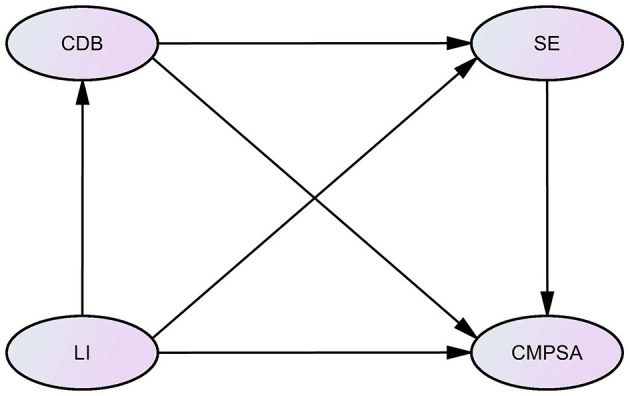 Figure 1
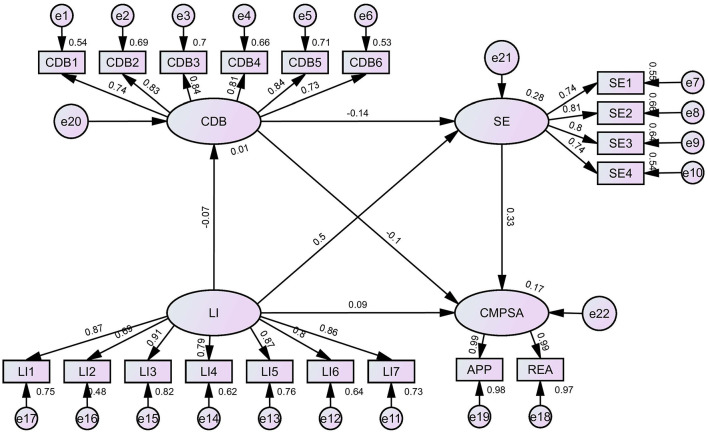 Figure 2
Peer Reviews
No public reviews on file for this paper yet. If you reviewed it on a platform where reviews are public (OpenReview, ICLR, NeurIPS, ICML), you can paste yours below so the community can read it here.
Videos
No videos yet. Explain this paper in a talk, walkthrough, or lecture? Add one.
Taxonomy
TopicsMathematics Education and Pedagogy · Education and Learning Interventions · Cognitive and developmental aspects of mathematical skills