Monitoring respiratory mechanics as a training tool for manual ventilation
Carlos Eduardo Baldo Carlomagno, Renata Suman Mascaretti, João Cesar Lyra, Romy Schmidt Brock Zacharias, Mauricio Magalhaes, Pedro Alexandre Federico Breuel, Celso Moura Rebello

TL;DR
This study shows that using a respiratory monitor during training helps medical residents better control breathing support for newborns, though mask sealing remains a challenge.
Contribution
The study demonstrates that real-time feedback from respiratory function monitors improves tidal volume control in neonatal resuscitation training.
Findings
RFM-based training significantly reduced tidal volume to lung-protective levels and maintained this improvement over three months.
Mask leakage remained consistently above 20%, indicating a need for additional training on sealing techniques.
Improvements in ventilation performance were retained even after discontinuing RFM feedback.
Abstract
Approximately 500,000 newborns in Brazil require respiratory support at birth each year. Manual ventilation is essential in neonatal resuscitation, but achieving adequate tidal volume (Tv) delivery and minimizing face mask leakage remain challenging. Respiratory Function Monitors (RFMs) offer real-time feedback that may enhance training effectiveness. This study aimed to assess the impact of RFM use on improving manual ventilation skills among neonatology residents using self-inflating bags (SIB) and T-piece resuscitators, focusing on optimizing Tv delivery and reducing mask leakage. A prospective experimental study was conducted with 23 neonatology residents from four training programs. Participants performed manual ventilation on a neonatal manikin across five sessions: baseline without RFM (V1), with RFM feedback (V2), immediately post-training without RFM (V3), and follow-ups at…
Genes, proteins, chemicals, diseases, species, mutations and cell lines named across the full text — each resolved to its canonical identifier and authoritative record.
Click any figure to enlarge with its caption.
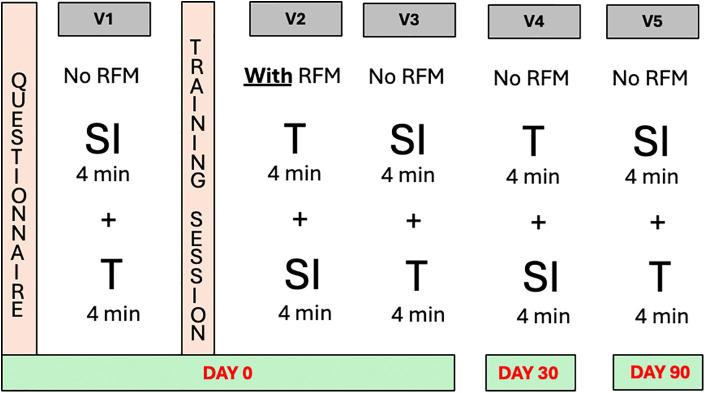 Figure 1
 Figure 2
 Figure 3
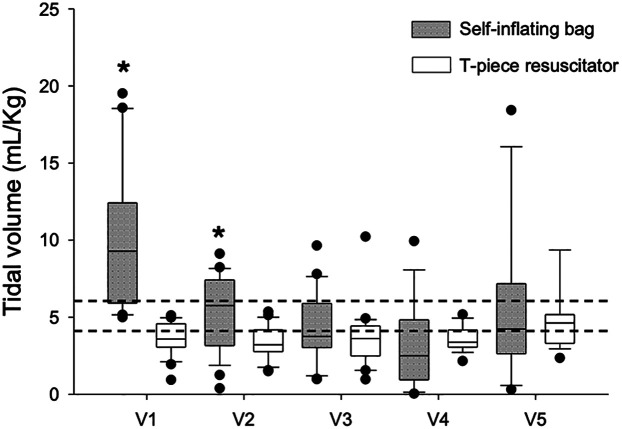 Figure 4
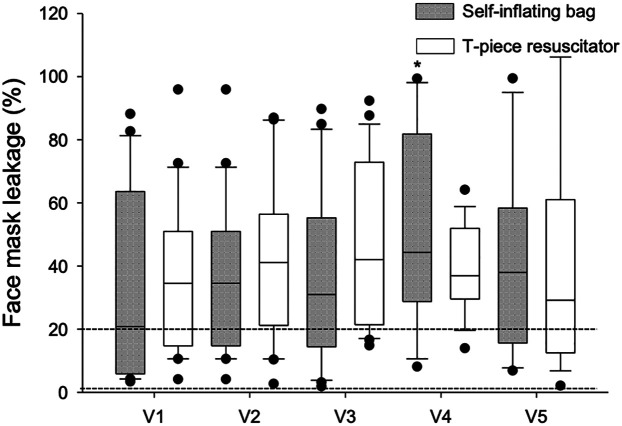 Figure 5
Peer Reviews
No public reviews on file for this paper yet. If you reviewed it on a platform where reviews are public (OpenReview, ICLR, NeurIPS, ICML), you can paste yours below so the community can read it here.
Videos
No videos yet. Explain this paper in a talk, walkthrough, or lecture? Add one.
Taxonomy
TopicsRespiratory Support and Mechanisms · Airway Management and Intubation Techniques · Simulation-Based Education in Healthcare