Patient specific instrumentation for open Latarjet procedure. Technique, accuracy, and short-term outcome. A prospective case series
Emmie A.M. van den Elzen, Kshitij Gupta, Esther Janssen, Berend Geelen, Maichel Gommans, Bruno Gobbato, Okke Lambers Heerspink, Freek Hollman

TL;DR
This study introduces a new surgical technique using 3D-printed guides to improve accuracy in a shoulder stabilization procedure.
Contribution
A patient-specific instrumentation technique using 3D-printed guides is proposed for the Latarjet procedure.
Findings
Median mediolateral displacement of grafts was 0.01 mm medially compared to digital plans.
All grafts showed healing within six weeks post-surgery.
One screw was malpositioned in a single case despite guide modifications.
Abstract
The Latarjet procedure is a common technique to address anteroinferior shoulder instability. However, inadequate positioning of the coracoid bone graft may lead to persistent instability or early arthritis, with complication rates described up to 15% in open procedures. Adequate bone-block positioning tailored to patients’ scapular morphology may reduce these complications. This study aims to optimize the Patient-Specific Instrumentation (PSI) Latarjet procedure by detailing the technique and assessing the accuracy of graft positioning through a comparison of the digitally planned and actual surgical outcomes. It is hypothesized that patient-specific, 3D-printed guides will enhance coracoid graft accuracy in the open Latarjet procedure. Between January and May 2024, 5 patients underwent the open PSI Latarjet procedure. Using computer aided design software, the procedure was digitally…
Genes, proteins, chemicals, diseases, species, mutations and cell lines named across the full text — each resolved to its canonical identifier and authoritative record.
Click any figure to enlarge with its caption.
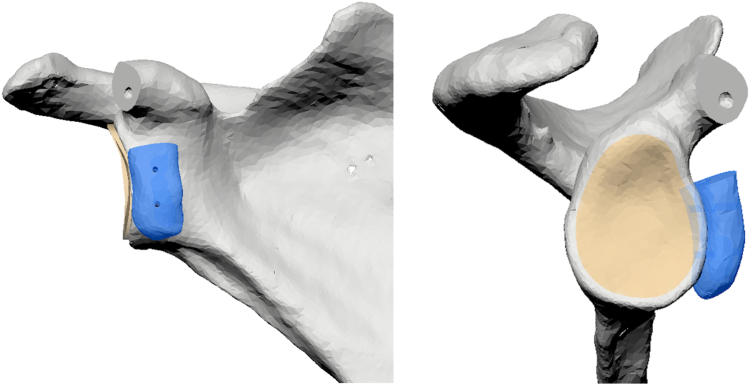 Figure 1
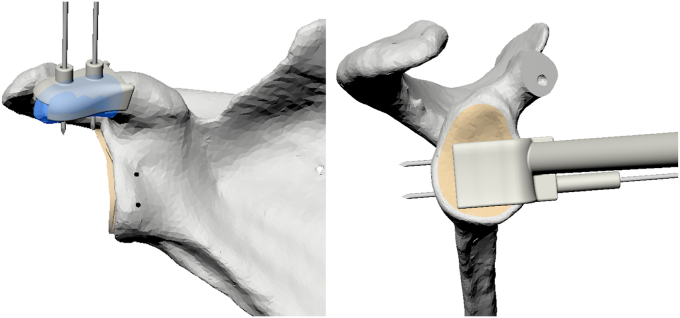 Figure 2
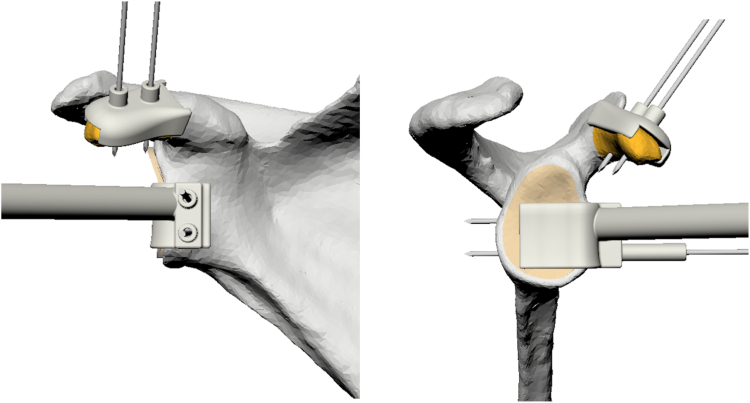 Figure 3
Peer Reviews
No public reviews on file for this paper yet. If you reviewed it on a platform where reviews are public (OpenReview, ICLR, NeurIPS, ICML), you can paste yours below so the community can read it here.
Videos
No videos yet. Explain this paper in a talk, walkthrough, or lecture? Add one.
Taxonomy
TopicsShoulder Injury and Treatment · Spinal Fractures and Fixation Techniques · Pelvic and Acetabular Injuries