Implementation of an ISO 15189 accredited next generation sequencing service for cell-free total nucleic acid (cfTNA) analysis to facilitate driver mutation reporting in blood: the experience of a clinical diagnostic laboratory
Reiltin Werner, Ruth Crosbie, Mairead Dorney, Amy Connolly, Dearbhaile Collins, Collette K Hand, Louise Burke

TL;DR
This paper describes the implementation of a reliable, fast, and minimally invasive NGS service for detecting cancer-related mutations in blood, improving patient care when tissue samples are not available.
Contribution
The paper presents the first ISO 15189 accredited NGS service for cfTNA analysis with reduced turnaround time and high accuracy.
Findings
High sensitivity (>83%) and specificity were achieved between plasma and tissue results.
A sequencing limit of detection of 1.2% was achieved with >22,000× coverage.
Turnaround time for liquid biopsy results was reduced by over 68% compared to reference labs.
Abstract
Next generation sequencing (NGS) on tumour tissue is integral to the delivery of personalised medicine and targeted therapy. NGS on liquid biopsy, a much less invasive technology, is an emerging clinical tool that has rapidly expanded clinical utility. Gene mutations in cell-free total nucleic acids (cfTNA) circulating in the blood are representative of whole tumour biology and can reveal different mutations from different tumour sites, thus addressing tumour heterogeneity challenges. The novel Ion Torrent Genexus NGS system with automated sample preparation, onboard library preparation, templating, sequencing, data analysis and Oncomine Reporter software was used. cfTNA extracted from plasma was verified with the targeted pan-cancer (~50 genes) Oncomine Precision Assay (OPA). Assessment criteria included analytical sensitivity, specificity, limits of detection (LOD), accuracy,…
Genes, proteins, chemicals, diseases, species, mutations and cell lines named across the full text — each resolved to its canonical identifier and authoritative record.
Click any figure to enlarge with its caption.
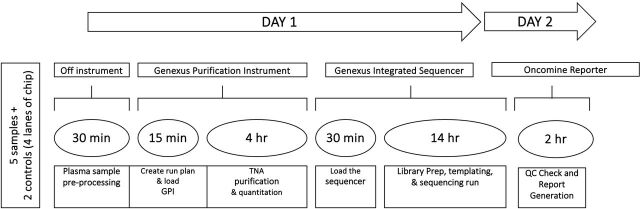 Figure 1
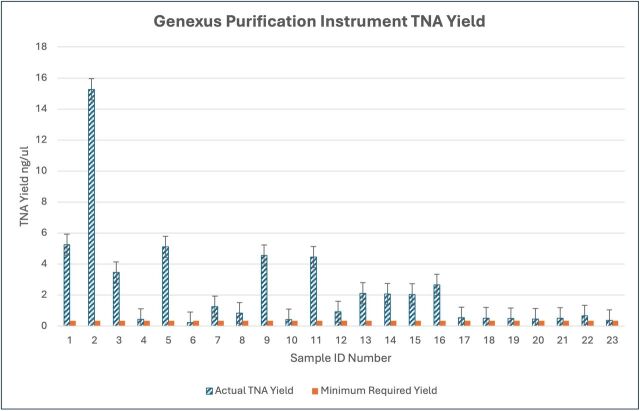 Figure 2
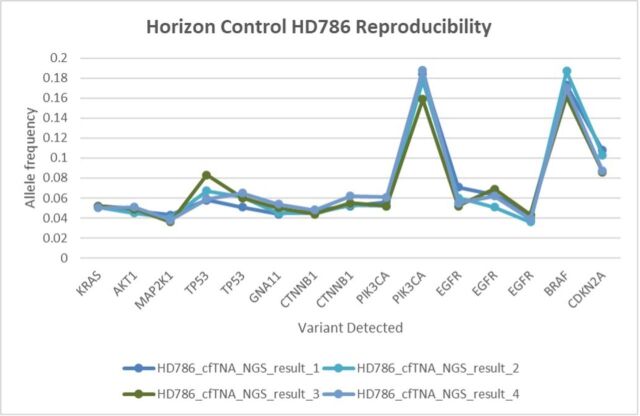 Figure 3
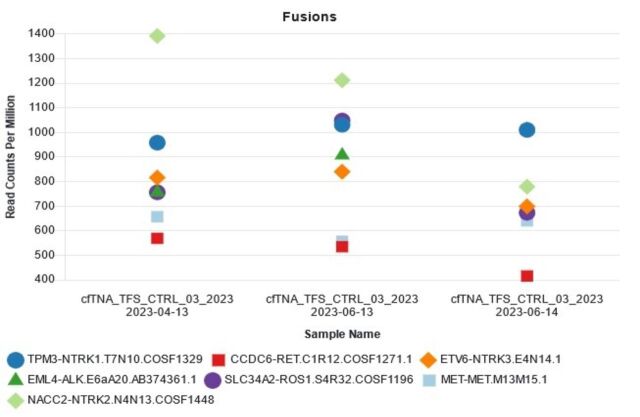 Figure 4
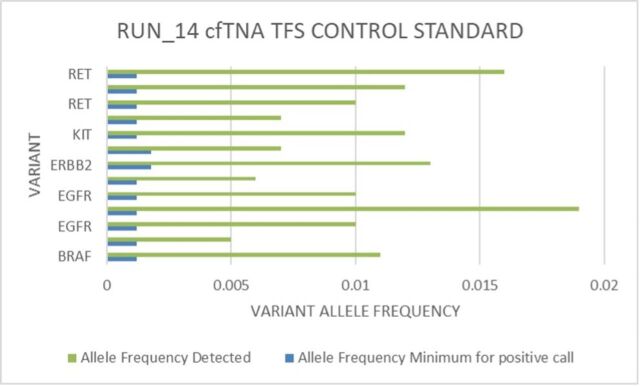 Figure 5
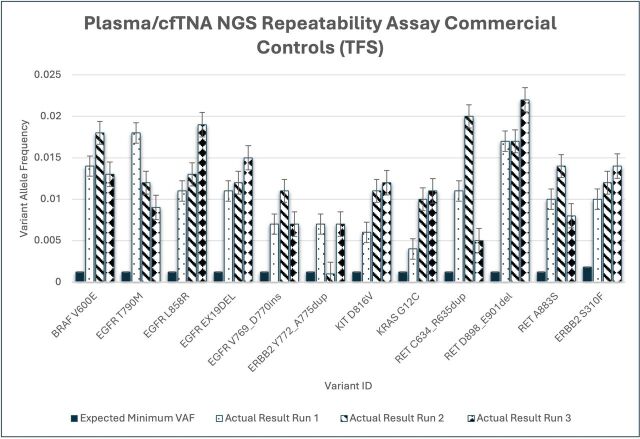 Figure 6
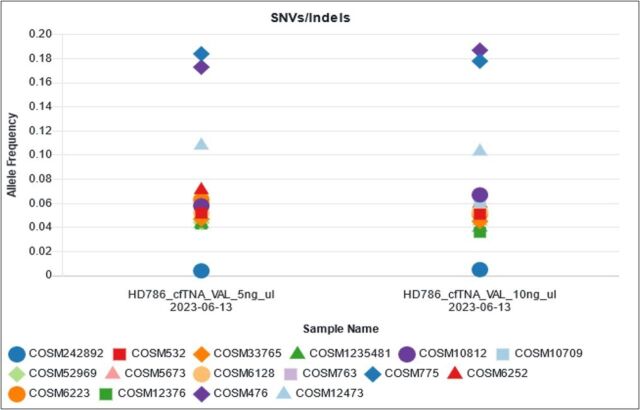 Figure 7
Peer Reviews
No public reviews on file for this paper yet. If you reviewed it on a platform where reviews are public (OpenReview, ICLR, NeurIPS, ICML), you can paste yours below so the community can read it here.
Videos
No videos yet. Explain this paper in a talk, walkthrough, or lecture? Add one.
Taxonomy
TopicsCancer Genomics and Diagnostics · Genomics and Rare Diseases · Genetic factors in colorectal cancer