Comparing visual inspection methods for parenteral products in hospital pharmacy: between reliability, cost, and operator formation considerations
Alexandre Jambon, Marie Forat, Chloé Marchand, Corinne Morel, Camille Merienne, Samira Filali, Fabrice Pirot

TL;DR
This study compares different visual inspection methods for sterile pharmaceutical products, finding manual and semi-automated methods more reliable than automated ones.
Contribution
The study evaluates the reliability, cost, and training requirements of visual inspection methods for detecting particles in sterile pharmaceuticals.
Findings
Manual and semi-automated visual inspection detected 100% of visible particles, while automated inspection detected only 28%.
Manual and semi-automated methods were more effective under ISO 8 pre-production conditions compared to automated methods.
All methods correctly analyzed particle-free vials and performed well under ISO 9 conditions.
Abstract
The COVID-19 pandemic has led to unforeseen and novel manifestations, as illustrated by the management of drug shortages through the development of hospital production of sterile pharmaceutical preparations (P2S). Visual inspection of P2S is a release control whose methods are described in monographs of the European Pharmacopoeia (2.9.20) and the United States Pharmacopeia (1790). However, these non-automated visual methods require training and proficiency testing of personnel. The main objective of this work was to compare the reliability and speed of analysis of two visual methods and an automated method for detecting visible particles by image analysis in P2S. Furthermore, these methods were used to evaluate sources of particulate contamination during pre-production processes (washing, disinfection, depyrogenation) and production (filling, capping). Three pharmacy technicians…
Genes, proteins, chemicals, diseases, species, mutations and cell lines named across the full text — each resolved to its canonical identifier and authoritative record.
Click any figure to enlarge with its caption.
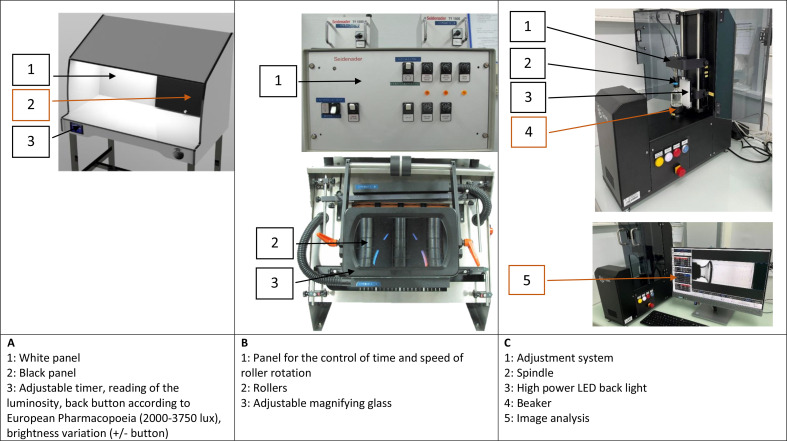 Figure 1
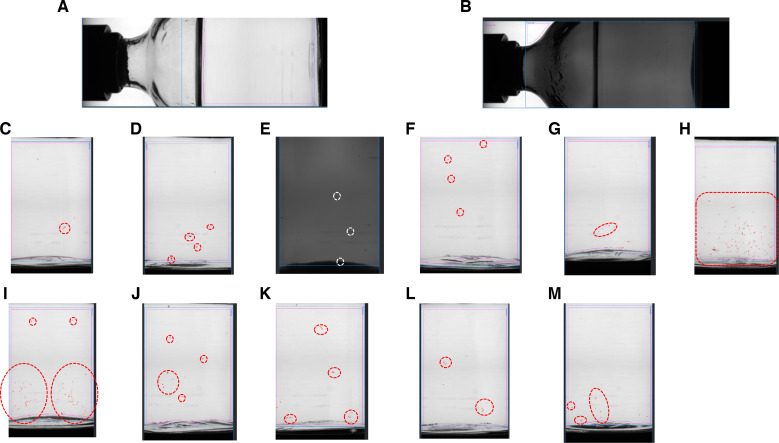 Figure 2
Peer Reviews
No public reviews on file for this paper yet. If you reviewed it on a platform where reviews are public (OpenReview, ICLR, NeurIPS, ICML), you can paste yours below so the community can read it here.
Videos
No videos yet. Explain this paper in a talk, walkthrough, or lecture? Add one.
Taxonomy
TopicsQuality and Safety in Healthcare · Patient Safety and Medication Errors · Safe Handling of Antineoplastic Drugs