Systems Biological Analysis of Immune-Metabolic Host Responses to Distinct Malaria Parasites
Davi Vinícius Lima, Tiago Paiva Guimarães, Anne Cristine Gomes Almeida, Arthur Jesuz Teixeira, Wuelton Marcelo Monteiro, Gisely Cardoso Melo, Luiz Gustavo Gardinassi

TL;DR
This paper compares immune and metabolic responses in malaria infections caused by different Plasmodium species using data from monkeys and humans.
Contribution
It identifies conserved and species-specific host responses to Plasmodium infections using multimodal data integration.
Findings
Conserved dynamics of dendritic cells and CD8+ T cells were observed across simian malaria infections.
Gene modules related to coagulation and complement activation were upregulated in rhesus monkeys and humans.
Metabolite regulation, including kynurenine and sex hormone-derived metabolites, was conserved across species.
Abstract
Recent studies suggest differential activation of immune cells and biochemical pathways during infection with distinct etiological agents of human malaria, Plasmodium falciparum or Plasmodium vivax. Rhesus monkeys infected with Plasmodium coatneyi develop pathology comparable to P. falciparum infection in humans, whereas P. vivax is modeled by infection with Plasmodium cynomolgi. To investigate host immune and metabolic responses, we analyzed and integrated public blood flow cytometry, transcriptomics, and untargeted metabolomics data from simian infection models and human malaria. We found conserved dynamics of blood dendritic cells, effector memory CD8+ T cells, and PD-1+ effector memory CD8+ T cells in simian infections; increased expression of HMOX1 and coagulation-related genes was conserved in simian infections, while the complement activation gene module was upregulated in rhesus…
Genes, proteins, chemicals, diseases, species, mutations and cell lines named across the full text — each resolved to its canonical identifier and authoritative record.
Click any figure to enlarge with its caption.
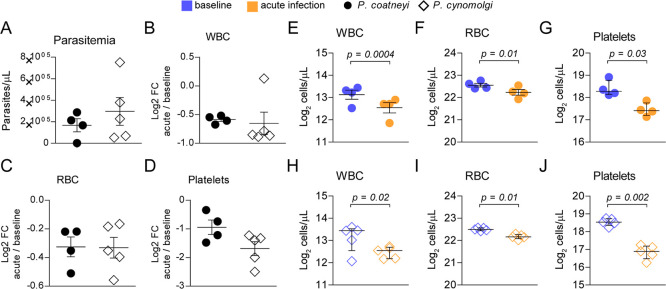 Figure 1
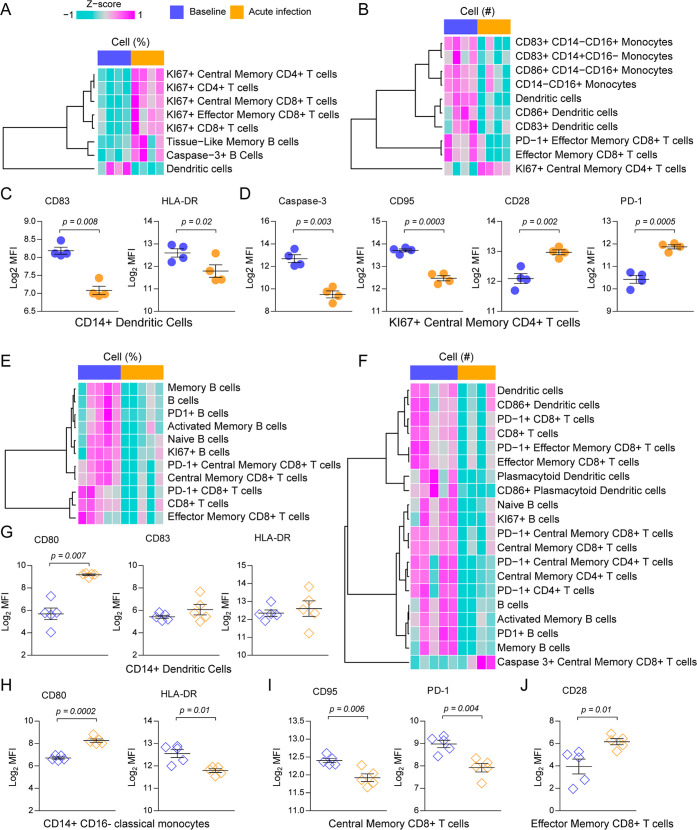 Figure 2
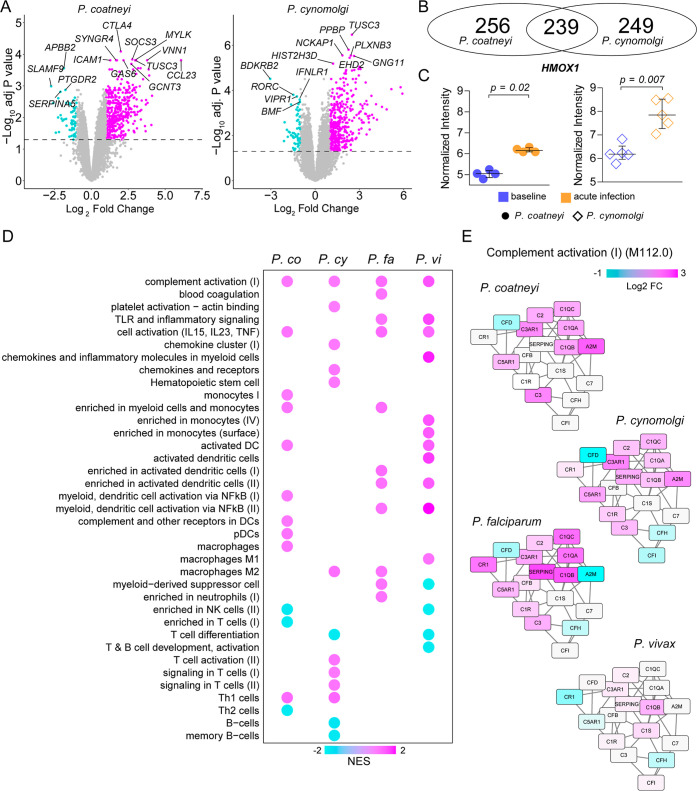 Figure 3
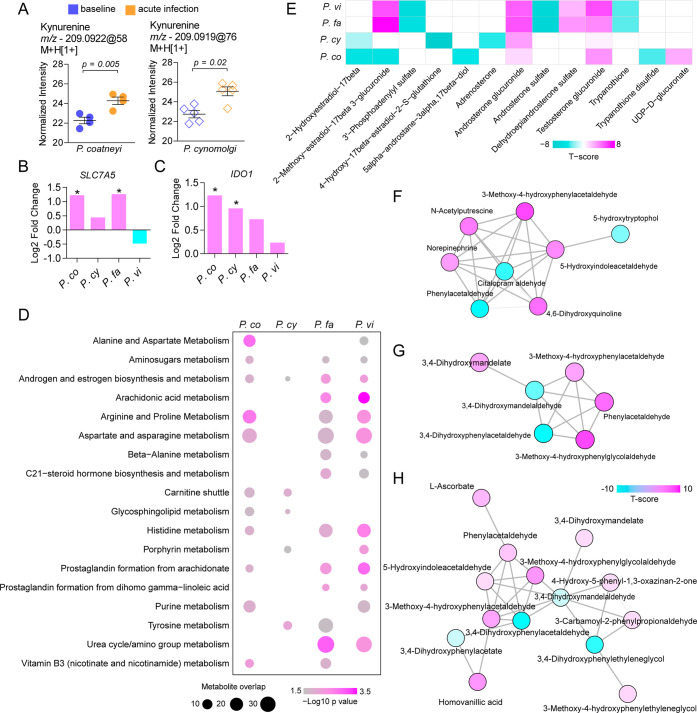 Figure 4
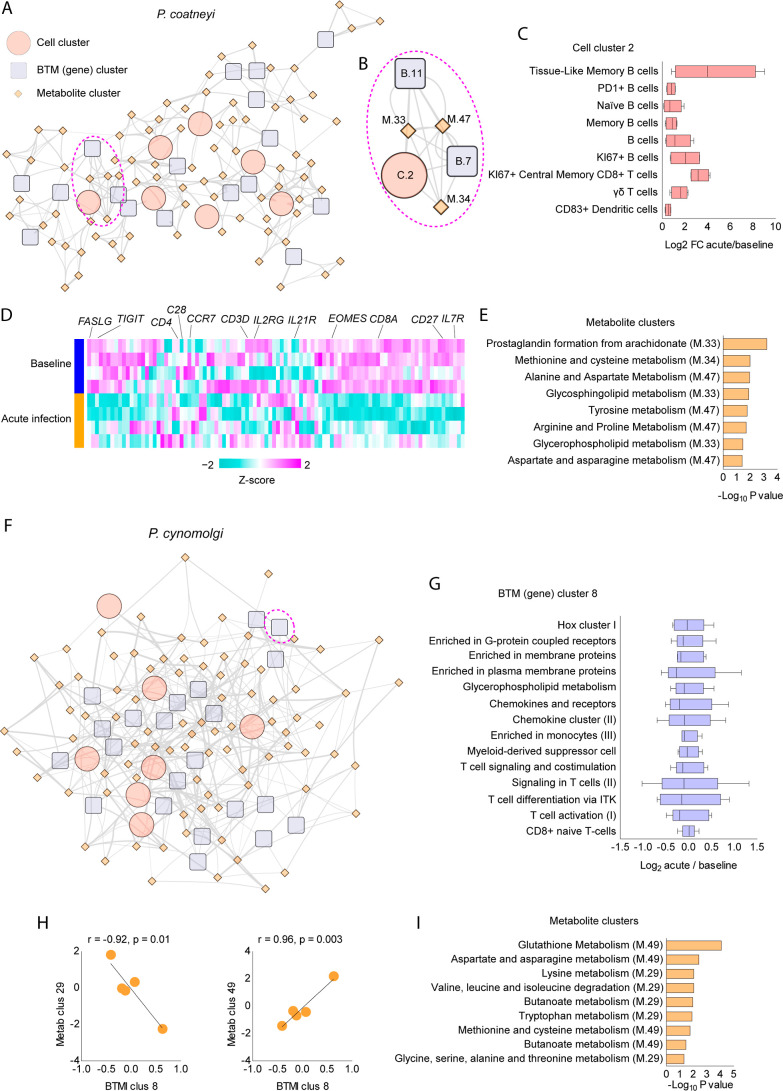 Figure 5
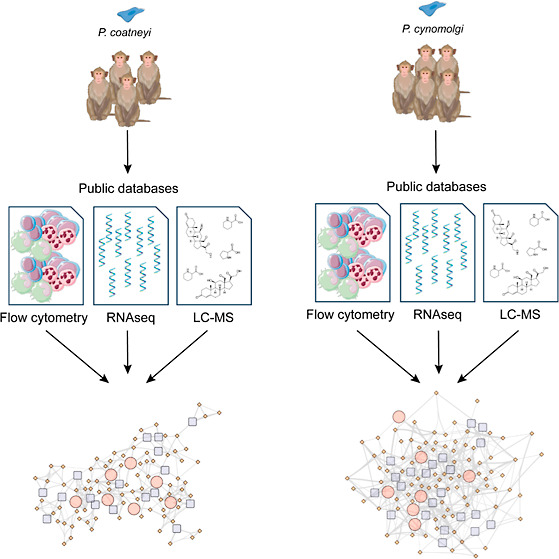 Figure 6
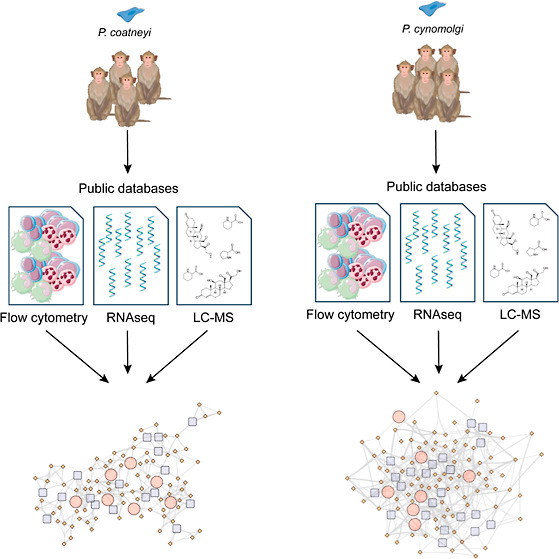 Figure 7
Peer Reviews
No public reviews on file for this paper yet. If you reviewed it on a platform where reviews are public (OpenReview, ICLR, NeurIPS, ICML), you can paste yours below so the community can read it here.
Videos
No videos yet. Explain this paper in a talk, walkthrough, or lecture? Add one.
Taxonomy
TopicsSphingolipid Metabolism and Signaling · Malaria Research and Control · Mosquito-borne diseases and control