Olfactory GPCRs through the lens of structural bioinformatics
Alessandro Nicoli, Florian Bößl, Antonella Di Concilio Moschen, Francesco Ferri, Clarissa Rienaecker, Antonella Di Pizio

TL;DR
This paper reviews recent advances in understanding the structure of olfactory GPCRs, which are important for smell and disease detection but remain poorly understood.
Contribution
The paper highlights new computational and AI-driven methods that are advancing the structural understanding of olfactory GPCRs.
Findings
Recent breakthroughs include the first resolved structures of ORs and TAARs.
AI-driven tools are transforming the prediction of olfactory receptor structures.
Computational strategies have identified novel modulators for these receptors.
Abstract
Olfactory perception, mediated by G protein-coupled receptors (GPCRs) such as odorant receptors (ORs) and trace amine-associated receptors (TAARs), plays a pivotal role in human health, influencing behaviors like food choices and serving as early biomarkers for neurodegenerative diseases. Despite their importance, olfactory GPCRs are among the least understood members of the GPCR superfamily, and most ORs and TAARs are still orphan receptors. This review provides a comprehensive overview of recent advancements in the structural bioinformatics of olfactory GPCRs. We outline how computational, structure-based strategies have succeeded in identifying novel modulators for olfactory receptors. By discussing recent breakthroughs in GPCR structural biology, such as the first resolved experimental structures of ORs and TAARs, and the transformative impact of AI-driven structure prediction tools…
Genes, proteins, chemicals, diseases, species, mutations and cell lines named across the full text — each resolved to its canonical identifier and authoritative record.
Click any figure to enlarge with its caption.
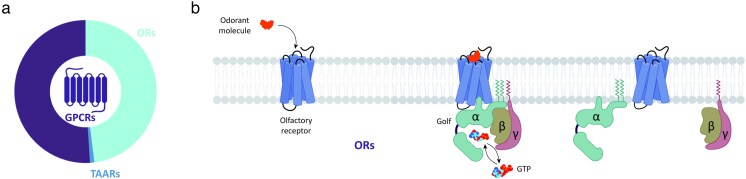 Figure 1
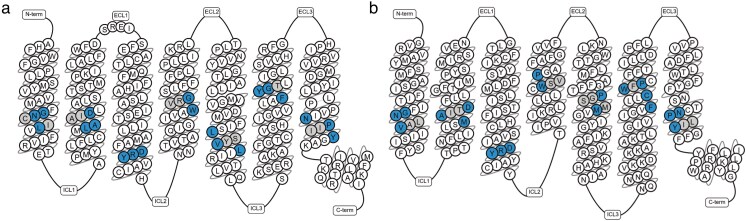 Figure 2
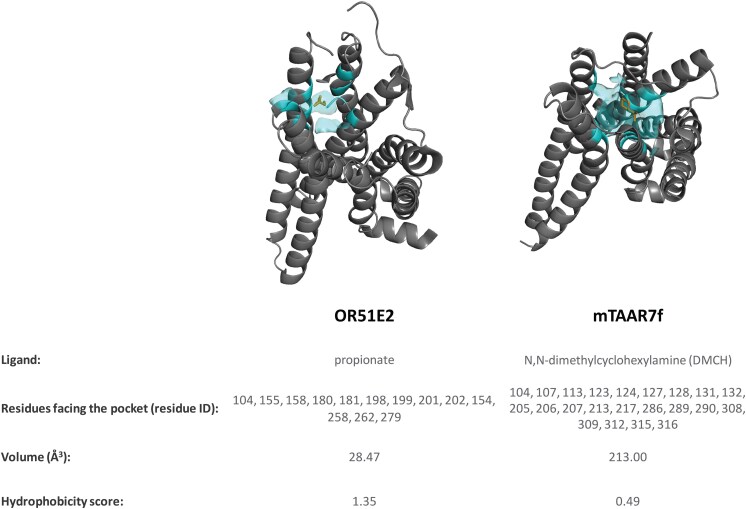 Figure 3
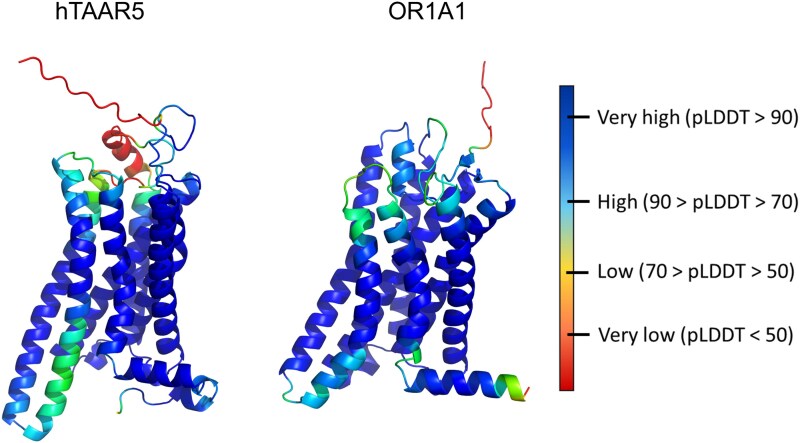 Figure 4
Peer Reviews
No public reviews on file for this paper yet. If you reviewed it on a platform where reviews are public (OpenReview, ICLR, NeurIPS, ICML), you can paste yours below so the community can read it here.
Videos
No videos yet. Explain this paper in a talk, walkthrough, or lecture? Add one.
Taxonomy
TopicsOlfactory and Sensory Function Studies · Receptor Mechanisms and Signaling · Neurobiology and Insect Physiology Research