Efficacy of Wee1 G2 Checkpoint Kinase and Mouse Double Minute 2 Homolog Inhibitors in Gastrointestinal Stromal Tumors Determined by p53 Status
Chiao-Ping Chen, Yan-Jei Tang, You-Yan Cai, Yi-Ru Pan, Chun-Nan Yeh, Wen-Kuan Huang, Chih-Hong Lo, Yu-Tien Hsiao, Hsuan-Jen Shih, Chiao-En Wu

TL;DR
This study shows that the effectiveness of two cancer drugs in gastrointestinal stromal tumors depends on the p53 gene status in the tumor cells.
Contribution
The study demonstrates that p53 status determines the response to MDM2 or Wee1 inhibitors in GIST, offering a new treatment strategy based on p53 status.
Findings
HDM201 inhibited growth and triggered apoptosis in p53 wild-type GIST cells.
Adavosertib was effective mainly in p53 mutant GIST cells.
Xenograft models confirmed drug efficacy differences based on p53 status.
Abstract
KIT proto-oncogene, receptor tyrosine kinase (KIT, CD117) and platelet-derived growth factor-alpha (PDGFRA) are key drivers of gastrointestinal stromal tumors (GIST), but resistance to targeted therapy often arises from tumor protein p53 (p53) alterations and loss of cell cycle control. However, the role of p53 status in GIST therapeutic potential has rarely been studied, so this study aimed to employ both wild-type and mutant p53 GIST models to investigate how p53 dysfunction influences the efficacy of p53 pathway-targeted therapies. The efficacy of the mouse double minute 2 homolog (MDM2) inhibitor (HDM201) and the Wee1 G2 checkpoint kinase (Wee1) inhibitor (adavosertib) was confirmed in both p53 wild-type (p53 WT) and p53 mutant (p53 MT) GIST cells. The anti-proliferative effects were assessed using the Cell Counting Kit-8 (CCK-8) assay. Flow cytometry (FACS) and immunoblotting were…
Genes, proteins, chemicals, diseases, species, mutations and cell lines named across the full text — each resolved to its canonical identifier and authoritative record.
Click any figure to enlarge with its caption.
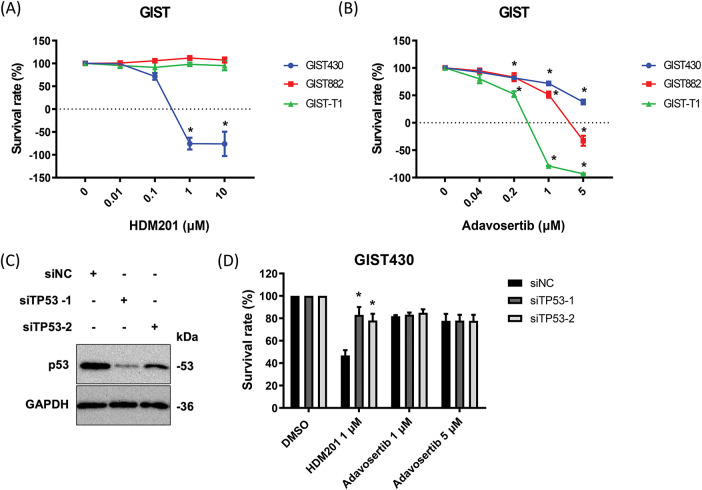 Figure 1
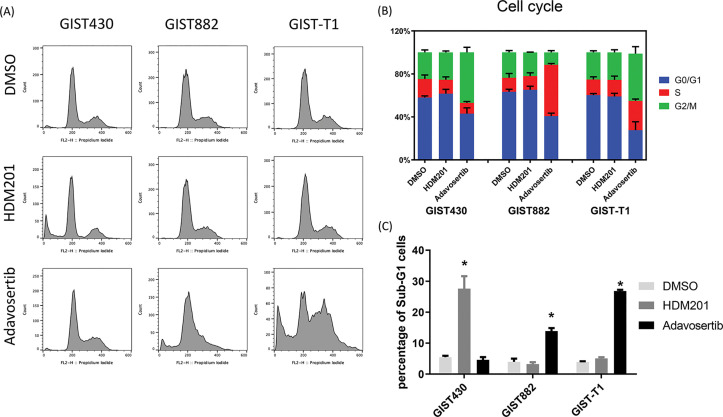 Figure 2
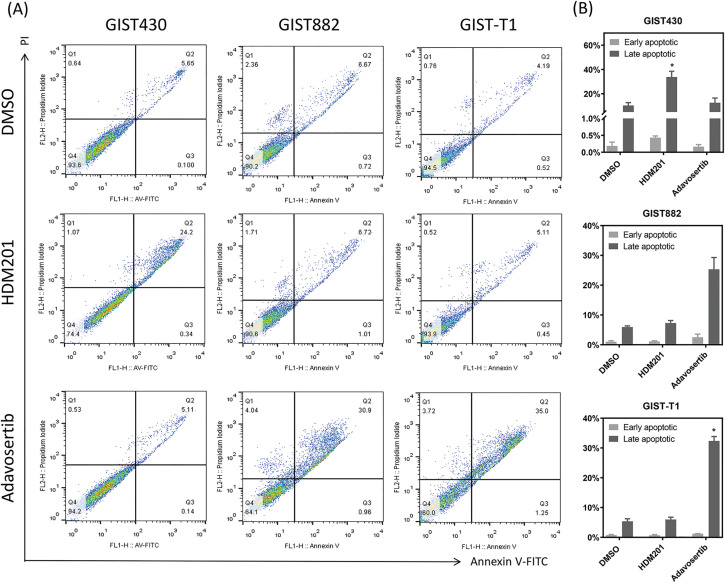 Figure 3
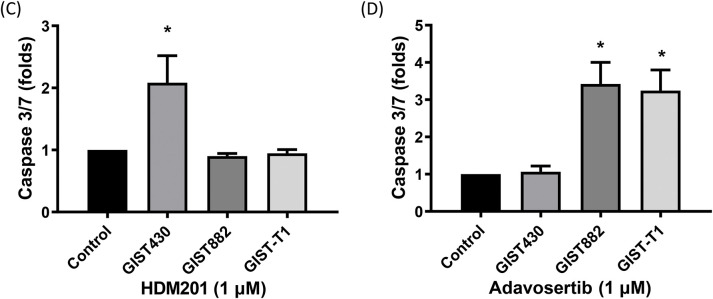 Figure 4
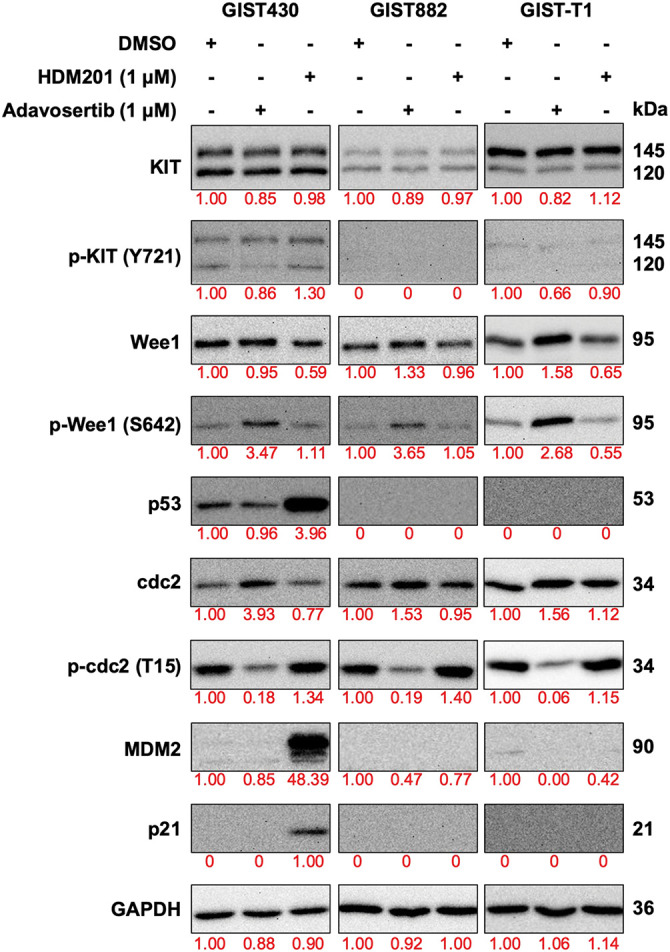 Figure 5
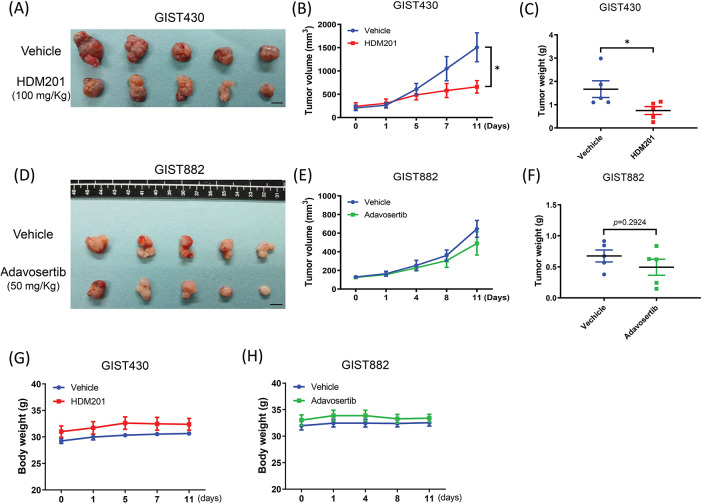 Figure 6
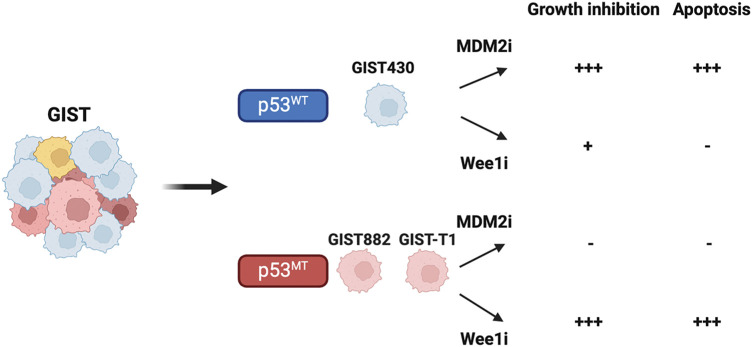 Figure 7
Peer Reviews
No public reviews on file for this paper yet. If you reviewed it on a platform where reviews are public (OpenReview, ICLR, NeurIPS, ICML), you can paste yours below so the community can read it here.
Videos
No videos yet. Explain this paper in a talk, walkthrough, or lecture? Add one.
Taxonomy
TopicsGastrointestinal Tumor Research and Treatment