Singlet–Triplet Gap in Covalently and Weakly Bound Carbenes: Studying the Dependence on the Exchange–Correlation Functional
Pablo Maiz-Pastor, Éric Brémond, Ángel José Pérez-Jiménez, Carlo Adamo, Juan Carlos Sancho-García

TL;DR
This paper evaluates how different computational methods perform in predicting energy gaps in carbenes, finding that simpler methods sometimes work better than more complex ones.
Contribution
The study reveals that lower-level functionals can outperform more advanced ones for carbene singlet–triplet gaps.
Findings
Low-level functionals like BLYP and PBE show lower errors than hybrid or double-hybrid functionals for carbene energy gaps.
Double-hybrid functionals like PBE-QIDH correct biases in triplet state energy predictions.
Recommended double-hybrid functionals achieve ±1–2 kcal/mol accuracy for carbene studies.
Abstract
We systematically analyze here the performance of density functional approximations for the calculation of the singlet–triplet gap of covalently bound carbenes (i.e., substituted arylcarbenes of increasing size and with different electroactive substituents) and weakly bound carbenes (diphenylcarbene noncovalently interacting with H2O, CH3OH, ClCF3, BrCF3, and ICF3 molecules). The calculations revealed an unexpected functional dependence, in the sense that low levels of the functional hierarchy (e.g., BLYP or PBE) provide lower errors than more sophisticated functionals (e.g., hybrid and double-hybrid expressions), thus evidencing a subtle yet marked interplay between the ingredients of any modern exchange–correlation functional. The decomposition of the results as a function of those ingredients allowed us to isolate those functionals overestimating (by default) the energy stability of…
Genes, proteins, chemicals, diseases, species, mutations and cell lines named across the full text — each resolved to its canonical identifier and authoritative record.
Click any figure to enlarge with its caption.
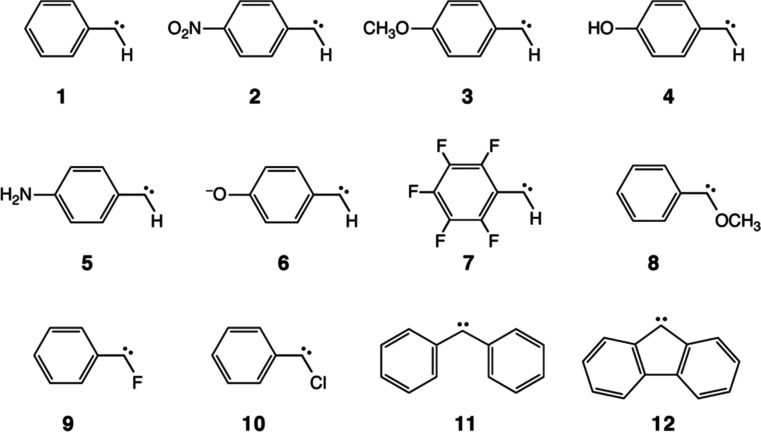 Figure 1
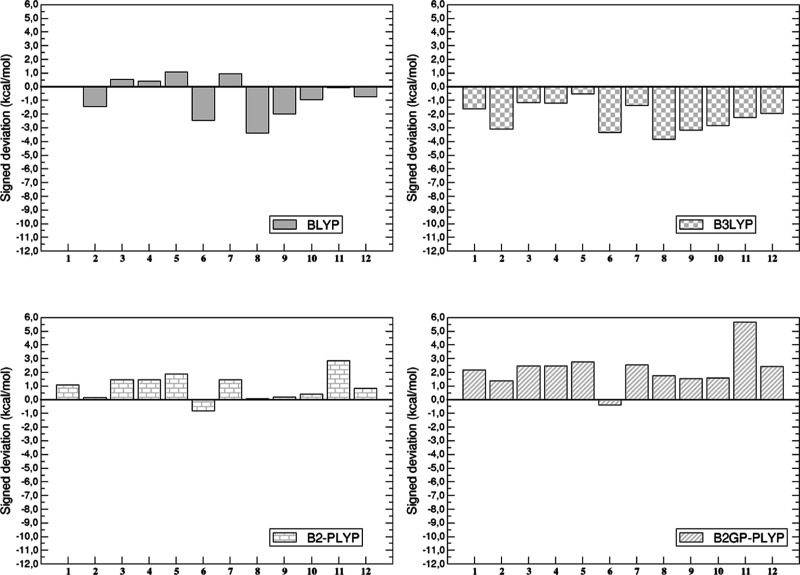 Figure 2
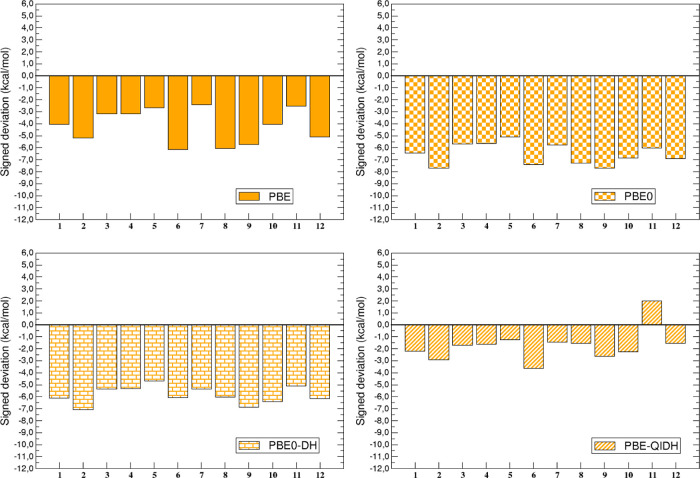 Figure 3
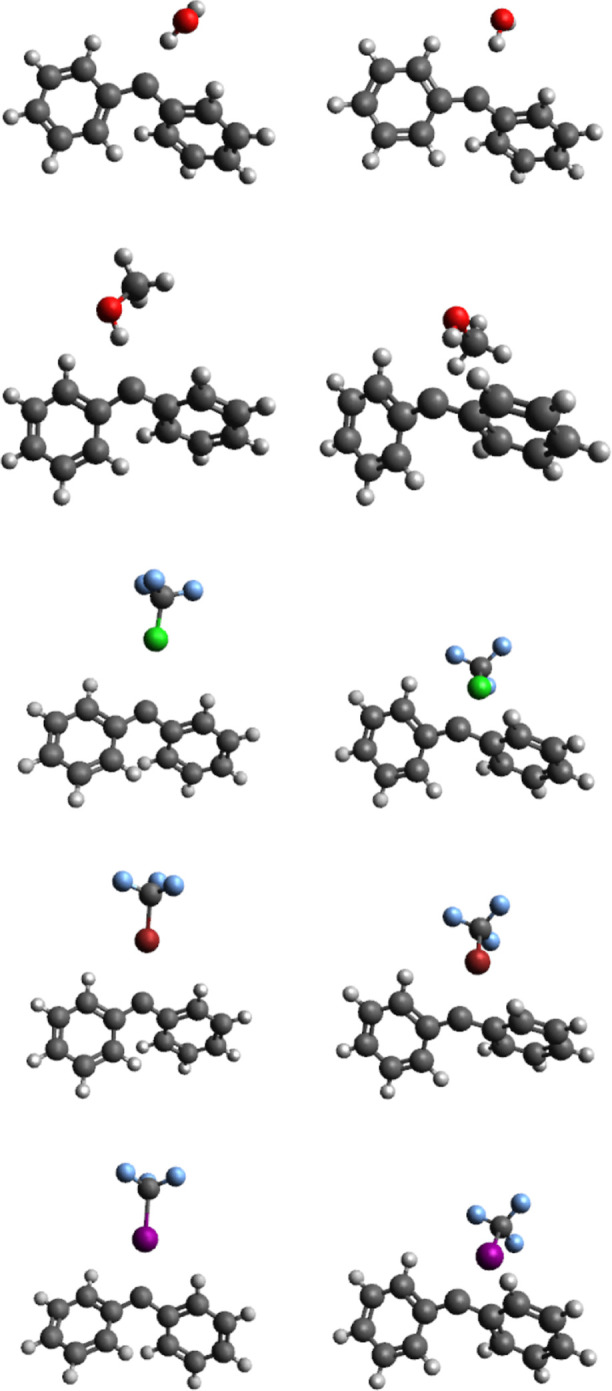 Figure 4
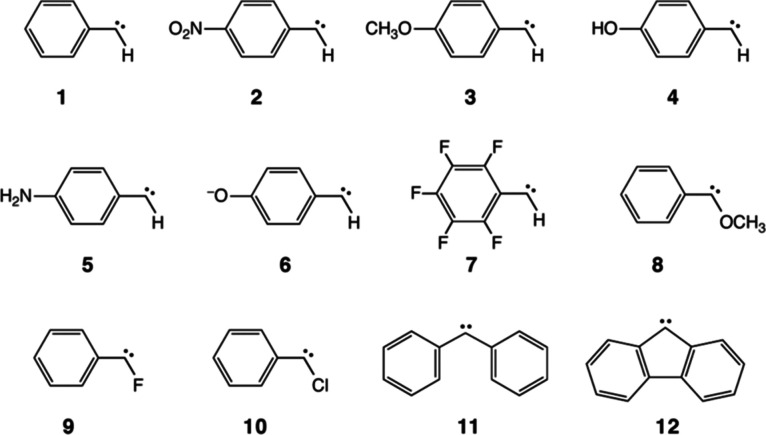 Figure 5
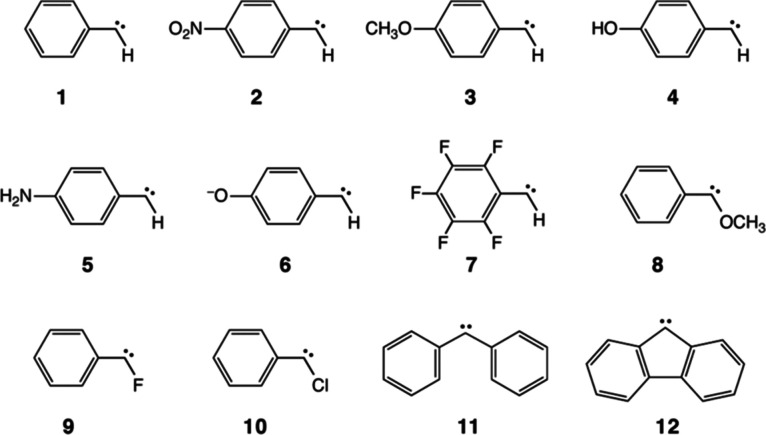 Figure 6
 Figure 7
 Figure 8
 Figure 9
 Figure 10
 Figure 11
 Figure 12
 Figure 13
 Figure 14
 Figure 15
 Figure 16
Peer Reviews
No public reviews on file for this paper yet. If you reviewed it on a platform where reviews are public (OpenReview, ICLR, NeurIPS, ICML), you can paste yours below so the community can read it here.
Videos
No videos yet. Explain this paper in a talk, walkthrough, or lecture? Add one.
Taxonomy
TopicsN-Heterocyclic Carbenes in Organic and Inorganic Chemistry · Chemical Reactions and Mechanisms · Chemical Reaction Mechanisms