Metal-dependant structural families of aminomethylphosphonic acid assemblies differentiated by ion mobility mass spectrometry and density functional theory
Olivia Rusli, Haedam Mun, Marco Neumaier, Sjors Bakels, Kevin Hes, Oscar H. Lloyd Williams, Anouk M. Rijs, Junming Ho, Nicole J. Rijs

TL;DR
This paper shows how different metal ions affect the structure of aminomethylphosphonic acid assemblies using advanced analytical techniques.
Contribution
The study identifies two distinct structural families of AMPA–metal aggregates based on metal type using ion mobility and DFT.
Findings
AMPA–metal aggregates with Ca2+, Sr2+, and Ba2+ form a square pyramidal geometry.
AMPA–metal aggregates with Mg2+, Mn2+, Cu2+, and Zn2+ form a seesaw geometry.
Ion mobility mass spectrometry and DFT can distinguish structural families at early assembly stages.
Abstract
Herein the morphology of aminomethylphosphonic acid (AMPA)–metal aggregates are analysed by ion mobility-mass spectrometry, DFT and IRMPD spectroscopy. Matching experimental collision cross section to the DFT predicted minima allowed unambiguous assignment of [M(AMPA)(AMPA-H)]+ where M = Mg2+, Ca2+, and Mn2+. Two distinct structural families of [M(AMPA)(AMPA-H)]+ where M = Mg2+, Ca2+, Sr2+, Ba2+, Mn2+, Cu2+, and Zn2+ were differentiated by ion mobility mass spectrometry. Groupings of experimental collision cross sections were observed for a square pyramidal geometry, (M = Ca2+, Sr2+, Ba2+) versus a seesaw geometry (M = Mg2+, Mn2+, Cu2+, and Zn2+), paving the way for distinction of aggregates at the earliest stages of assembly. Aminomethylphosphonic acid (AMPA)–metal aggregates are effectively distinguished by ion mobility-mass spectrometry, and complementary DFT, giving insight into…
Genes, proteins, chemicals, diseases, species, mutations and cell lines named across the full text — each resolved to its canonical identifier and authoritative record.
Click any figure to enlarge with its caption.
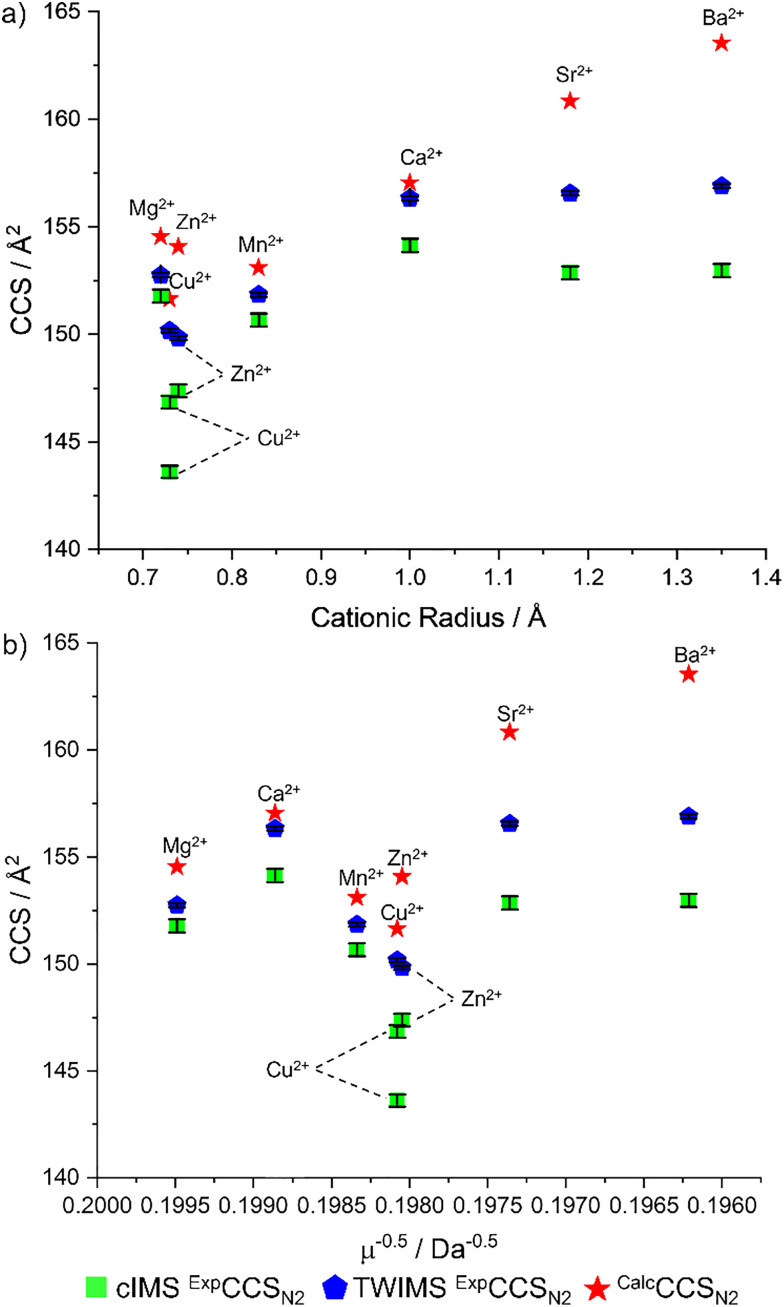 Figure 1
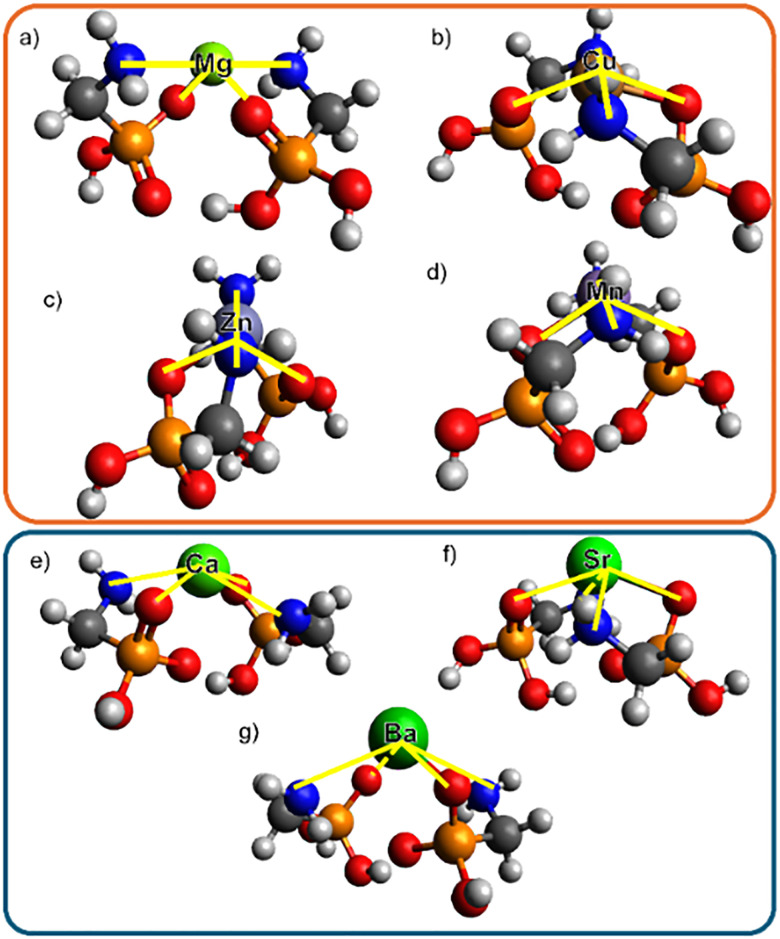 Figure 2
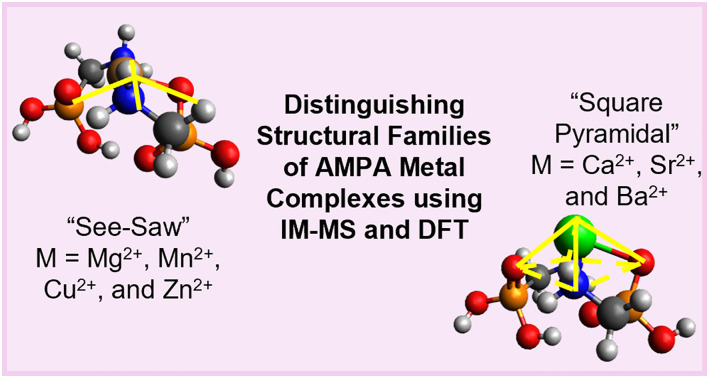 Figure 3
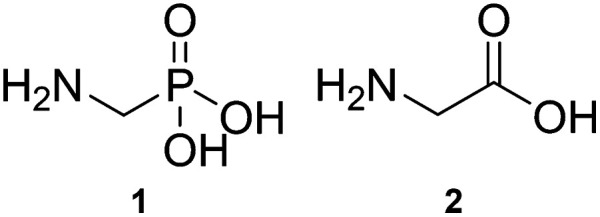 Figure 4
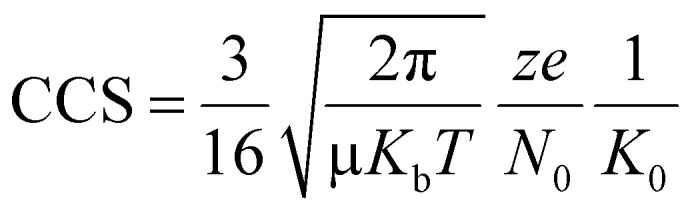 Figure 5
Peer Reviews
No public reviews on file for this paper yet. If you reviewed it on a platform where reviews are public (OpenReview, ICLR, NeurIPS, ICML), you can paste yours below so the community can read it here.
Videos
No videos yet. Explain this paper in a talk, walkthrough, or lecture? Add one.
Taxonomy
TopicsChemical Synthesis and Characterization · Chemical Thermodynamics and Molecular Structure · Analytical Chemistry and Chromatography