Efficient Turn-On Fluorescent Sensor Based on Fluorescent Resonance Energy Transfer between 1,3,6,8-Tetra(4-pyridyl)pyrene and Gold Nanoparticles for Glutathione Detection
Shicong Liu, Yuanyuan Zhang, Dan Jia, Junqiu Liu, Chunxi Hou

TL;DR
This paper introduces a new fluorescent sensor that detects glutathione in food by using energy transfer between a chemical compound and gold nanoparticles.
Contribution
The novel sensor uses FRET between TTPY and AuNPs for efficient and selective glutathione detection in food samples.
Findings
The sensor has a low detection limit of 54 nM for glutathione.
The method successfully detected glutathione in real food samples.
TTPY exhibits strong fluorescence properties with a 496 nm emission wavelength.
Abstract
A fluorescent probe based on fluorescent resonance energy transfer (FRET) between the organic fluorophore 1,3,6,8-tetra(4-pyridyl) pyrene (TTPY) and gold nanoparticles (AuNPs) was designed for detecting glutathione (GSH) in foods. TTPY, synthesized via a Suzuki–Miyaura coupling reaction, exhibited excellent fluorescence properties with a maximum emission wavelength of 496 nm. Acting as an energy donor, TTPY transfers energy to AuNPs via FRET, resulting in fluorescence quenching of TTPY. In the presence of GSH, TTPY was displaced from the AuNP surface, restoring the fluorescence of the TTPY chromophore. The developed sensor demonstrated excellent water solubility and selectivity and a low detection limit (54 nM). Moreover, the proposed method was successfully applied for the determination of GSH in food samples, demonstrating its potential for food antioxidant analysis.
Genes, proteins, chemicals, diseases, species, mutations and cell lines named across the full text — each resolved to its canonical identifier and authoritative record.
Click any figure to enlarge with its caption.
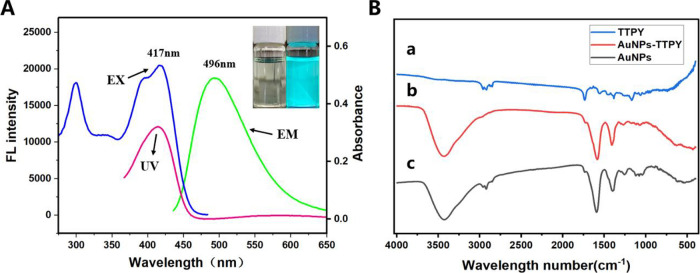 Figure 1
 Figure 2
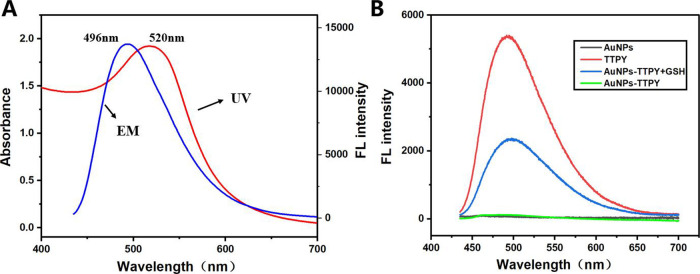 Figure 3
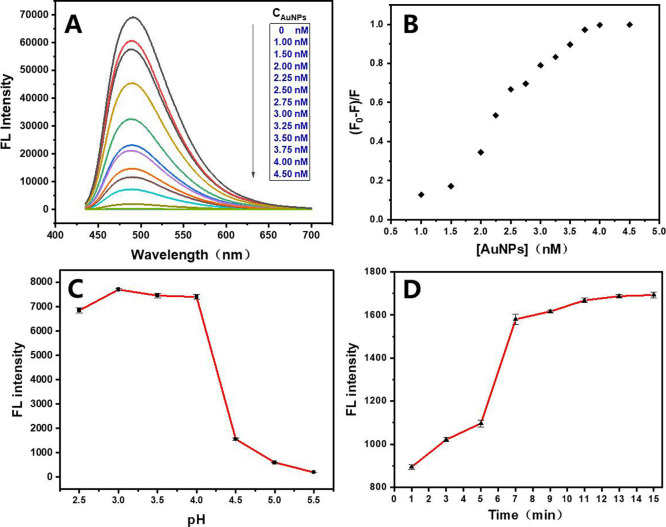 Figure 4
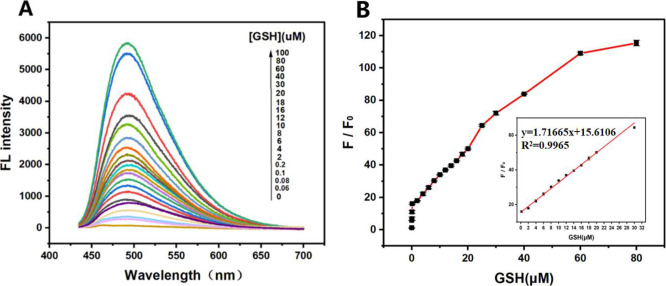 Figure 5
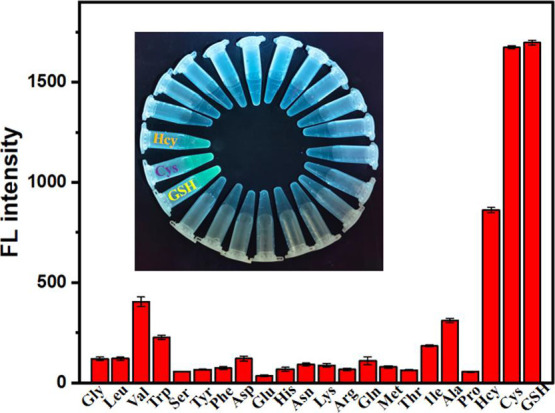 Figure 6
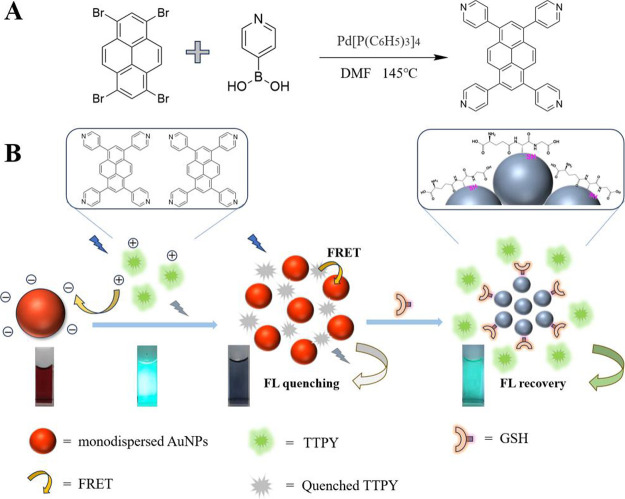 Figure 7
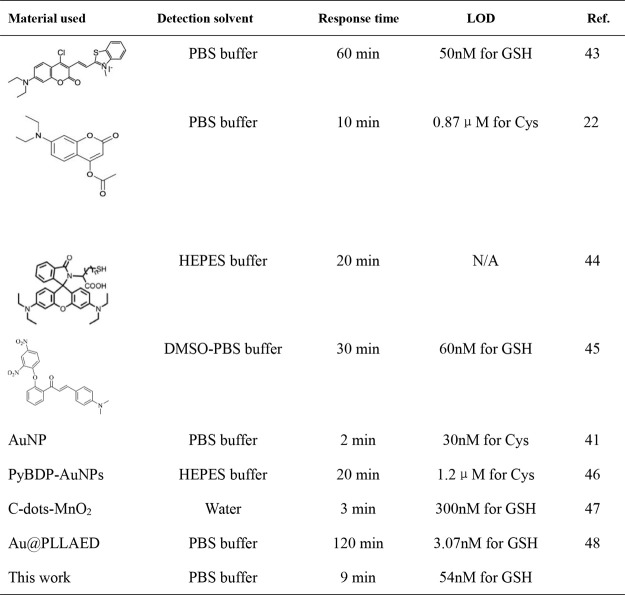 Figure 8
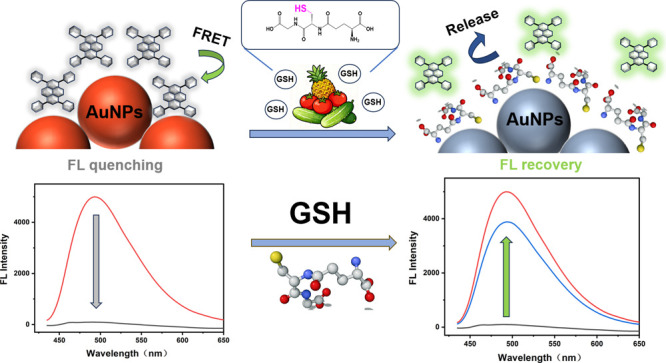 Figure 9
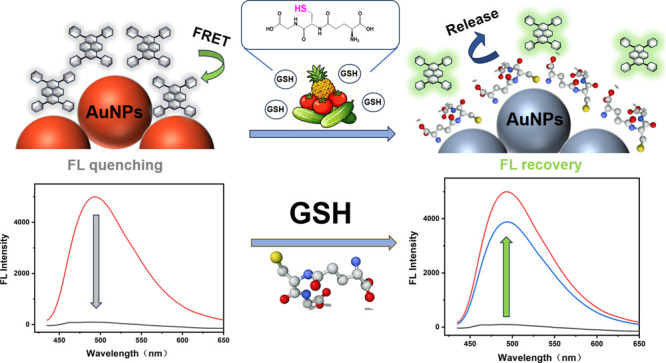 Figure 10
Peer Reviews
No public reviews on file for this paper yet. If you reviewed it on a platform where reviews are public (OpenReview, ICLR, NeurIPS, ICML), you can paste yours below so the community can read it here.
Videos
No videos yet. Explain this paper in a talk, walkthrough, or lecture? Add one.
Taxonomy
TopicsSulfur Compounds in Biology · Molecular Sensors and Ion Detection · Advanced Nanomaterials in Catalysis