Affinity Selection-Mass Spectrometry for the Identification of Ligands of Acetylcholinesterase from Topsentia ophiraphidites and Docking Studies for the Dereplicated Ligands
Larissa Ramos Guimarães da Silva, Christyne Barros de Sá, Bruno Sergio do Amaral, Nelilma Correia Romeiro, Quezia Bezerra Cass, Alessandra Leda Valverde

TL;DR
This study identifies potential acetylcholinesterase ligands from a sponge species and uses docking to explore their interactions, offering new leads for Alzheimer's research.
Contribution
The study reports novel AChE ligands from Topsentia ophiraphidites and their docking analysis for drug discovery.
Findings
Four compounds were identified as AChE ligands with affinity ratios between 1.20 and 1.84.
Molecular docking revealed that the (R, R) stereoisomer of one compound interacts strongly with AChE's active site.
The ligands show potential for further pharmacological investigation.
Abstract
Acetylcholinesterase (AChE) inhibition has been successful for the treatment of Alzheimer’s disease and still stands as an important target in the search for novel ligands. In this context, affinity selection-mass spectrometry (AS-MS) has been acknowledged as a high-throughput screening (HTS) technique for large molecular libraries in drug discovery programs and natural product investigations. In this work, an AS-MS assay with AChE immobilized onto magnetic beads (AChE-MB) has been used to search for ligands in samples of the sponge Topsentia ophiraphidites collected in the archipelago of Fernando de Noronha, Brazil. Ligand dereplication disclosed 6-desmethyl-6-ethyl-9,10-dihydrospongosoritin A, 3,5-dibromo-O-methyltyrosine, 3-bromo-5-iodo-O-methyltyrosine, and 3,5-di-iodo-O-methyltyrosine as AChE ligands, which showed affinity ratios of 1.84, 1.34, 1.26, and 1.20, respectively, in the…
Genes, proteins, chemicals, diseases, species, mutations and cell lines named across the full text — each resolved to its canonical identifier and authoritative record.
Click any figure to enlarge with its caption.
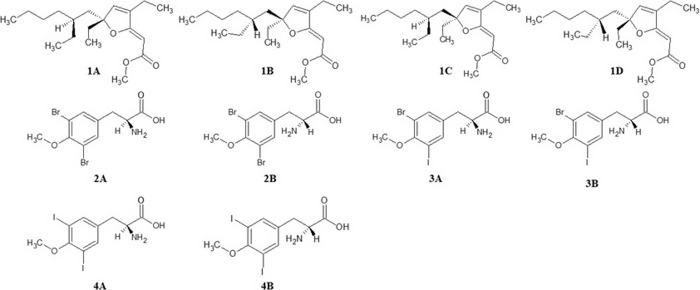 Figure 1
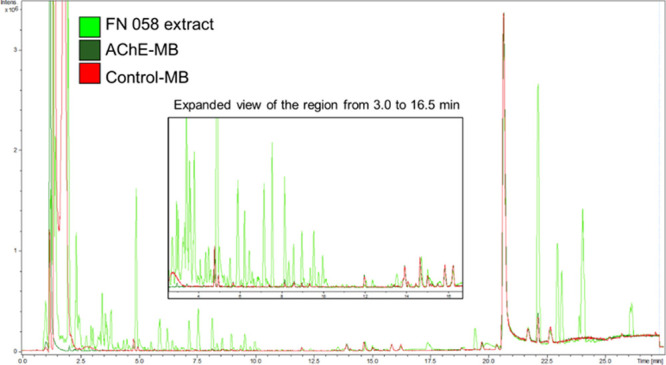 Figure 2
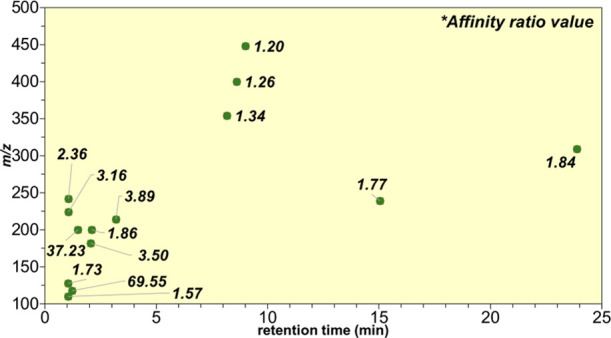 Figure 3
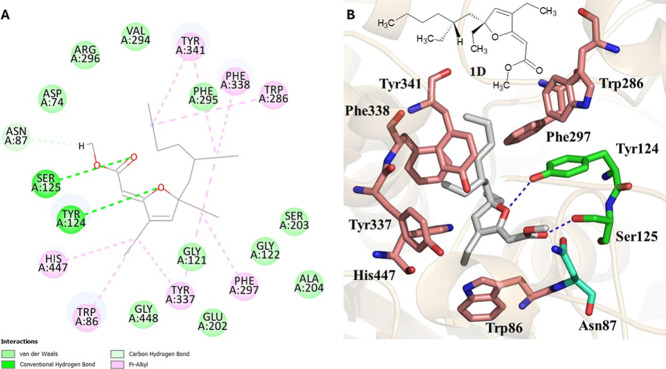 Figure 4
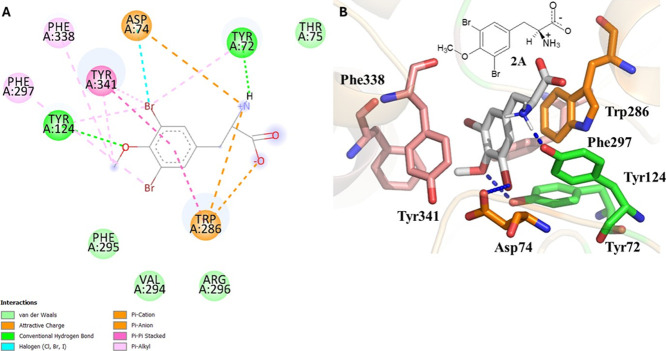 Figure 5
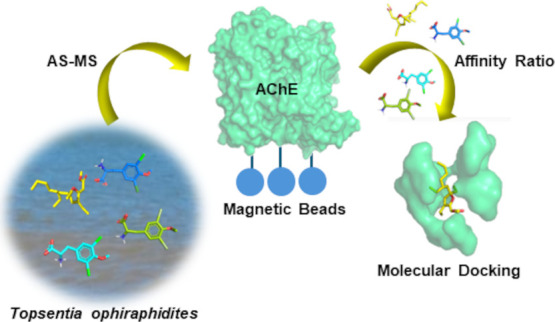 Figure 6
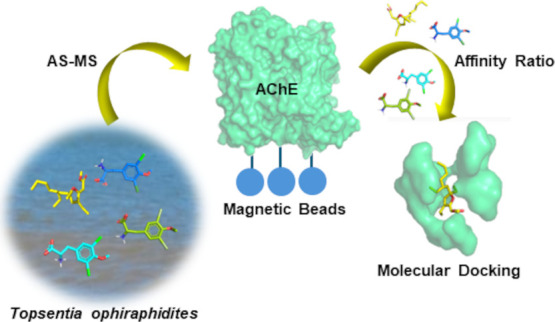 Figure 7
 Figure 8
 Figure 9
Peer Reviews
No public reviews on file for this paper yet. If you reviewed it on a platform where reviews are public (OpenReview, ICLR, NeurIPS, ICML), you can paste yours below so the community can read it here.
Videos
No videos yet. Explain this paper in a talk, walkthrough, or lecture? Add one.
Taxonomy
TopicsCholinesterase and Neurodegenerative Diseases · Computational Drug Discovery Methods · Enzyme function and inhibition