spook haploinsufficiency exacerbates aging-related motor impairments
Veronica C. Ciliberto, Maya Solis, Carolyne Chepkosgei, Paul Rafael Sabandal, Kyung-An Han

TL;DR
Reduced levels of a gene called spook in fruit flies worsen age-related motor problems, suggesting a key role for steroid signaling in aging.
Contribution
The study identifies spook haploinsufficiency as a novel contributor to aging-related motor impairments through ecdysone signaling.
Findings
spook heterozygous flies show accelerated aging-related motor decline in climbing assays.
Reduced brain ecdysone levels are linked to impaired motor function without affecting basal activity.
Ecdysone signaling is proposed as a conserved pathway contributing to aging-related motor impairments.
Abstract
The global rise in aging populations heightens the risk of motor decline, reducing quality of life and increasing morbidities, yet aging-related motor impairments (AMI) remain poorly understood. Many steroid hormones synthesized by cytochrome P450 enzymes decline with aging but their role in AMI is unclear. Here we show that spook heterozygous flies with reduced brain ecdysone exhibit accelerated, aging-related declines in climbing performance in a stimulus-induced negative geotaxis assay, without affecting basal activity. These findings implicate ecdysone signaling as a critical regulator of aging-sensitive motor function and suggest a conserved steroid pathway contributing to AMI across species.
Genes, proteins, chemicals, diseases, species, mutations and cell lines named across the full text — each resolved to its canonical identifier and authoritative record.
Click any figure to enlarge with its caption.
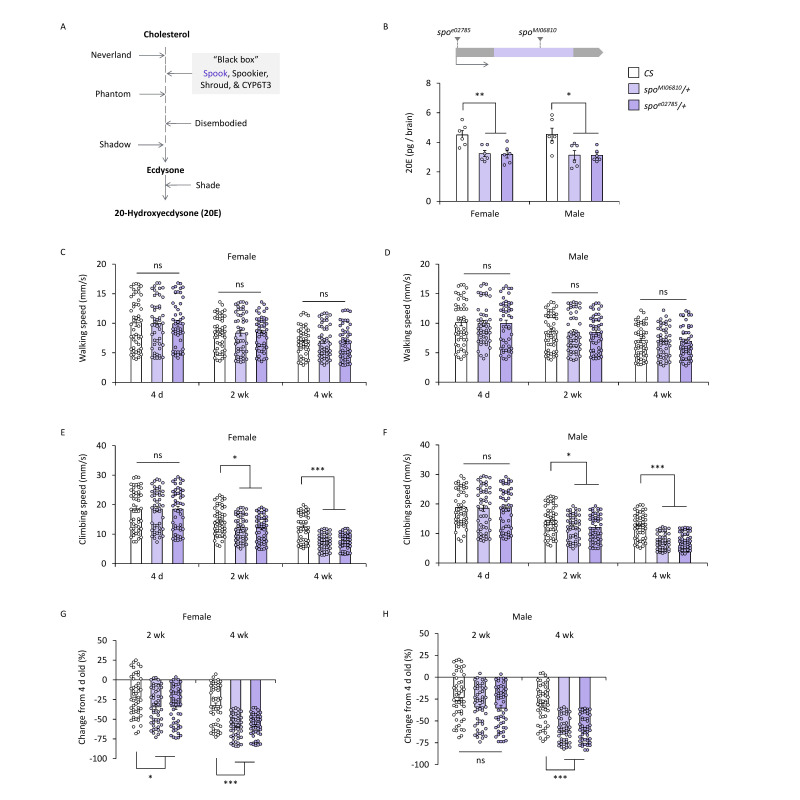 Figure 1
Peer Reviews
No public reviews on file for this paper yet. If you reviewed it on a platform where reviews are public (OpenReview, ICLR, NeurIPS, ICML), you can paste yours below so the community can read it here.
Videos
No videos yet. Explain this paper in a talk, walkthrough, or lecture? Add one.
Taxonomy
TopicsNeurobiology and Insect Physiology Research · Zebrafish Biomedical Research Applications · Neuroscience and Neuropharmacology Research