Choice of Processing Pipelines for T1‐Weighted Brain MRI Impacts Association and Prediction Analyses
Elise Delzant, Olivier Colliot, Baptiste Couvy‐Duchesne

TL;DR
This study compares different MRI processing methods and finds that FSLVBM is the most reliable for analyzing brain scans and predicting traits.
Contribution
The study provides a comprehensive benchmark of MRI processing pipelines using a large dataset and identifies FSLVBM as the most robust method.
Findings
FSLVBM outperformed other pipelines in morphometricity, replicability, and predictive accuracy.
Volume-based methods generally performed better than surface-based ones in detecting significant clusters.
Combining multiple pipelines may improve brain-based prediction by leveraging unique signals.
Abstract
The growing availability of large neuroimaging datasets, such as the UK Biobank, provides new opportunities to improve robustness and reproducibility in brain imaging research. However, little is known about the extent to which MRI processing pipelines influence results. Using 39,655 T1‐weighted MRI scans from the UK Biobank, we systematically compared five widely used gray‐matter representations derived from three major software packages: FSL (volume‐based), CAT12/SPM (volume‐ and surface‐based), and FreeSurfer (cortical and subcortical surface‐based). We assessed their impact on morphometricity (trait variance explained by brain features), susceptibility to imaging confounders, false positives, association findings, and prediction accuracy across 29 diverse traits, including lifestyle, metabolic, and disease‐related variables. We found that all pipelines were sensitive to imaging…
Genes, proteins, chemicals, diseases, species, mutations and cell lines named across the full text — each resolved to its canonical identifier and authoritative record.
Click any figure to enlarge with its caption.
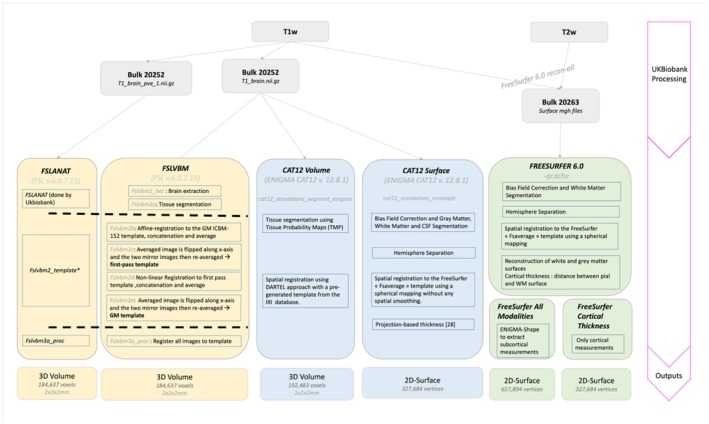 Figure 1
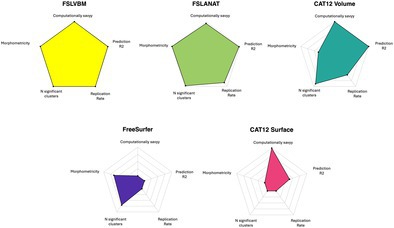 Figure 2
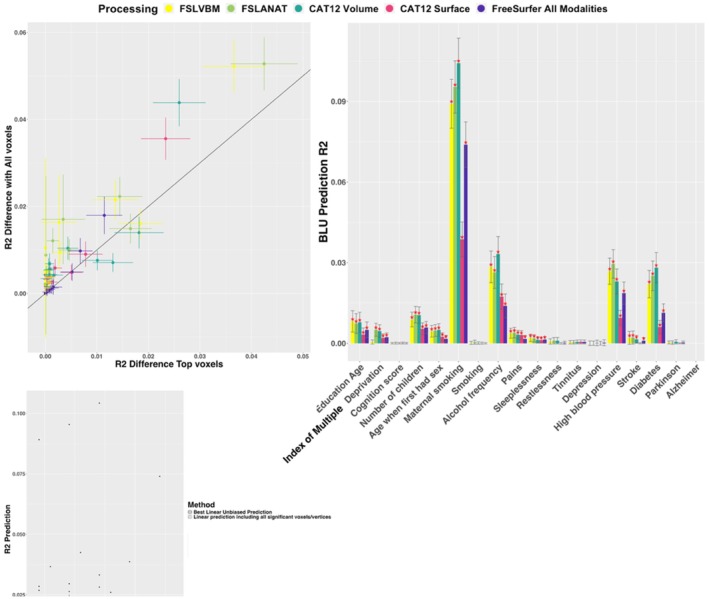 Figure 3
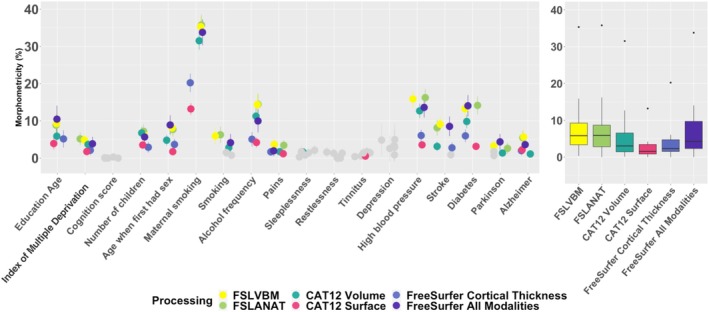 Figure 4
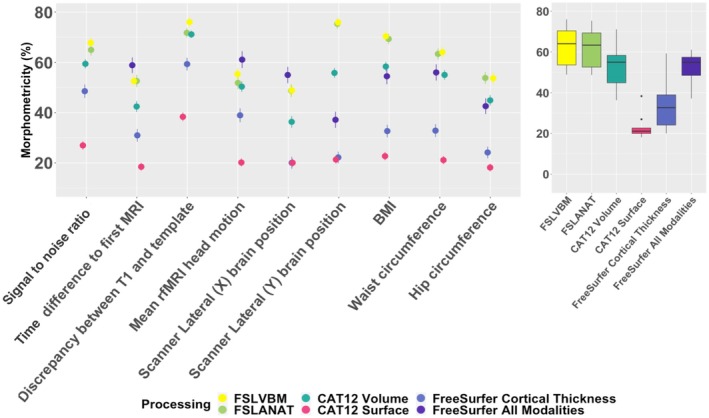 Figure 5
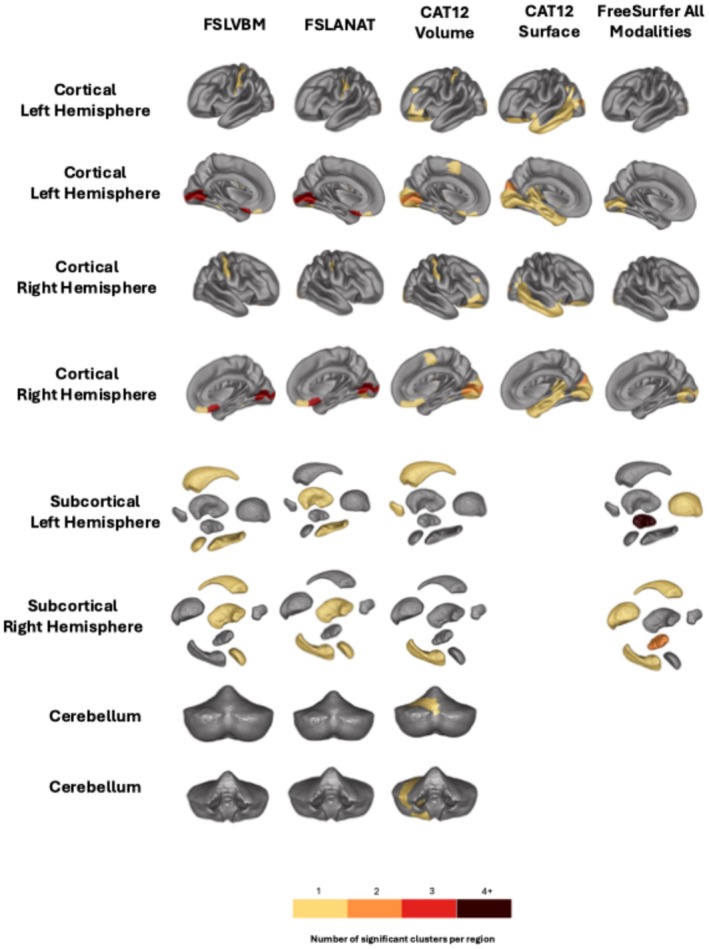 Figure 6
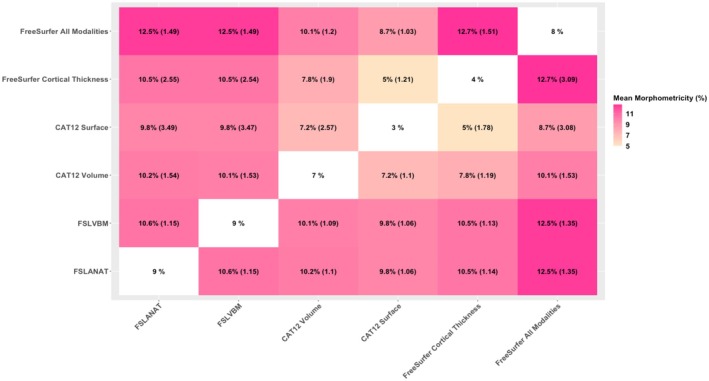 Figure 7
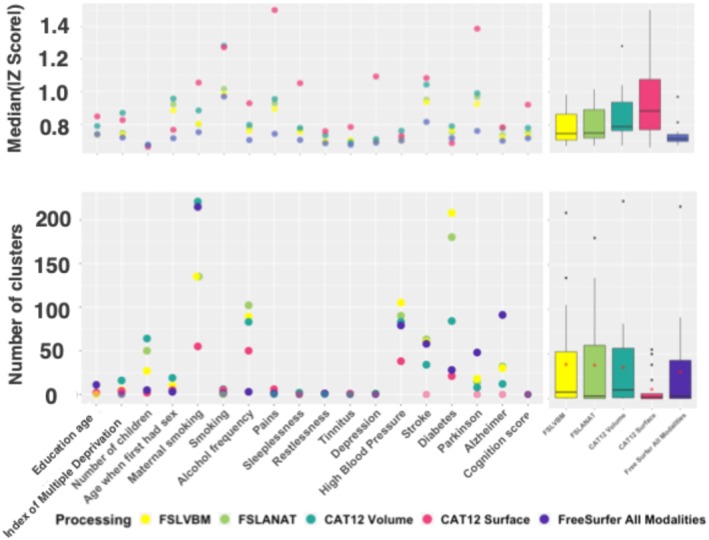 Figure 8
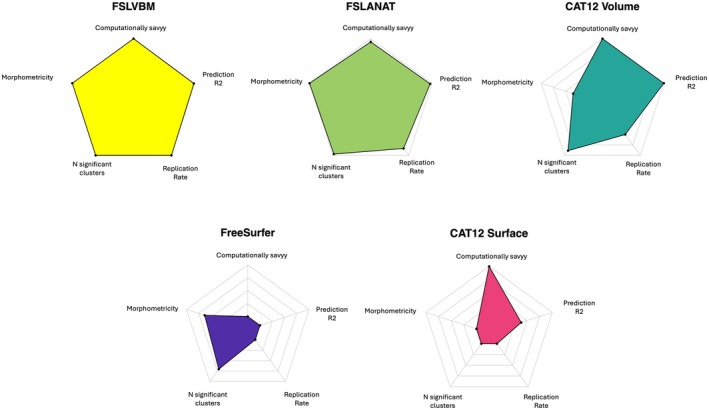 Figure 9
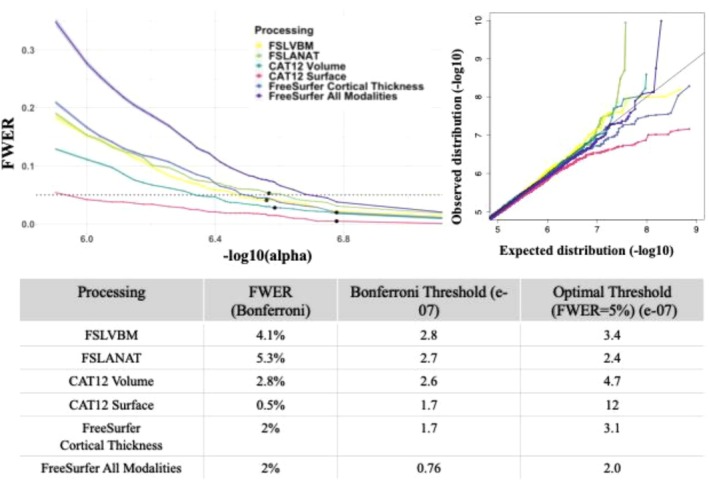 Figure 10
Peer Reviews
No public reviews on file for this paper yet. If you reviewed it on a platform where reviews are public (OpenReview, ICLR, NeurIPS, ICML), you can paste yours below so the community can read it here.
Videos
No videos yet. Explain this paper in a talk, walkthrough, or lecture? Add one.
Taxonomy
TopicsRadiomics and Machine Learning in Medical Imaging