Estimated atrial fibrillation burden on early rhythm-control and cardiovascular events in the EAST-AFNET 4 trial
Stef Zeemering, Katrin Borof, Ulrich Schotten, Julius Obergassel, A John Camm, Harry J.G.M. Crijns, Lars Eckardt, Larissa Fabritz, Andreas Goette, Zarina Habibi, Jordi Heijman, Ben J.M. Hermans, Marc D. Lemoine, Christina Magnussen, Andreas Metzner, Andreas Rillig

TL;DR
This study explores how the amount of time spent in atrial fibrillation affects cardiovascular outcomes in patients receiving rhythm-control therapy.
Contribution
The study introduces a novel approach to estimate AF burden using AI-based ECG analysis and examines its impact on cardiovascular events.
Findings
Lower AF burden was associated with fewer cardiovascular events in patients on rhythm-control therapy.
Higher AF burden showed comparable event rates to usual care, suggesting a potential refinement in AF diagnosis.
Abstract
Atrial fibrillation (AF) is currently diagnosed by ECG, creating a binary, lifelong diagnosis. AF burden, estimated as the proportion of time spent in AF, quantifies AF severity dynamically. AF burden can modulate the risk of AF-related outcomes. Whether AF burden modulates cardiovascular outcomes with rhythm-control therapy is unknown. AF burden on early rhythm-control was estimated using supervised artificial-intelligence-based rhythm classification of patient-operated telemetric short-term ECGs in patients randomised to early rhythm-control in the EAST-AFNET 4 trial (NCT01288352, ISRCTN04708680, conducted between 2011 and 2020). ECGs were transmitted 1–2 times per week and during symptoms. A landmark was set at 12 months and efficacy and safety outcomes occurring during the subsequent 4.1 years of follow-up were compared by estimated AF burden quartiles (Q1–Q4). In 1178 patients…
Genes, proteins, chemicals, diseases, species, mutations and cell lines named across the full text — each resolved to its canonical identifier and authoritative record.
Click any figure to enlarge with its caption.
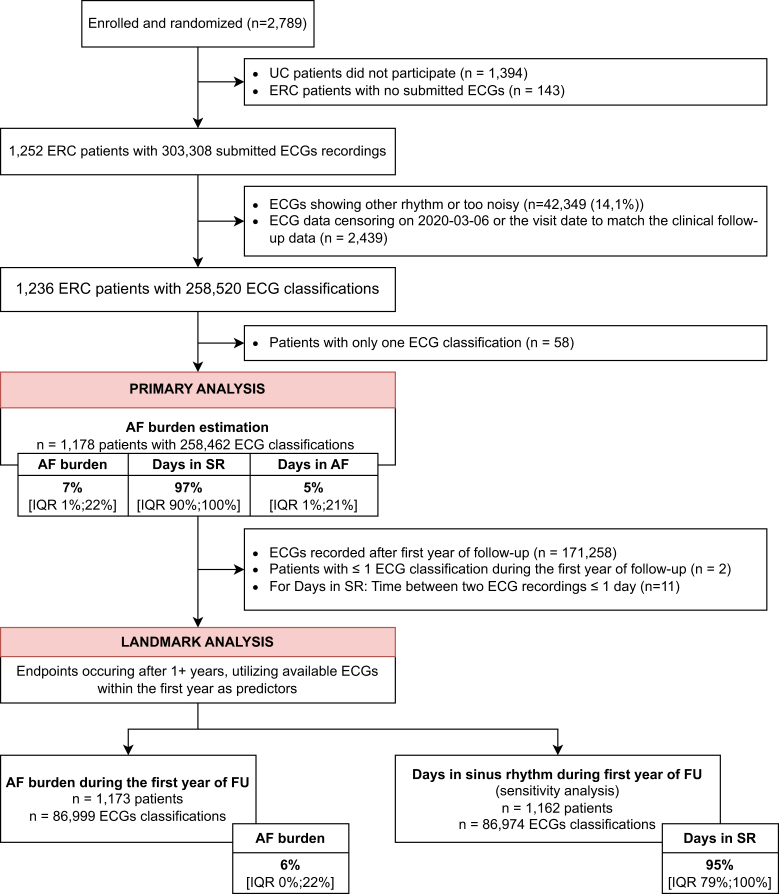 Figure 1
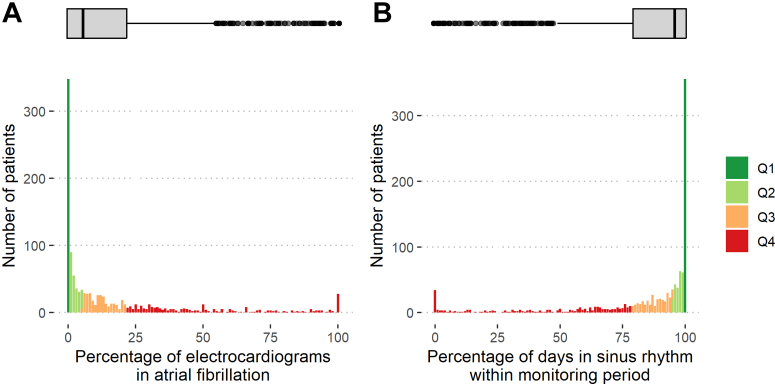 Figure 2
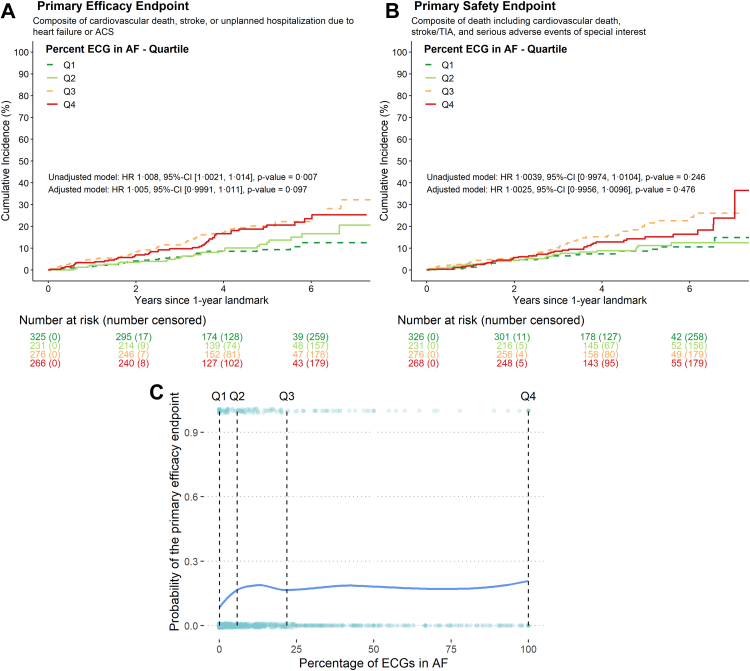 Figure 3
Peer Reviews
No public reviews on file for this paper yet. If you reviewed it on a platform where reviews are public (OpenReview, ICLR, NeurIPS, ICML), you can paste yours below so the community can read it here.
Videos
No videos yet. Explain this paper in a talk, walkthrough, or lecture? Add one.
Taxonomy
TopicsHeart Rate Variability and Autonomic Control · Atrial Fibrillation Management and Outcomes · Cardiac electrophysiology and arrhythmias